

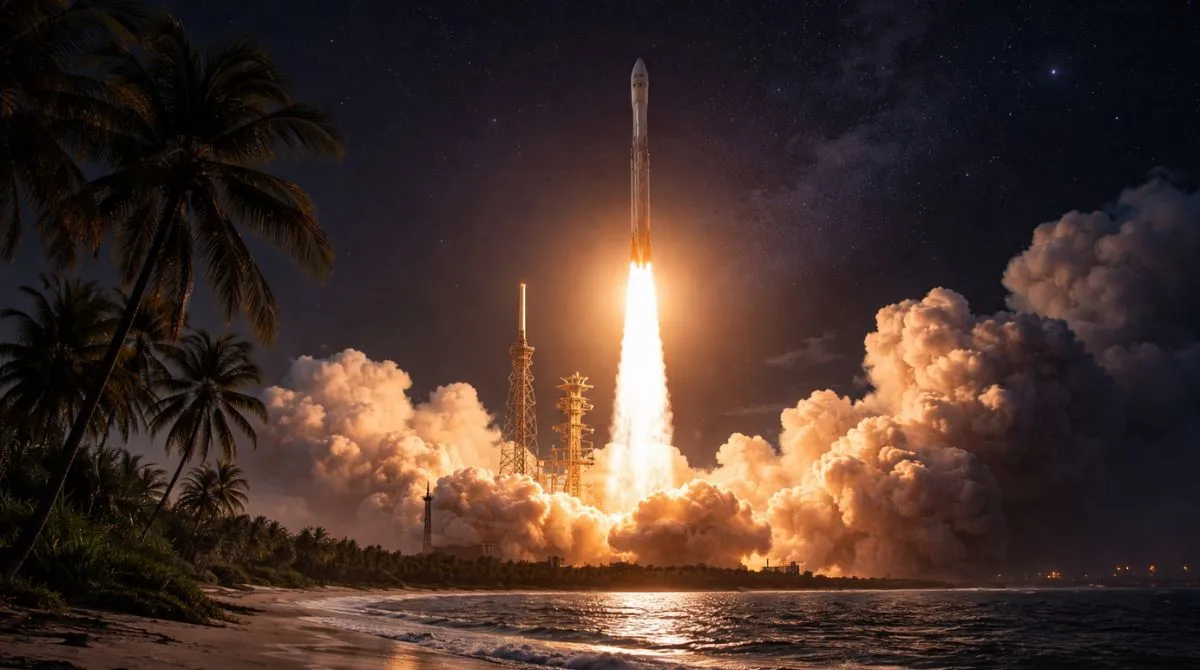
SpaceX has scheduled a late-night rocket launch that Florida residents can watch as it prepares a Falcon 9 mission from Cape Canaveral Space Force Station. The rocket will carry the GPS III-SV09 satellite for the U.S. Space Force into medium-Earth orbit.
SpaceX plans liftoff for January 28, 2026, with a brief launch window opening at 11:38 p.m. EST. The company delayed the mission by one day because of unfavorable weather, setting up a nighttime launch attempt.
Mission Overview
- Rocket: Falcon 9
- Payload: GPS III-SV09 navigation satellite
- Orbit: Medium-Earth orbit
- Builder: Lockheed Martin
- Technology: Advanced M-Code for stronger anti-jamming protection
The launch highlights how the U.S. Space Force is actively reshaping its positioning, navigation, and timing strategy after reassessing earlier satellite architectures. In recent years, the service shifted away from a fragmented resilient GPS approach and instead focused on strengthening the existing GPS III constellation with enhanced anti-jamming and military-grade capabilities. This strategic shift, detailed why the Space Force ended its resilient GPS satellite program, explains why missions like GPS III-SV09 remain critical to delivering secure and reliable navigation services worldwide.
The satellite is the ninth unit in the GPS III program and carries the name Ellison Onizuka, honoring the astronaut lost in the 1986 Challenger accident. The mission was originally assigned to United Launch Alliance before being reassigned to SpaceX.
Key Timing Details
| Event | Estimated Time |
| Launch window opens | 11:38 p.m. EST |
| First-stage landing attempt | 8–9 minutes after liftoff |
| Satellite deployment | About 90 minutes after liftoff |
If all goes as planned, the Falcon 9 booster will target a landing on the drone ship A Shortfall of Gravitas in the Atlantic. SpaceX has scheduled additional Falcon 9 launches from the same Florida site in the days that follow, keeping the Space Coast busy through early February.