
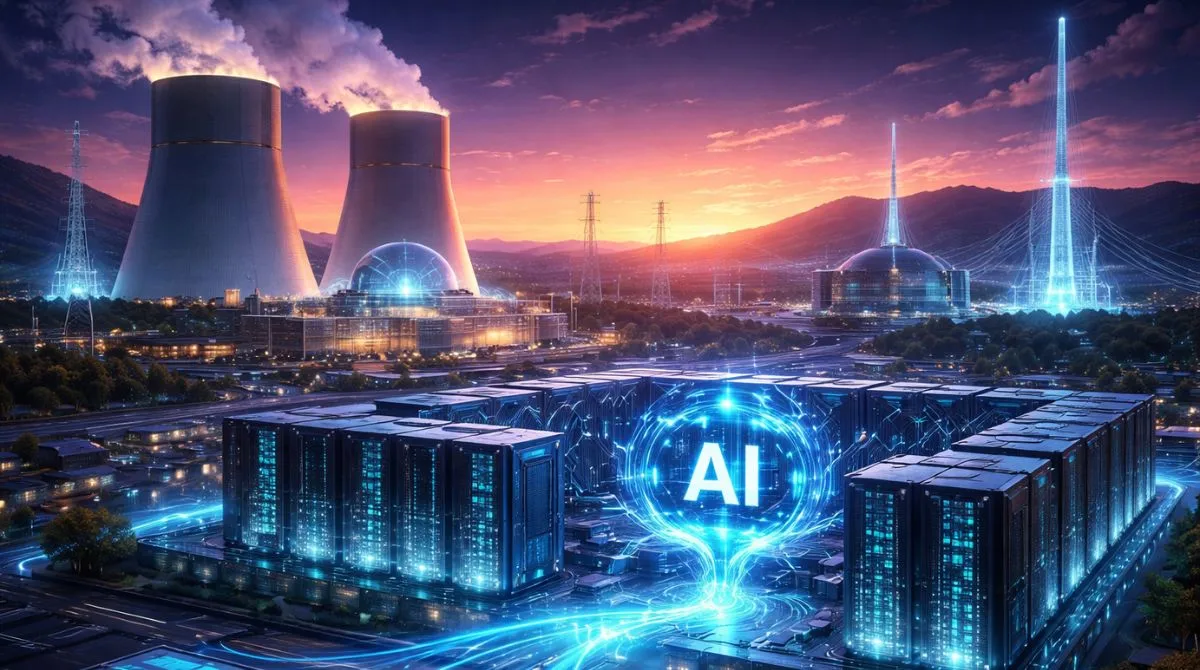
Meta is moving to secure steady, round-the-clock electricity for its fast-growing AI data centers by turning to nuclear power. The company is combining long term supply from existing reactors with commitments tied to newer reactor projects, targeting up to 6.6GW of clean capacity by 2035.
These Meta nuclear power deals follow an earlier partner search focused on adding multiple gigawatts in the early 2030s, with much of the strategy centered on the PJM power region. The goal is simple to lock in reliable baseload energy as AI training and inference keep pushing demand higher.
Key Takeaways:
- Meta is pairing proven nuclear plants with next generation reactor plans to reduce power risk for AI growth.
- One agreement runs 20 years and includes upgrades that add extra output in the early 2030s.
- Another deal includes upfront cash support tied to fuel procurement for future reactors.
- A third arrangement starts with initial reactors, plus options for additional nuclear units and large-scale storage.
Meta Nuclear Power Deals Breakdown:
| Partner | Planned capacity | Timing | What Meta gets |
| Vistra | 2.1GW + 433MW (upgrades) | 20-year deal (extra output in early 2030s) | Long-term power from operating nuclear plants, plus higher generation after upgrades |
| Oklo | Up to 1.2GW | As early as 2030 (approval dependent) | Electricity from planned reactors in Ohio, plus upfront cash support for fuel procurement |
| TerraPower | 690MW (first two units) + options up to 2.8GW + 1.2GW storage | Supply starts around 2032 | Initial advanced reactors, expansion rights for more units, plus large-scale storage options |
Meta is also tying this energy plan to major compute expansion in Ohio, including a 1GW-class AI supercluster concept and a larger follow on project. Investors noticed quickly, pushing several nuclear linked stocks higher while Meta’s own shares stayed relatively steady.