


South Korea has taken a major regulatory step by ending a restriction that kept companies out of the digital asset market for nearly a decade. The Financial Services Commission or Financial Services Commission, confirmed that approved firms will soon be able to participate in regulated cryptocurrency investments.
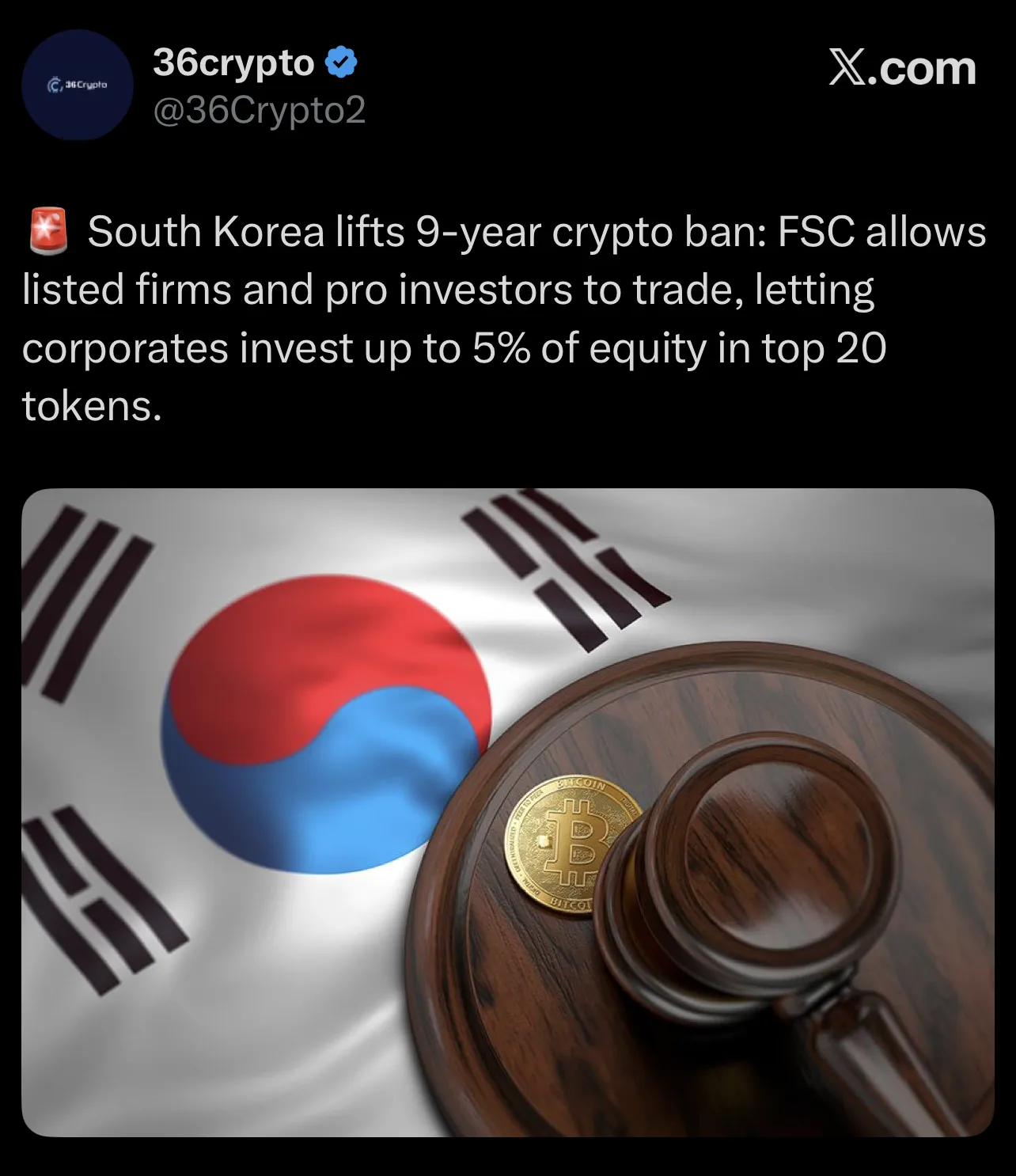
Under the new framework, listed companies and registered professional investors can allocate a limited share of capital to digital assets. Regulators aim to balance innovation with financial stability while expanding institutional participation.
Key Investment Conditions Include:
- Corporate investment capped at 5 percent of annual equity capital.
- Access limited to the top 20 cryptocurrencies by market value.
- Trading allowed only on South Korea’s five regulated exchanges.
- Risk controls such as staggered execution and order size limits.
Eligible Participants Overview:
| Category | Details |
| Eligible entities | Listed companies and professional investors |
| Estimated participants | Around 3,500 organizations |
| Trading start timeline | Later in 2026 |
| Final rules expected | January to February 2026 |
Regulators are still debating whether dollar pegged stablecoins such as USDT will qualify under the approved asset list. This decision could influence liquidity and corporate adoption levels.
The move aligns with South Korea’s 2026 Economic Growth Strategy, which also outlines plans for stablecoin legislation and cryptocurrency exchange traded funds. Policymakers see regulated digital assets as a tool to modernize capital markets while keeping investor protection at the center.
If implemented smoothly, the policy could mark a turning point for institutional crypto participation in Asia’s fourth largest economy.