

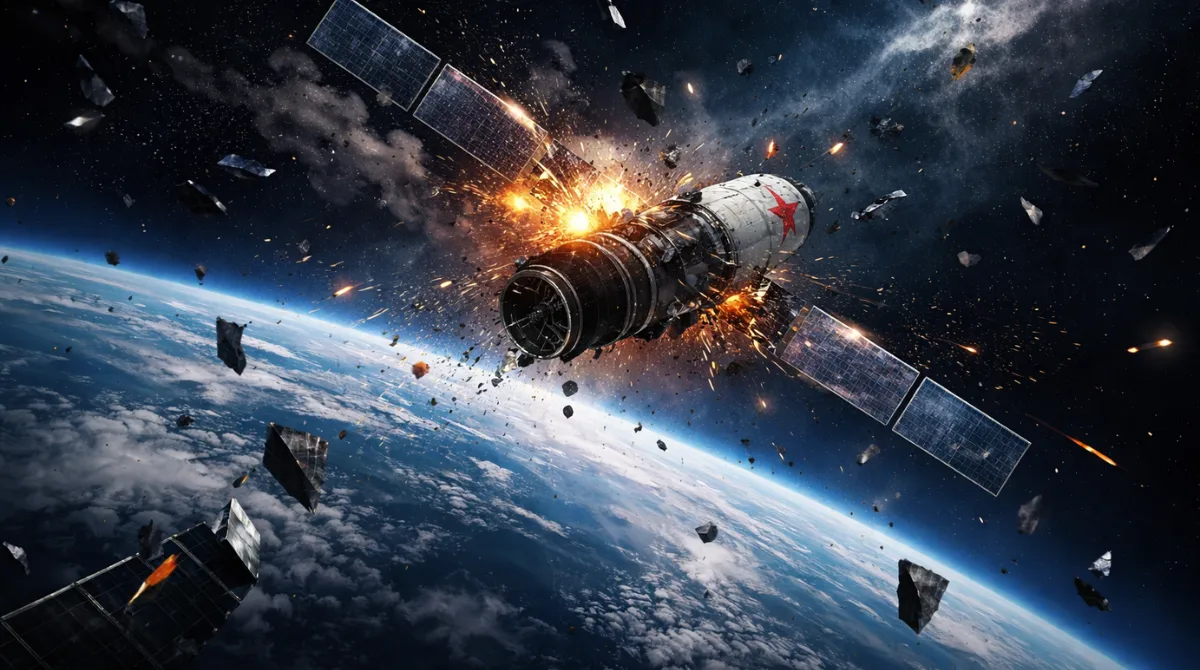
A Russian military satellite identified as Luch/Olymp broke apart in orbit on January 30, 2026, triggering fresh concerns about space debris and orbital safety. Space-tracking analysts detected a sudden fragmentation event, confirming the satellite did not perform a controlled maneuver.
The breakup produced multiple debris fragments, indicating a destructive incident rather than routine activity. Analysts believe the most likely cause was a collision with existing space debris, not a test, launch or intentional operation.
Luch/Olymp had already been retired and moved into a higher, non-operational orbit before the incident. During its active years, it was widely viewed as a signals intelligence and inspection satellite used by Russia’s military.
Why Luch/Olymp Drew Global Attention
While operational, the satellite frequently maneuvered close to foreign spacecraft, drawing scrutiny from U.S. and European observers.
Satellites now act as strategic assets, forcing operators to intervene when systems intersect with global conflicts. As seen when SpaceX blocked Russia’s unauthorized Starlink use, commercial satellite networks increasingly shape national security decisions during active crises. This growing overlap between military, commercial and retired spacecraft operations raises broader risks for orbital safety and geopolitical stability.
Key Concerns Included:
- Close approaches to commercial satellites
- Proximity to military communication systems
- Potential surveillance or interference risks
Growing Space Debris Risks
The fragmentation highlights the escalating danger posed by orbital debris, especially in heavily used regions.
Current Debris Environment Overview
| Category | Estimated Scale |
| Tracked debris objects | Tens of thousands |
| Untracked fragments | Millions |
| Typical collision speed | Several km per second |
Even small debris pieces can cause severe damage at orbital speeds. Each collision creates more fragments, compounding long-term risks for satellites, space missions and essential global communication systems.