


Quantum computing investment is rising again in 2026 because the field has moved from promise-heavy research toward repeatable engineering milestones. Buyers and funders now see clearer paths to performance improvements, practical pilots, and near-term revenue models.

Another shift is confidence in the surrounding ecosystem. Better control electronics, improved cryogenics, stronger software tooling, and more disciplined roadmaps are reducing technical uncertainty and helping budgets unlock.
Why Quantum Computing Investment Is Increasing Again?
Capital is returning because progress is easier to measure than it was a few years ago. Teams are tracking hardware stability, error behavior, and runtime reliability in ways that translate into operational planning.
Investors and procurement leaders also understand that quantum value will not arrive as a single moment. It will show up as a series of incremental wins across chemistry simulation, optimization workflows, and advanced security research.
Several drivers are reinforcing each other at the same time.
- Clearer technical benchmarks: More consistent reporting on error rates, coherence, calibration time, and uptime makes comparisons less speculative.
- Richer development stacks: Better compilers, pulse-level tools, and workflow orchestration reduce time-to-experiment for researchers and engineers.
- Hybrid computing strategies: Pairing classical HPC with quantum accelerators makes near-term use more realistic than waiting for large fault-tolerant systems.
- Supply chain maturity: Improvements in photonics, superconducting components, vacuum systems, and fabrication reduce delivery risk.
These conditions raise the likelihood that funded programs reach measurable outcomes, which is the core requirement for sustained spending.
How Government Funding Is Boosting The Quantum Sector?
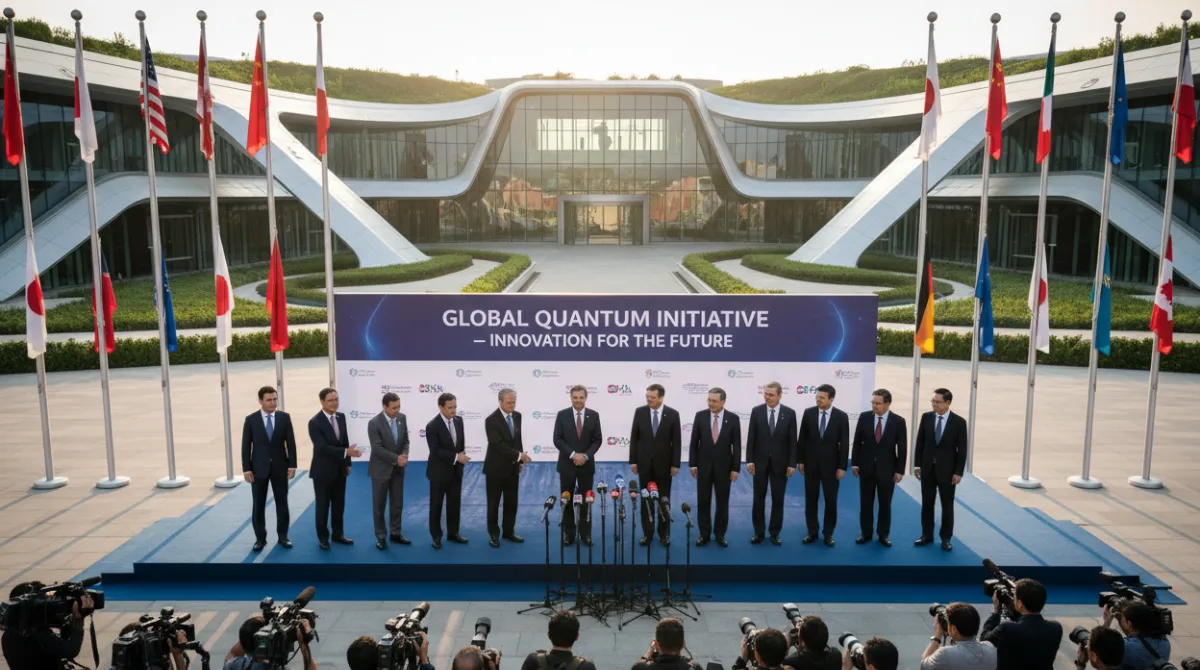
Public funding is acting as a stabilizer for long-cycle innovation. Governments can fund foundational research, standards work, and infrastructure that private markets typically underinvest in due to longer timelines.
National programs are also shaping talent pipelines. Funding for graduate programs, national labs, and research consortia increases the supply of quantum engineers, experimental physicists, and applied mathematicians.
Government spending tends to concentrate on a few recurring priorities.
- National security and cryptography: Support for post-quantum cryptography migration and quantum-resistant security testing.
- Strategic industries: Materials science, energy, and pharmaceuticals where simulation advantages can translate into economic value.
- Infrastructure and testbeds: Shared facilities that enable benchmarking, calibration methods, and interoperability experiments.
- Standards and measurement: Metrology, verification approaches, and reference workloads to compare systems fairly.
This backdrop reduces downside risk for private investors because it keeps research momentum steady through market cycles.
Why Businesses Are Spending More On Quantum Computing?

Enterprise spending is rising because leaders now treat quantum as an R and D capability with a defined scope rather than an open-ended bet. Many organizations have established small internal teams, governance, and evaluation criteria for pilot selection.
Businesses are also reacting to competitive pressure in industries where marginal improvements matter. A small edge in materials discovery, risk modeling, or logistics can justify exploratory budgets when paired with strong measurement discipline.
Common enterprise investment patterns are becoming more consistent.
- Dedicated quantum centers of excellence: Small cross-functional groups that set priorities, manage vendors, and track ROI proxies.
- Workload screening: Filtering use cases by data readiness, constraint structure, and tolerance for approximate solutions.
- Vendor diversification: Testing multiple modalities such as superconducting, trapped ions, photonic, and neutral atoms to reduce lock-in.
- Security preparedness: Funding crypto agility programs to reduce future migration costs if quantum threats accelerate.
As procurement becomes more systematic, quantum line items look less like experimental spend and more like portfolio risk management.
Which Countries Are Investing Most In Quantum Technology?
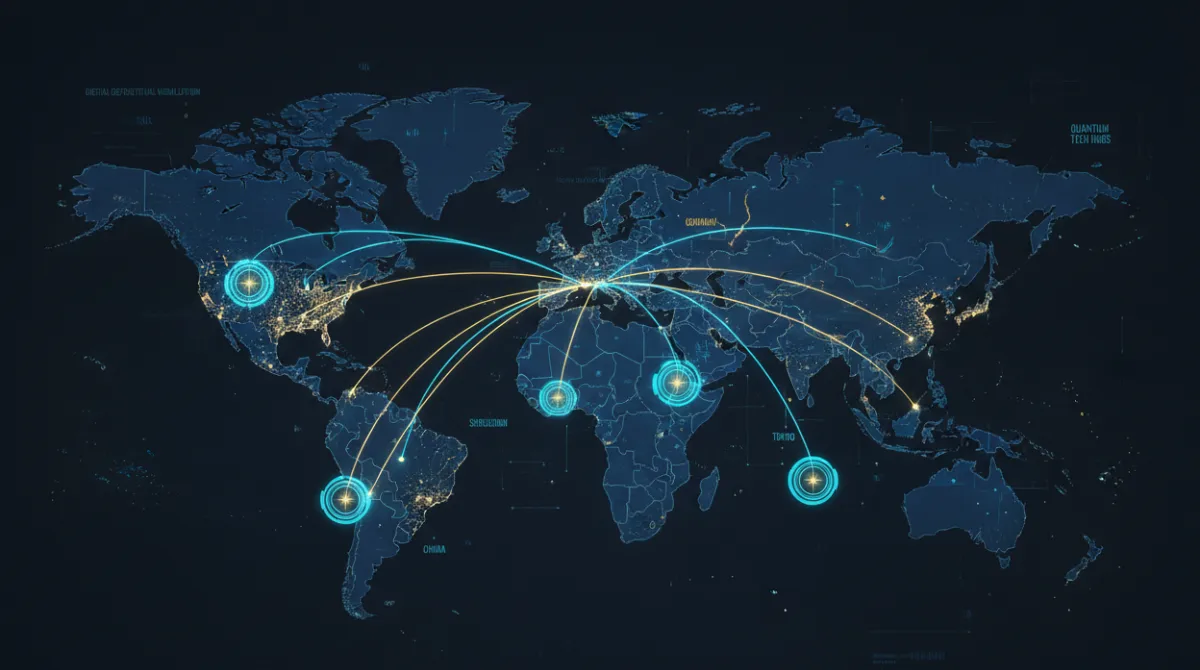
Quantum investment is increasingly shaped by national strategy. Countries are competing for leadership in hardware, software, and talent, with a focus on domestic capabilities and trusted supply chains.
While exact budgets and classifications vary, a consistent pattern has emerged. Large economies tend to combine government grants, defense-related research, and incentives for private partnerships.
| Investment Focus | Typical National Priority | Why It Attracts Funding |
|---|---|---|
| Hardware Platforms | Superconducting, trapped ions, photonic, neutral atoms | Strategic control of core IP and manufacturing capability |
| Quantum Networking | QKD pilots, entanglement distribution, repeater research | Secure communications research and long-term infrastructure value |
| Workforce Development | Scholarships, lab training, industry fellowships | Talent scarcity is a bottleneck that slows commercialization |
| Standards And Benchmarking | Measurement methods, interoperability, verification | Improves trust, comparison, and procurement decisions |
This mix of priorities helps explain why funding is rising again. It aligns national security goals with industrial growth and scientific leadership.
What Rising Quantum Spending Means For Startups And Researchers?

Higher spending creates more room for specialized companies rather than only full-stack platform providers. Startups can focus on enabling layers such as error mitigation software, cryogenic components, control systems, or verification tools.
Researchers benefit when grants and partnerships support longer experimental runs, larger datasets, and shared facilities. That support can translate into stronger publications, more reproducible results, and faster iteration cycles.
The opportunity also comes with new expectations.
- Proof of engineering discipline: Roadmaps need measurable milestones like calibration time reductions, better stability, or improved yields.
- Security and compliance readiness: Organizations expect clear data handling, access controls, and auditability for cloud-based research.
- Interoperability: Tooling that works across hardware types and integrates with existing HPC workflows earns faster adoption.
- Talent strategy: Hiring plans must account for scarce roles like cryo engineers, microwave experts, and quantum error correction specialists.
Capital is more available, but it is also more demanding. Teams that can show repeatable execution tend to win multi-year support.
How Quantum Computing Commercialization Is Starting To Accelerate?
Commercialization is picking up because early buyer journeys are becoming clearer. Organizations now understand how to run a pilot, measure results, and decide whether to expand or pause a program.
Hardware providers are also improving service reliability. Better uptime, more predictable queue behavior, and clearer documentation make it easier to treat quantum compute as an operational resource.
Several commercialization signals are especially important.
- More credible benchmarks: Better workload suites and transparent reporting reduce marketing noise and build trust.
- Hybrid workflow adoption: Quantum subroutines are being tested inside classical pipelines, which makes integration less disruptive.
- Verticalized software: Domain-specific tooling for chemistry, finance, and optimization reduces the need for specialized quantum developers.
- Growing services layer: Consulting, integration, and managed experimentation services lower barriers for enterprise teams.
Acceleration does not mean the hardest problems are solved. It means the path from experiment to decision is shorter and more repeatable.
What To Expect Next From The Quantum Computing Market?
The next phase is likely to reward realism over hype. Buyers will look for systems that improve stability, reduce operational overhead, and support workflows that can be validated against classical baselines.
More attention will also shift to risk management. Crypto agility, data governance, export controls, and supply chain resilience will influence procurement and partnership decisions.
Teams evaluating quantum programs can prepare by focusing on practical checkpoints.
- Define measurable pilot goals. Track outcomes such as runtime, solution quality, and reproducibility against clear baselines.
- Build a hybrid-ready architecture. Ensure data movement, orchestration, and monitoring work across HPC, cloud, and quantum services.
- Prioritize security planning. Advance crypto migration readiness and protect sensitive research data with strong access controls.
- Invest in skills and partners. Combine internal capability building with trusted vendors for tooling, validation, and integration.
These actions help convert rising budgets into durable capability rather than one-off experiments.
Conclusion
Quantum computing investment is rising again in 2026 because technical progress, public funding, and enterprise discipline are reinforcing each other. The market is shifting from broad speculation to narrower, testable plans that investors and buyers can evaluate.
Organizations that treat quantum as a measured portfolio of pilots, talent development, and security readiness will be best positioned for the next wave of commercialization. Momentum is returning, but execution quality will decide who benefits most.