

Physical AI is the branch of artificial intelligence that lets machines perceive the real world, decide what to do and then move through it safely. It connects software intelligence to physical actions using sensors, actuators and control systems.
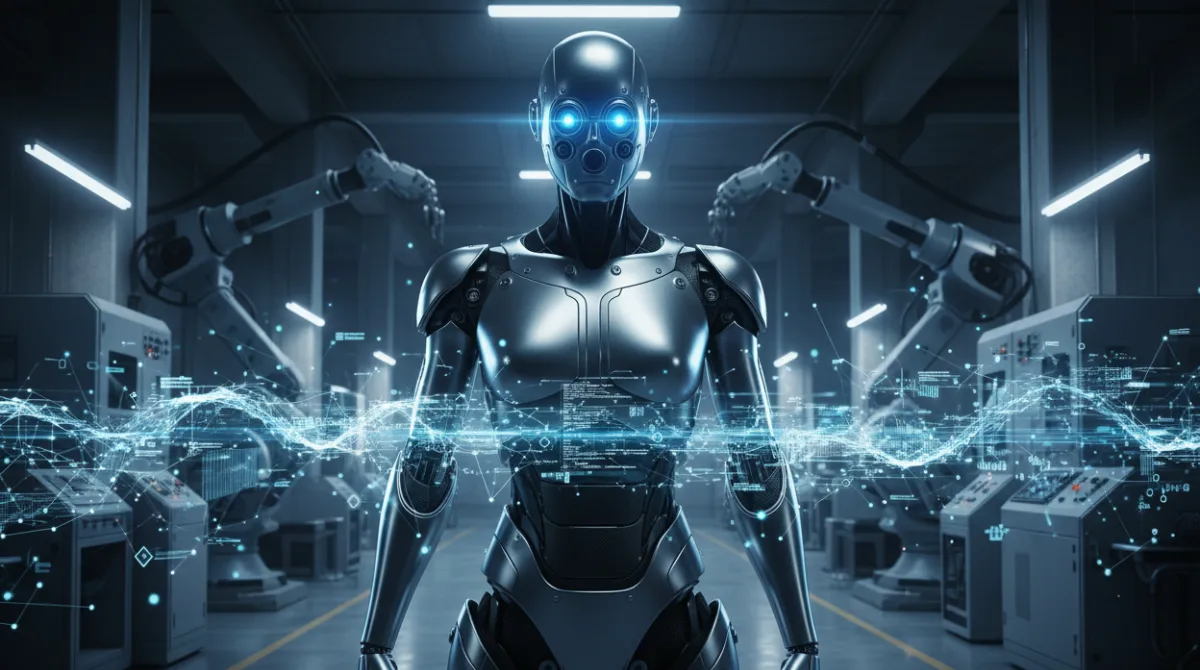
Unlike AI that only predicts or generates information, physical AI must deal with friction, uncertainty and real-time constraints. It is built for environments where mistakes can damage equipment, interrupt operations, or harm people.
What Is Physical AI
Physical AI is AI designed to act in the physical world through a body such as a robot, a drone, a vehicle, or a smart device with moving parts. It combines perception, reasoning and motion so a machine can sense what is happening and respond with precise actions.
It also includes systems that do not look like traditional robots, such as automated lab instruments, smart prosthetics and adaptive manufacturing tools. The defining feature is closed-loop interaction with the world rather than static analysis of data.
How Physical AI Works In Robots And Smart Machines
Physical AI follows a loop of sensing, understanding, deciding, acting and learning from feedback. Each cycle happens under strict timing, often measured in milliseconds, to keep motion stable and safe.
Robots rely on multiple layers of decision-making, from low-level motor control to higher-level task planning. When a machine picks up an object, it must estimate pose, plan a path, control force and adjust grip as conditions change.
Perception And State Estimation
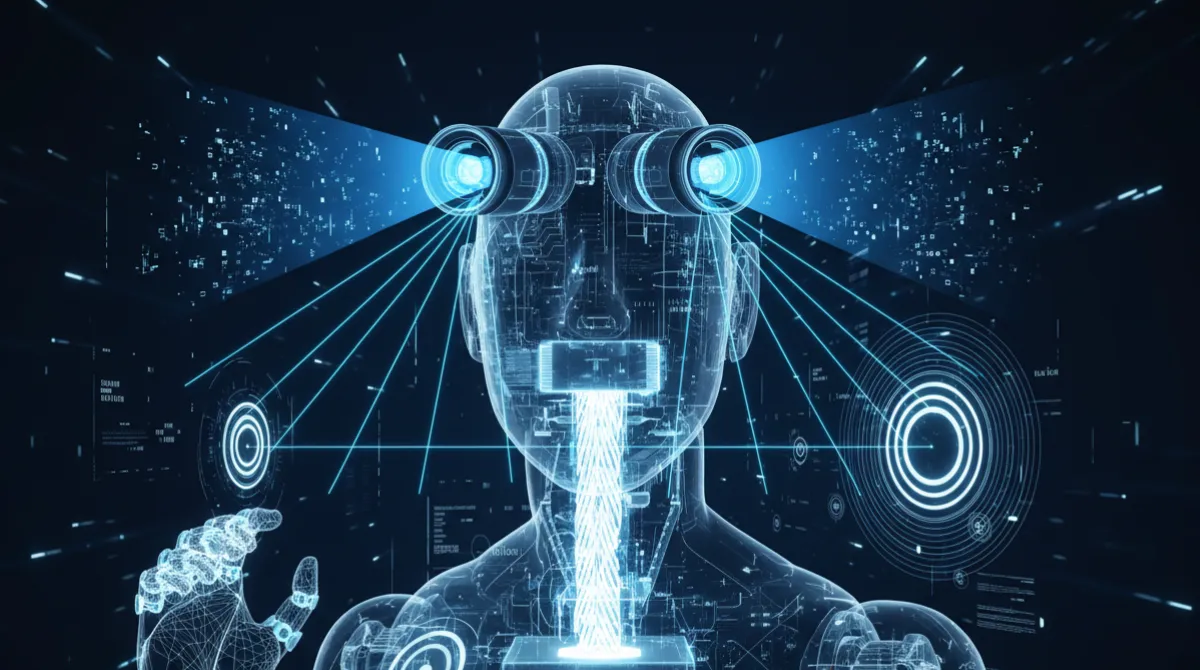
Perception turns raw sensor signals into useful information such as object position, surface shape and human proximity. State estimation merges signals over time to track motion, orientation and uncertainty.
This layer often uses sensor fusion across cameras, lidar, radar, tactile arrays, encoders and inertial measurement units. Reliable estimation reduces jitter, improves accuracy and prevents unstable control.
Decision Making And Planning
Planning selects actions that meet a goal while respecting constraints like joint limits, collision boundaries and energy use. Decision making includes choosing what to do next when priorities conflict, such as speed versus safety.
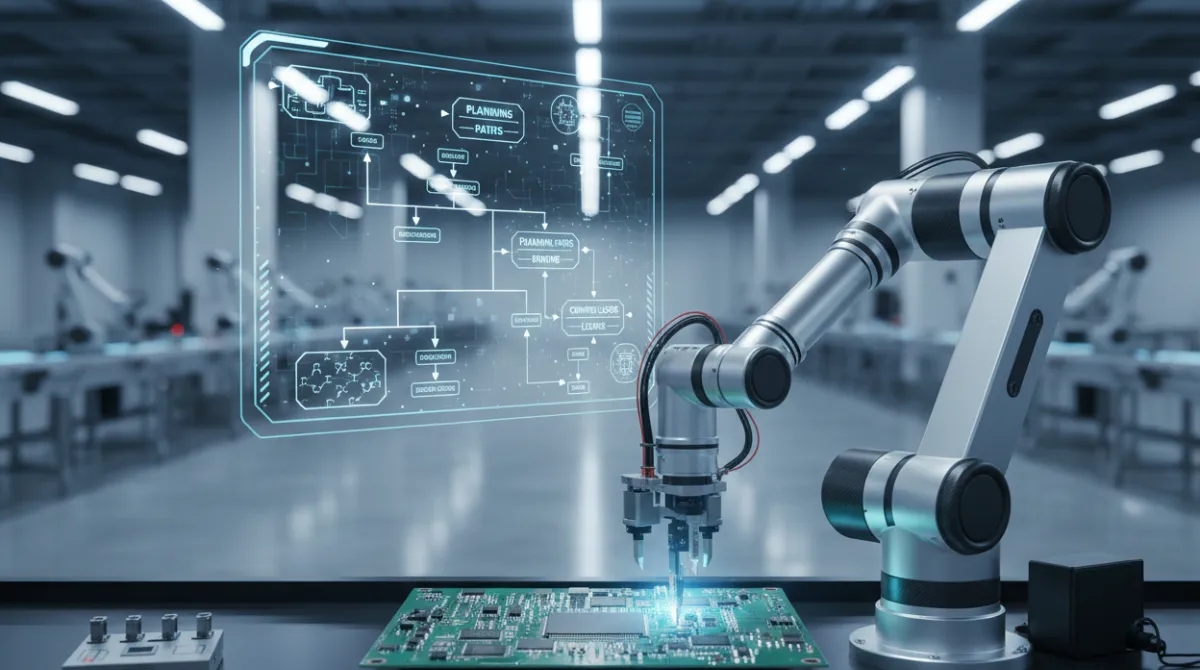
Some systems plan long horizons using maps and models, while others react quickly using policies learned from data. Most practical deployments blend both so the robot stays robust when conditions drift.
Control And Actuation
Control converts a plan into motor commands that drive wheels, arms, grippers, or rotors. It uses continuous feedback to correct small errors before they become large deviations.
Actuation includes electric motors, hydraulics, pneumatics and compliant mechanisms. Force control and impedance control are common when interacting with humans or delicate materials.
Key Technologies Behind Physical AI
Physical AI is a system-level discipline that mixes AI models with robotics engineering. It uses algorithms, embedded compute and mechanical design that are tightly integrated.
- Machine learning for perception: Deep learning models recognize objects, estimate poses, segment scenes and detect anomalies under changing lighting.
- Reinforcement learning for skills: Policies learn control strategies for grasping, walking, balancing and manipulation under uncertainty.
- Classical robotics algorithms: Kinematics, dynamics, trajectory optimization and motion planning handle constraints and safety margins.
- Sensor fusion and SLAM: Localization and mapping keep track of where the machine is while building a usable representation of the environment.
- Real-time systems: Deterministic scheduling and edge inference reduce latency and keep control loops stable.
- Safety and verification: Redundant sensing, watchdogs and formal checks reduce the chance of unsafe motion.
These components work best when data, simulation and hardware testing are aligned. That alignment is what turns a promising model into dependable behavior on the floor.
Physical AI Vs Traditional AI
Traditional AI often focuses on information tasks such as classification, prediction, ranking, or text generation. It can tolerate delays and occasional errors because outcomes are usually reversible.
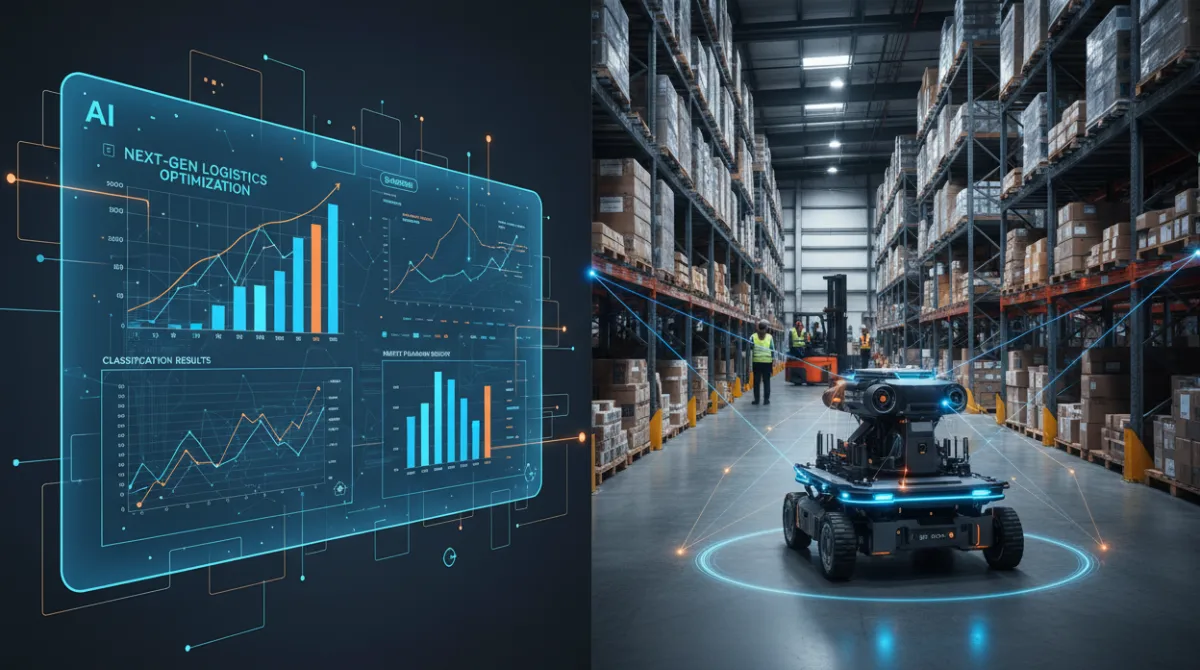
Physical AI must handle physics, timing and risk. It needs to stay stable across edge cases and sensor noise while meeting safety requirements and operating costs.
| Dimension | Physical AI | Traditional AI |
|---|---|---|
| Primary Output | Actions and motion in the real world | Predictions, classifications, or generated content |
| Key Constraints | Latency, safety, dynamics, hardware limits | Data quality, accuracy, compute budget |
| Feedback Loop | Continuous closed-loop sensing and control | Often open-loop or batch evaluation |
| Failure Cost | Physical damage, downtime, safety risk | Wrong answers, reduced performance |
This difference changes how systems are designed, tested and monitored. It also shapes what counts as success, since consistent behavior matters as much as average accuracy.
Real World Uses Of Physical AI
Physical AI is used anywhere machines must perceive and act under changing conditions. Deployments typically start with structured environments and then expand as reliability improves.
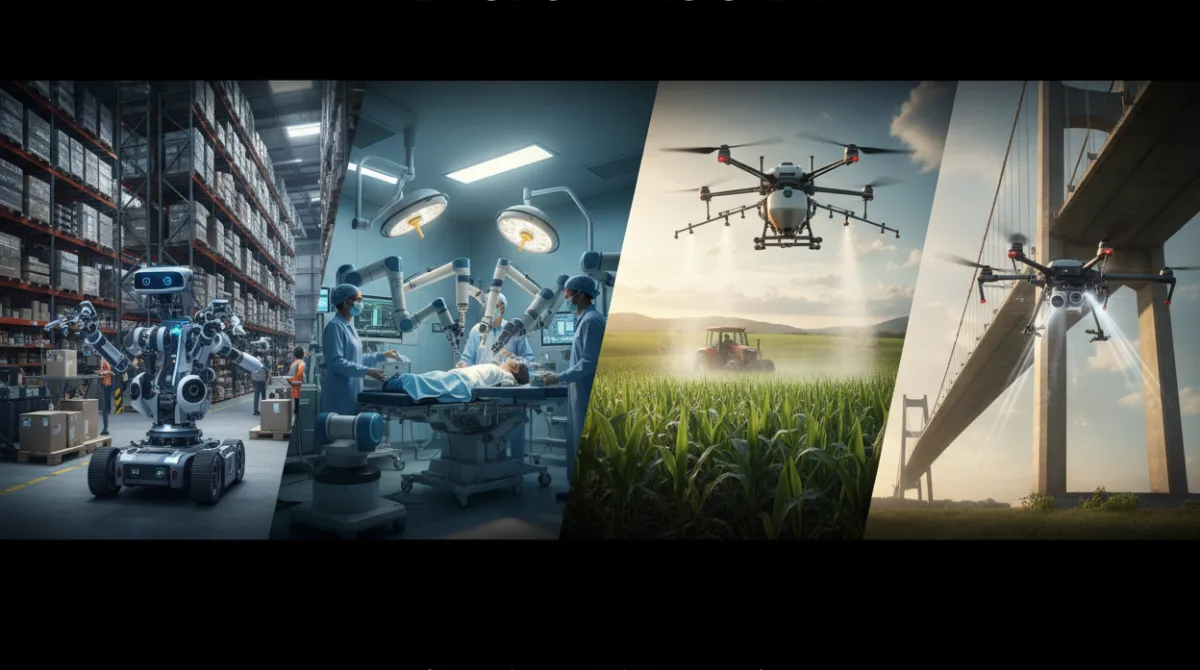
- Warehouse automation: Mobile robots navigate aisles, avoid people and coordinate routing to reduce travel time and congestion.
- Manufacturing and assembly: Vision-guided arms handle variable parts, adjust insertion forces and maintain quality without rigid fixtures.
- Healthcare robotics: Assistive devices support lifting, rehabilitation and precise instrument positioning with controlled force and safety constraints.
- Agriculture and field robotics: Machines detect crops, estimate ripeness and perform selective operations while handling dust, vibration and weather.
- Inspection and maintenance: Drones and crawlers detect defects, measure corrosion and map assets in hard-to-reach or hazardous areas.
Across these uses, the common thread is reliable perception plus safe control. The business value comes from consistent throughput, fewer incidents and predictable performance.
Benefits Of Physical AI
Physical AI can improve productivity while reducing exposure to dangerous tasks. It also helps operations stay resilient when labor is scarce or conditions are difficult.
- Higher consistency: Robots repeat actions with stable precision across long shifts, which supports uniform quality.
- Improved safety: Automation reduces human exposure to heavy lifting, toxic environments and high-risk inspection areas.
- Better adaptability: Learning-based perception and control handle variation in lighting, part placement and surface properties.
- Operational visibility: Sensors and logs create traceability for motion, force and outcomes, which improves troubleshooting.
- Scalable performance: Once validated, skills can be replicated across fleets with consistent configuration management.
These benefits depend on strong integration between mechanical design, data collection and software updates. When any one part lags, the system can become brittle.
Challenges Of Physical AI
Physical AI is hard because real environments are messy and physics is unforgiving. Small perception errors can cause large motion errors, especially at speed or under load.
Data is also costly. Training a robust policy may require diverse sensor captures, careful labeling and long cycles of testing that respect safety limits.
- Sim-to-real gaps: Models trained in simulation can fail on real friction, lighting artifacts and sensor drift.
- Edge cases: Rare situations like reflective surfaces, loose materials, or unexpected human behavior can break assumptions.
- Latency and compute limits: High accuracy models can be too slow for real-time control without optimized inference.
- Safety certification: Proving bounded behavior and safe operation requires rigorous testing and documented processes.
- Maintenance and lifecycle: Wear, calibration drift and component replacements can degrade performance if not monitored.
Addressing these challenges usually involves redundancy, conservative control layers and continuous monitoring. Mature programs treat deployment as an ongoing engineering practice rather than a one-time install.
The Future Of Physical AI
The future of physical AI points toward more general skills, faster adaptation and better safety tooling. Foundation models for robotics, multimodal perception and policy learning are pushing systems to handle broader tasks with less manual programming.
Edge hardware is also improving, which makes it easier to run perception and planning on-device with lower latency. Better simulation, digital twins and automated test pipelines will reduce development time while improving reliability.
Another major direction is human-robot collaboration. Expect more compliant actuators, richer intent sensing and shared autonomy where machines handle precision and humans guide goals.
Conclusion
Physical AI brings intelligence into the physical world by tightly combining sensing, planning and control. It differs from traditional AI because it must operate safely under real-time constraints and unpredictable conditions.
When designed well, physical AI improves consistency, safety and scalability across warehouses, factories, healthcare, agriculture and inspection work. Progress will continue as models, sensors and verification methods become more reliable and easier to deploy.