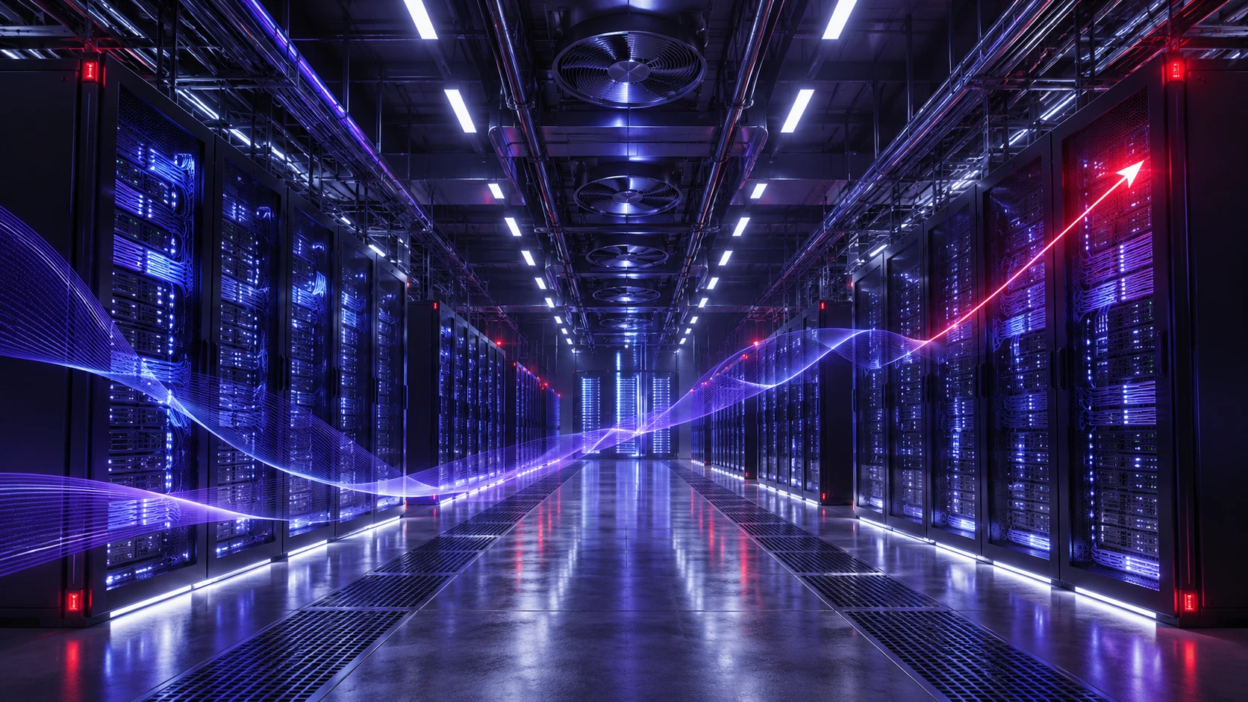
AI data center spending is reaching new levels in 2026 as major technology companies invest billions of dollars in powerful computing systems, artificial intelligence chips, and cloud infrastructure. Amazon, Alphabet, Microsoft, and Meta have outlined company-wide capital spending plans totaling approximately $720 billion to $740 billion for 2026. AI infrastructure is a major driver of these investments, although the total also includes spending beyond AI data centers.
Financial results and earnings discussions released during the final week of October 2026 brought renewed attention to the growing cost of AI infrastructure. Amazon, Alphabet, Microsoft, and Meta outlined major capital investment plans as they expand computing capacity. Their investments include new data centers, upgraded servers, networking equipment, and other infrastructure needed to support AI services and cloud customers.
These investments come as demand for AI computing power continues to rise worldwide. Businesses are using artificial intelligence for customer support, data analysis, software development, and everyday operations. Data centers must support both AI training, which helps develop models, and inference, which runs those models for users. These workloads have different requirements for processing power, networking, and cooling, as explained in TechBonafide’s guide to training vs inference AI data centers.
Amazon is among the biggest investors in this expansion. According to Amazon’s third-quarter 2026 financial results, the company expects approximately $220 billion in cash capital expenditures for the year. Artificial intelligence infrastructure is a major reason for the increase. Amazon Web Services (AWS) reported $46 billion in third-quarter revenue, representing growth of approximately 39% compared with the same period in 2025.
Google’s parent company, Alphabet, expects capital spending between $195 billion and $205 billion in 2026. During its third-quarter 2026 earnings call, Alphabet reported approximately $51.4 billion in quarterly capital expenditures, with most of that amount directed toward technical infrastructure supporting AI development. The investments include servers, networking equipment, and data center facilities needed to expand Google Cloud and support the company’s AI products.
Microsoft is also expanding its AI infrastructure. During its fiscal 2027 first-quarter earnings call, the company projected approximately $170 billion in capital expenditures for calendar year 2026. The estimate reflects delays in some computing capacity deliveries from third-party providers. Microsoft continues investing in processors, servers, and cloud infrastructure to support Azure and growing customer demand for AI applications.
Meta, the company behind Facebook, Instagram, and WhatsApp, expects capital expenditures between $135 billion and $145 billion in 2026, including principal payments on finance leases. The company confirmed this range in its third-quarter 2026 financial results. Meta is expanding its AI infrastructure to support advertising technology, recommendation systems, and future AI services, while preparing for substantial infrastructure investment beyond 2026.
Adding the four companies’ spending estimates produces a combined range of approximately $720 billion to $740 billion for 2026. However, this figure is an approximate comparison of company-wide capital investment plans, not a confirmed total for AI data centers alone. The companies also use somewhat different reporting methods, including different treatment of cash expenditures and finance leases. Their actual spending may differ from these estimates.
The rapid expansion is creating opportunities for companies that manufacture AI chips, memory components, networking equipment, and cooling systems. High-speed connections are becoming especially important because modern AI data centers must move enormous amounts of information between processors and servers. This growing demand is also influencing the semiconductor industry, as highlighted by Marvell’s planned acquisition of Lumentum, which focuses on technologies used in advanced AI connectivity. Data center construction companies and electricity suppliers could also benefit from continued infrastructure expansion.
However, the rising cost of AI infrastructure is creating concerns among investors. Building and operating modern data centers requires expensive processors, large amounts of electricity, advanced cooling systems, and high-speed network connections. Cooling is becoming particularly important as powerful AI processors generate substantial heat, creating demand for specialized equipment. TechBonafide previously reported on Google’s search for AI data center cooling equipment, highlighting how infrastructure expansion depends on more than chips alone. These expenses can put pressure on company profits and cash flow.
Investors are now watching whether the money being spent on artificial intelligence will generate enough revenue to justify the investment. Amazon, for example, reported a $42.4 billion free cash flow outflow over the 12 months ending September 2026, largely reflecting increased investment in property and equipment connected to AI expansion. Although demand for AI services continues to grow, companies may need several years to recover their infrastructure costs. Stronger AI revenue, improved efficiency, and reliable customer demand will be important in determining whether these investments deliver long-term returns.
Electricity availability is another major challenge. AI data centers need substantial power to operate large numbers of processors, networking systems, and cooling equipment. The International Energy Agency has examined these challenges in its report on integrating data centers into electricity systems. Power limitations can also delay infrastructure projects, a problem explored in TechBonafide’s report on the AI data center power crunch. As more facilities are developed, technology companies must secure dependable electricity supplies while managing costs and environmental concerns.
Looking ahead, AI data center spending is expected to remain a major technology industry trend in 2027. The next stage of expansion will depend on demand for AI services, the availability of computing chips, electricity supplies, and the ability of companies to turn their infrastructure investments into sustainable profits.
For now, the spending plans show that artificial intelligence is no longer focused only on developing smarter software. It is also driving one of the largest infrastructure investment cycles in the technology industry.