

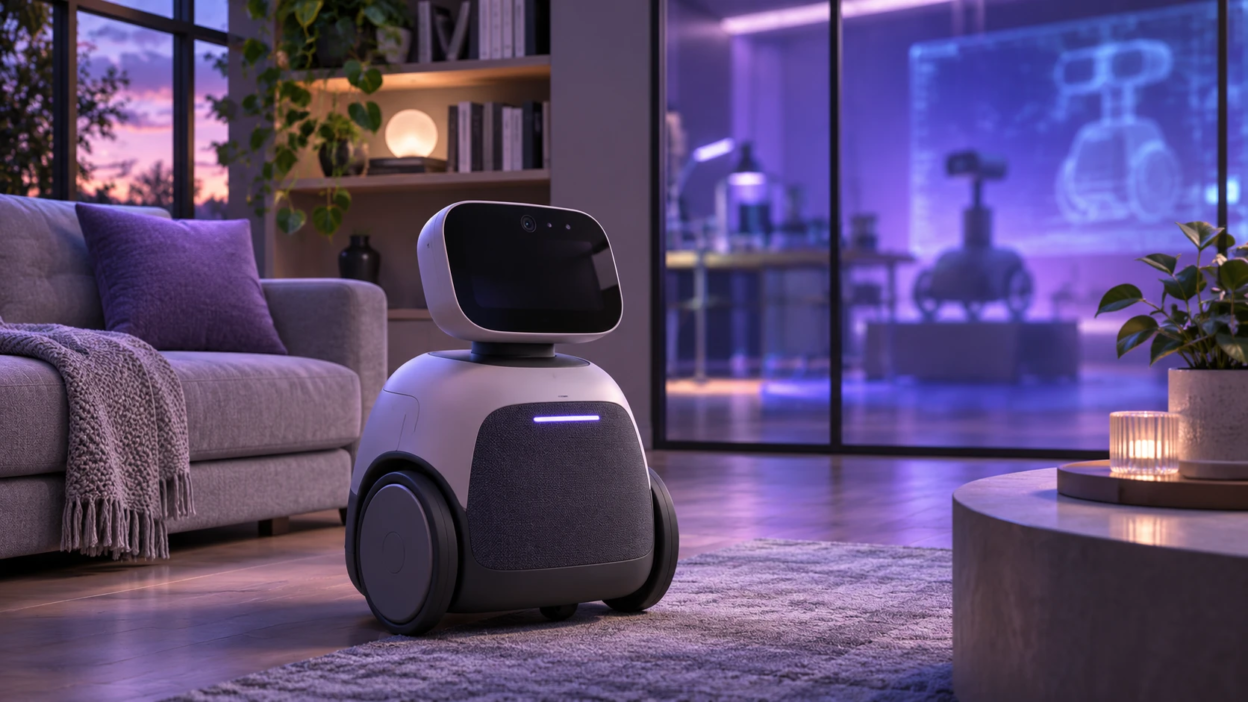
Amazon is reportedly working on a new home robot as the company continues its efforts to bring intelligent machines into everyday households. According to a CNBC investigation published on November 8, 2026, job listings suggest that Amazon has assembled a team to develop another household robotics product following its earlier Astro robot. However, the company has not officially introduced a new consumer device.
The strongest publicly available evidence comes from Amazon’s recruitment listing for Fauna Robotics. The listing describes research involving artificial intelligence, robot navigation, object handling, and operation in changing home environments. It confirms that Amazon is actively pursuing technologies for robots designed to interact with people in everyday spaces. However, it does not identify a finished product or establish when one might become available.
Amazon’s robotics plans gained another important piece in March 2026, when the company acquired Fauna Robotics, a New York-based developer of humanoid robots. In its official acquisition announcement, Fauna confirmed that it had joined Amazon and would continue developing its robotics technology. The company also said it would keep selling and supporting its existing Sprout Creator Edition robot.
Sprout is a small humanoid robot designed primarily for developers, researchers, and organizations exploring ways robots can operate around people. Its design focuses on movement, interaction, and working in shared environments. Although Amazon now owns Fauna, there is no confirmation that the rumored household robot will use Sprout’s design or become a commercial version of that machine.
Amazon already has experience with consumer robotics through Astro, which it introduced in September 2021. The wheeled robot was designed to move around homes, monitor rooms, support video communication, and work with Alexa. According to Amazon’s original Astro announcement, its regular launch price was $1,449.99, with an introductory price of $999.99 for selected customers. Those prices applied to Astro, not the reported new robot.
The difference between Astro and a possible future household robot could be significant. Astro was mainly designed for monitoring, communication, and moving between rooms. A more capable home robot might eventually interact with objects or assist with physical tasks. However, those possibilities are not confirmed features of Amazon’s reported project. Its exact design and intended functions remain unknown.
Building robots for homes presents challenges that are different from those found in warehouses. A household robot must deal with furniture, pets, children, changing room layouts, and unexpected obstacles. It must also move safely around people. Amazon’s recruitment materials identify several of these practical problems, including the difficulty of making robotic systems work reliably outside controlled environments.
Privacy will also be important if Amazon eventually introduces another home robot. Devices operating inside homes may need cameras, microphones, sensors, and information about their surroundings. Consumers will want clear answers about what information is collected, where it is processed, and how it can be controlled. Amazon has not announced privacy specifications for the reported new product, so Astro’s existing safeguards should not be assumed to apply to it.
Amazon’s reported plans reflect growing interest in physical AI, where artificial intelligence helps machines understand and interact with the real world. TechBonafide previously explored this trend in its coverage of humanoid robots and physical AI at CES 2026. The wider industry is working to move beyond robots that demonstrate limited abilities toward machines that can perform useful tasks reliably.
For now, Amazon has not announced the name, appearance, specifications, price, release date, or availability of a new home robot. Its continued robotics recruitment and acquisition of Fauna provide evidence of ongoing development, but they do not confirm that a new consumer product is ready to launch. The most important question is whether Amazon can turn its latest robotics research into something that households find practical, safe, and worth buying.


