

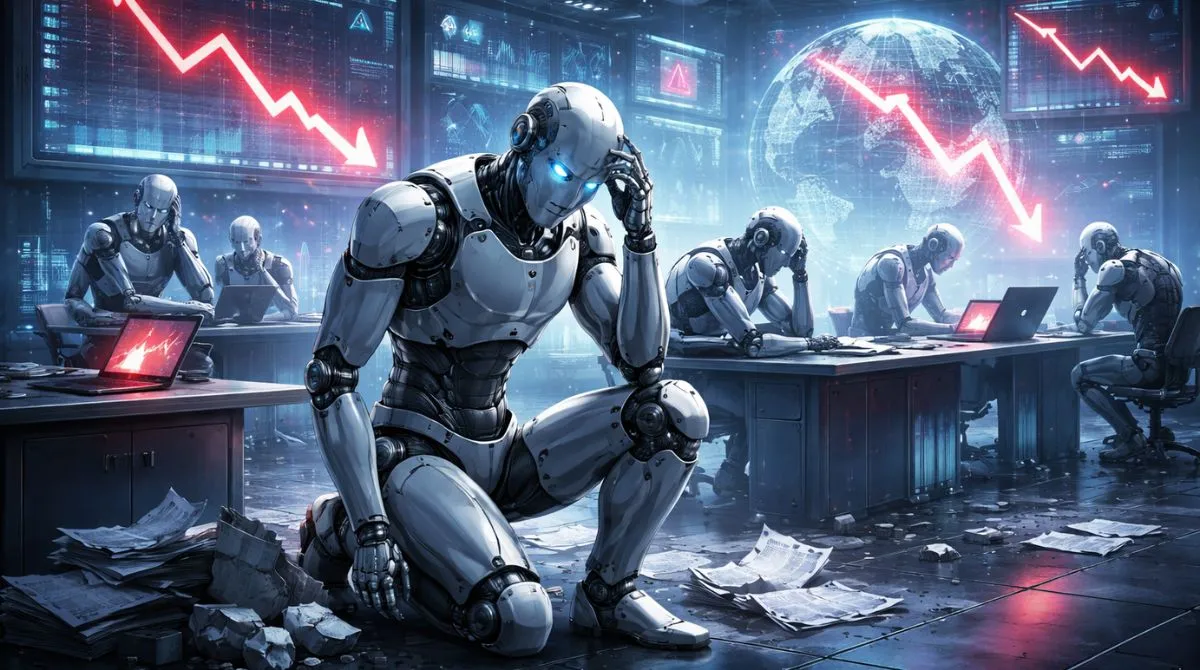
Predictions that artificial intelligence agents would transform work in 2025 have largely failed to materialize, as real-world adoption and performance lag far behind expectations set by technology leaders and executives, according to industry reports and expert commentary.
At the start of the year, prominent figures such as Sam Altman and Kevin Weil said AI agents would soon handle everyday digital tasks, from filling out forms to making reservations. Meanwhile, Marc Benioff forecast a trillion-dollar “digital labor” market driven by autonomous software workers. Those projections, however, have not matched reality.
By late 2025, only 11% of organizations were using AI agents in live production environments, according to Deloitte. The same report found that 42% of companies lacked a clear roadmap for agent adoption, while 35% had no formal strategy at all. Critics were blunt. AI researcher Andrej Karpathy described current agents as cognitively limited, suggesting they may need another decade to mature.
Performance issues have reinforced skepticism. In demonstrations, OpenAI’s ChatGPT Agent reportedly took several minutes to complete simple actions, such as selecting items from dropdown menus. Cognitive scientist Gary Marcus labeled the technology a “dud,” citing frequent errors in multi-step tasks.
Moreover, barriers to adoption remain significant. Deloitte pointed to legacy systems, weak data foundations, and governance gaps, noting that 48% of respondents cited poor data searchability. While coding-focused agents have shown limited success, general-purpose agents continue to struggle with everyday interfaces.
Looking ahead, analysts say meaningful progress will likely depend on improved data systems, clearer governance, and more realistic expectations about what AI agents can deliver in the near term.