

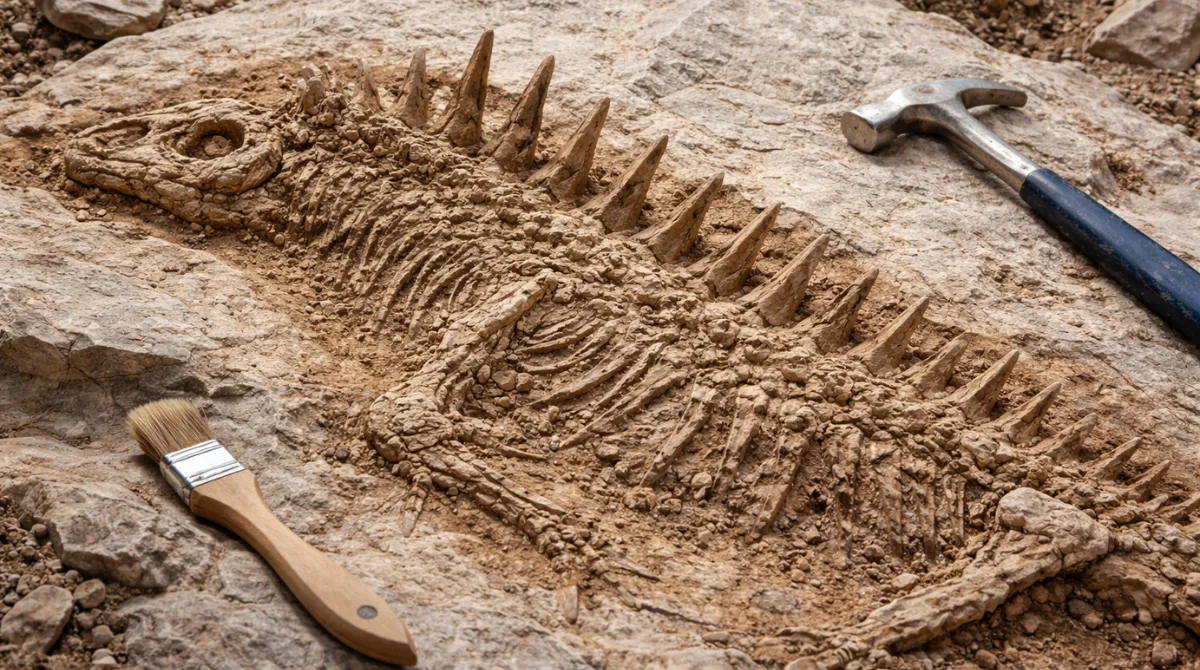
Researchers in China have identified a previously unknown iguanodontian dinosaur species after examining a juvenile fossil with preserved skin and an intact skeleton. Using X-ray scanning and high-resolution histological analysis, scientists reported skin cells preserved for roughly 125 million years, allowing cellular-level study.
That preservation revealed unusual hollow spikes embedded in the skin and spread across much of the dinosaur’s body. Researchers described the spikes as cutaneous and hollow structures, a feature not previously observed in dinosaurs. The team named the species Haolong dongi in honor of Chinese paleontologist Dong Zhiming.
The dinosaur was identified as a herbivore that lived alongside small carnivorous dinosaurs in the same Early Cretaceous ecosystems. Scientists suggested the hollow spikes may have helped deter predators, similar to porcupine quills and may also have supported thermoregulation or sensory functions. Because the specimen is juvenile, researchers said it is not yet clear whether adult individuals retained the same structures.