


Google has introduced a new personalization feature called Personal Intelligence for its Gemini app, aiming to make AI responses more relevant without compromising user control. The tool tailors answers using information from a user’s own Google services, but only after the user grants permission.
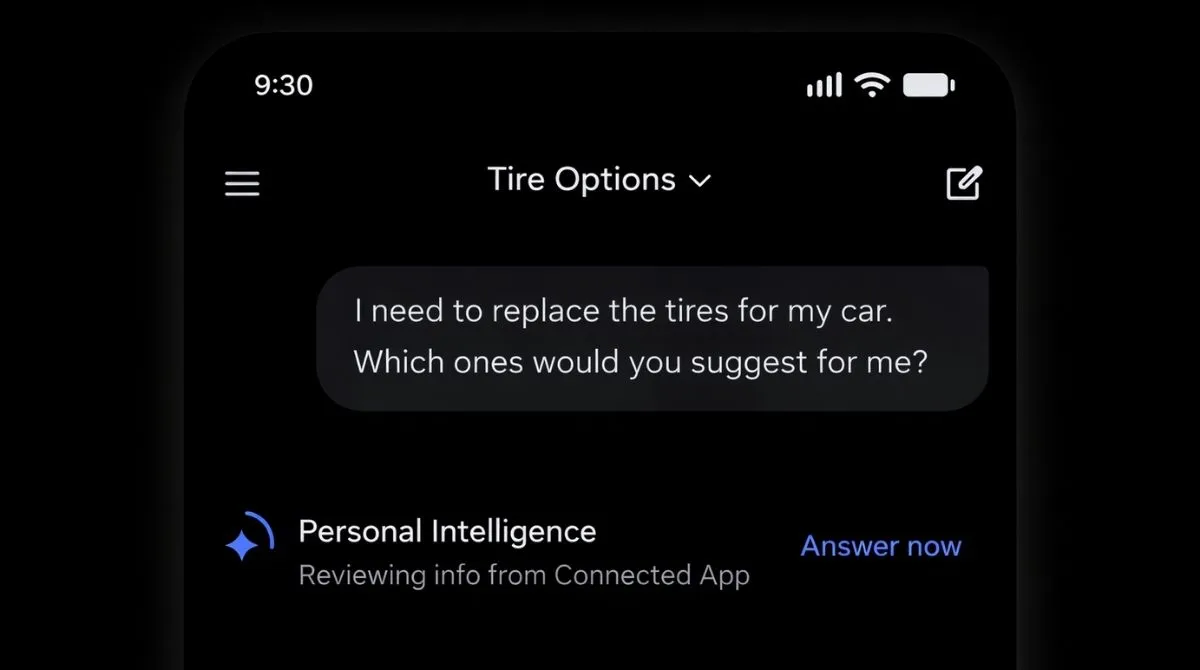
Personal Intelligence lets users connect Gemini with specific apps such as Gmail, Google Photos, YouTube and Google Search. The feature stays off by default, and users must manually opt in and select which services they want to link.
Once enabled, Gemini can use contextual signals from connected apps to provide more accurate assistance. For example, it may reference an email, a photo memory or previous search activity to respond with greater awareness of personal context.
Key controls and safeguards include:
- Manual opt-in with app-by-app selection
- Ability to disconnect integrations at any time
- Clear settings to manage data access
- Assurance that personal data is not automatically used to broadly train the model
Google designed the system with built-in privacy protections and emphasizes transparency and user choice. Personal Intelligence is currently rolling out in beta in the United States.
Availability overview:
| Aspect | Details |
| Launch status | Beta rollout |
| Initial region | United States |
| Access | Google AI Pro and Google AI Ultra subscribers |
| Default setting | Disabled |
| Expansion plans | More regions and users planned |
This move highlights Google’s broader effort to position Google Gemini as a privacy-first personalization layer across consumer AI. The same approach is extending beyond Google’s ecosystem, with Apple confirming plans to integrate Google Gemini into Siri, reinforcing industry confidence in controlled, context-aware AI.
Google has not shared a specific timeline for wider availability but has confirmed that it plans to expand access over time.