
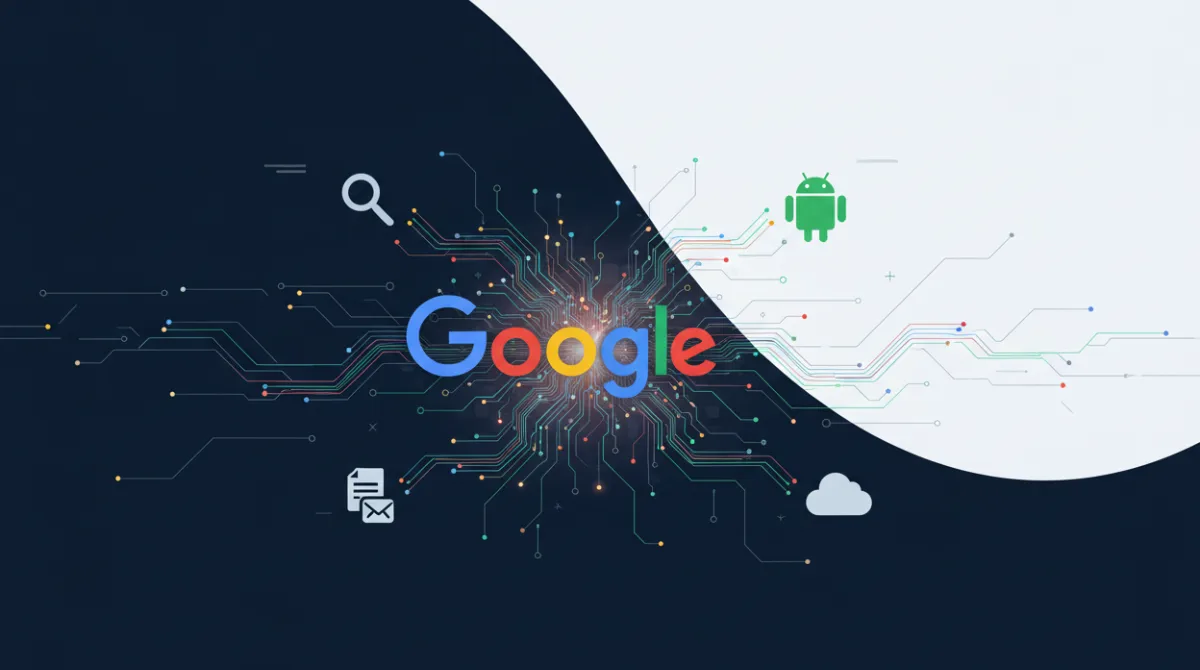
Google is using 2026 as a visible reset point, tying its identity to AI with clearer product choices, tighter messaging, and stronger accountability. The goal is not only to ship models, but to make AI feel native across Search, Android, Workspace, and Cloud.
This rebuild also signals a shift in how Google wants to be judged. Performance matters, but so do safety, provenance, and whether AI improves everyday tasks without eroding user trust.
Why AI Has Become Central To Google’s Brand Strategy
Google’s brand was built on organizing information and making it universally useful. AI now sits at the center of that promise because users expect answers, summaries, and actions rather than a list of links.
Brand strategy follows attention, and attention has moved toward assistants that can reason, write, and plan. Google is positioning AI as the connective tissue that turns its ecosystem into a single, adaptive experience.
That shift also helps unify messaging across consumer and enterprise markets. It lets Google communicate one story that spans personal productivity, developer tools, and large scale infrastructure.
How Google Is Integrating AI Across Its Core Products
Integration matters more than novelty. Google is embedding AI into workflows people already use, then smoothing the handoffs between devices, apps, and contexts.
In Android and Pixel experiences, AI features focus on communication, accessibility, and faster task completion. In Workspace, AI supports drafting, summarizing, and turning documents into structured outputs that teams can reuse.
In Maps and YouTube, AI enhances discovery and relevance while trying to keep the experience predictable. These product lines become brand proof points because they touch daily habits at global scale.
- Personalization With Guardrails User level relevance aims to stay transparent and controllable.
- On Device And Cloud Balance Latency and privacy tradeoffs guide where inference runs.
- Unified Assistive Layer Similar behaviors across apps reduce cognitive load and strengthen brand cohesion.
When these pieces feel consistent, the AI message becomes believable rather than promotional.
The Role Of Gemini In Google’s AI Rebranding

Gemini functions as the flagship identity that replaces fragmented model naming and makes the story easier to follow. Instead of promoting isolated features, Google can map improvements back to one recognizable AI family.
That matters for trust. Users and buyers want to know what is powering an output, how it is trained and evaluated, and how updates change behavior over time.
Gemini also provides a bridge between consumer experiences and enterprise offerings. A shared model line supports consistent capabilities, shared safety research, and clearer expectations about quality across use cases.
Google Vs Microsoft And OpenAI Competing For AI Leadership
The competitive frame is not only model benchmarks. It includes distribution, default surfaces, developer mindshare, and the ability to turn research into reliable products.
Microsoft leverages enterprise relationships and productivity software. OpenAI benefits from cultural momentum and a fast shipping cadence that shapes public expectations for what AI should do.
Google’s advantage is reach across Search, Android, Chrome, YouTube, and Cloud. The risk is that any perceived misstep in safety or usefulness gets amplified because its products are core utilities for billions of people.
How AI Is Changing Google Search And User Experience
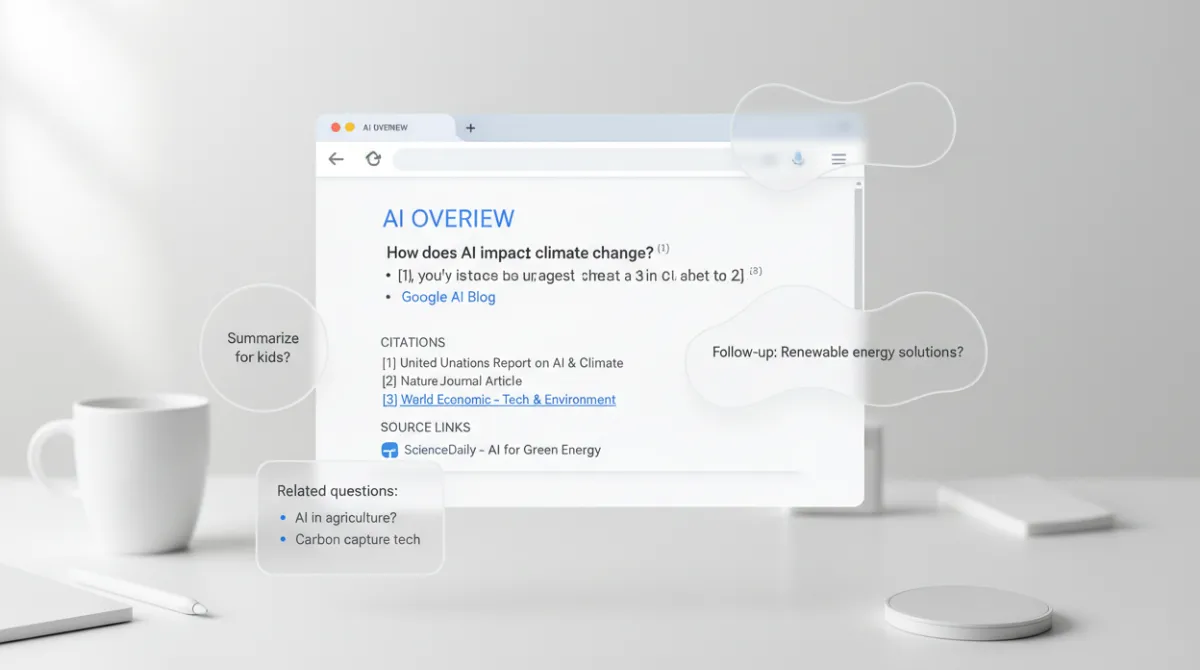
Search is moving from retrieval to resolution. Users increasingly expect a direct response that reduces back and forth browsing, while still allowing deeper exploration when needed.
This changes interface priorities. Clarity, citations, and the ability to verify claims become central to maintaining trust when answers look authoritative by default.
It also changes how people navigate the web. Discovery can happen through summaries, follow up prompts, and task oriented journeys rather than keyword refinement alone.
- Answer Quality And Grounding Search must minimize hallucinations and clearly separate facts from uncertainty.
- Choice And Control Users need ways to adjust depth, tone, and sources without friction.
- Speed And Familiarity AI features must not slow common queries or hide the core search utility.
These experience decisions will define how credible Google’s AI first brand feels over time.
Google Cloud And The Expansion Of Enterprise AI
Enterprise buyers care about reliability, governance, and cost predictability as much as model capability. Google Cloud is expanding AI by pairing foundation models with tools for data control, deployment, and monitoring.

Security and compliance influence adoption. Companies want encryption, audit trails, access management, and clear boundaries around how data is used during training and inference.
Operational maturity is another differentiator. Firms expect model evaluation, drift detection, and incident response processes that look like serious software engineering, not experimental labs.
| Enterprise Need | What Google Emphasizes | Why It Matters |
|---|---|---|
| Data Governance | Access controls, audit logs, policy enforcement | Reduces regulatory and IP risk |
| Deployment Flexibility | Cloud, hybrid, and edge options | Meets latency and residency constraints |
| Model Operations | Evaluation, monitoring, and rollback workflows | Keeps outputs stable as conditions change |
| Cost Management | Usage visibility and optimization guidance | Prevents budget surprises at scale |
This enterprise posture supports the brand shift by showing AI as dependable infrastructure, not just a consumer novelty.
Challenges Google Faces In Rebuilding Its AI Brand
Trust is the hardest asset to regain once shaken. AI amplifies this because errors can look confident, spread quickly, and be hard to correct after the fact.
Another challenge is product coherence. If model naming, feature behavior, or subscription packaging feels inconsistent, users perceive AI as bolted on rather than integrated.
Regulatory pressure also shapes the brand. Governments and watchdogs increasingly focus on transparency, competition, copyright concerns, and the societal impact of automated decision making.
- Safety And Misuse Preventing harmful outputs while maintaining usefulness requires continuous tuning and red teaming.
- Quality Across Languages Global parity is essential for a brand built on universal access.
- Provenance And Attribution Clear sourcing and content labeling help protect credibility.
Solving these tensions is part of the branding effort because behavior communicates more than slogans.
How Developers Fit Into Google’s AI Ecosystem
Developers determine whether an AI platform becomes a standard. Google is strengthening its ecosystem with model access, APIs, tooling, and integration paths that reduce time to production.
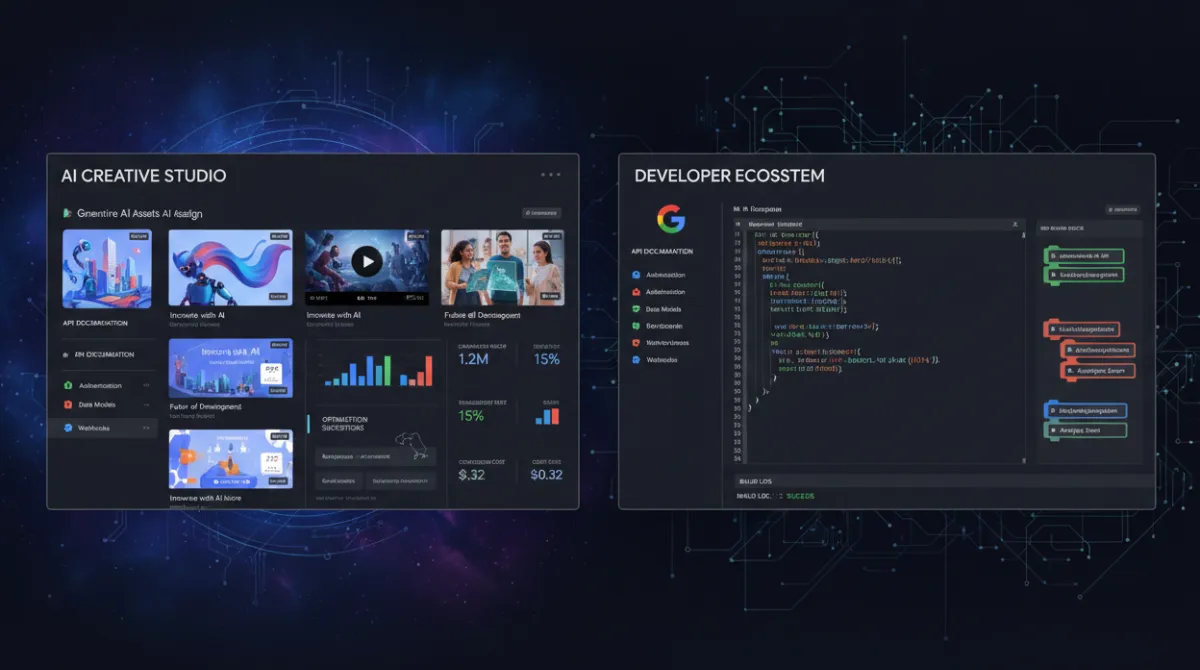
Consistency across environments matters. Teams want predictable SDKs, stable versioning practices, and documentation that reflects real deployment needs rather than only research capability.
Responsible AI guidance also plays a role. Developers need evaluation patterns, safety filters, and observability so they can meet internal governance without reinventing everything.
- Composable Building Blocks Models, retrieval, and orchestration tools should work together without fragile glue code.
- Transparent Limits Clear guidance on failure modes helps teams design safer experiences.
- Production Readiness SLAs, monitoring hooks, and incident workflows support long term adoption.
When developer experience improves, it feeds the brand through real products shipped on Google’s stack.
The Impact Of AI On Google’s Advertising Business
Advertising funds much of Google’s ecosystem, so AI changes here are strategic, not optional. AI can improve targeting and creative generation, but it also raises concerns about transparency and user control.
On the advertiser side, AI can streamline campaign creation, keyword expansion, and asset testing. That can improve performance while reducing operational effort for teams managing many accounts.
On the user side, the challenge is maintaining relevance without crossing privacy boundaries. Google’s brand depends on making ad experiences feel useful, clearly labeled, and aligned with expectations.
- Better Measurement Modeled conversions and privacy safe attribution aim to keep insights usable as tracking changes.
- Creative Assistance Generating and adapting assets speeds iteration while requiring strong policy enforcement.
- Fraud Resistance AI can detect abnormal patterns, but it must avoid false positives that punish legitimate advertisers.
These adjustments will influence whether AI is seen as improving the ecosystem or merely optimizing monetization.
What Google’s AI Strategy Means For The Future
Google is rebuilding its brand around a simple claim that AI should make computing more helpful and more human in pace. That future depends on whether AI reduces effort without reducing agency.
Expect a stronger emphasis on end to end experiences that cross devices and apps. The winners will be platforms that make AI reliable under real constraints like cost, latency, and safety.
Google’s long term position will hinge on trust signals such as source clarity, controllable personalization, and consistent product behavior. If those pieces hold, the AI first brand becomes durable rather than trendy.
Conclusion
Google’s 2026 brand rebuild centers on making AI the organizing layer across Search, consumer products, Cloud, and advertising. Gemini anchors the narrative, while integration and reliability aim to turn AI from a feature into a default expectation.
The strategy carries risks around safety, coherence, and regulation, but it also leverages unmatched distribution and infrastructure. The lasting measure will be whether users and businesses feel more capable, more informed, and more in control.