

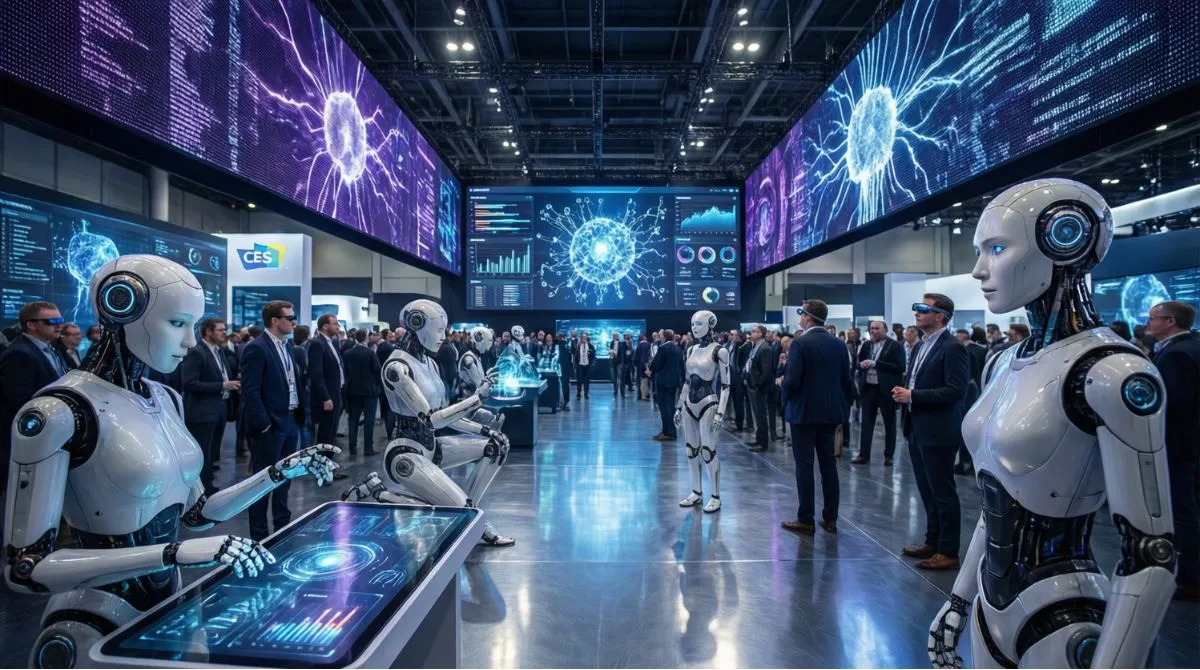
Robots didn’t just pose at CES 2026 in Las Vegas. Exhibitors put physical AI onstage with humanoids that danced, shadowboxed, folded paper, dealt cards and even acted like small shop helpers. The demos looked impressive, but most machines still moved cautiously, showing how battery limits, compute demands and unpredictable real-world situations slow progress.
Several showcases leaned into “AI that acts,” not just talks. A Singapore based team presented a robotic hand that played table tennis and handled casino style dealing. Other booths featured companion-style robots, cleaning arms that sort items, modular yard machines and a conversational “AI bartender” concept, all pointing to physical AI as a fast growing product category.
Chips and devices also took center stage. Companies pitched a shift of AI workloads from cloud to local hardware to reduce cost and latency, while PC and device processors aim to make physical AI more practical at the edge.
- Key Friction Points: slow movement, power draw, safety and standards
- Key Bet: stronger on device compute to unlock reliable physical AI
What CES 2026 Revealed About Physical AI:
| Key Points | Why It Matters |
|---|---|
| Physical AI dominated CES 2026 | The focus shifted from AI software to robots and machines acting in the real world |
| Humanoid robots performed real tasks | Robots demonstrated card dealing, dancing, folding paper and service style roles |
| Clear technology limits remain | Slow movement, battery life and limited adaptability are still major challenges |
| On-device AI gained importance | Companies pushed AI processing to devices to cut cloud costs and reduce latency |
| Affordable humanoids are still far away | Experts do not expect mass market humanoid robots anytime soon |
| Safety and trust are critical | Standards, data control and energy efficiency will shape adoption |