

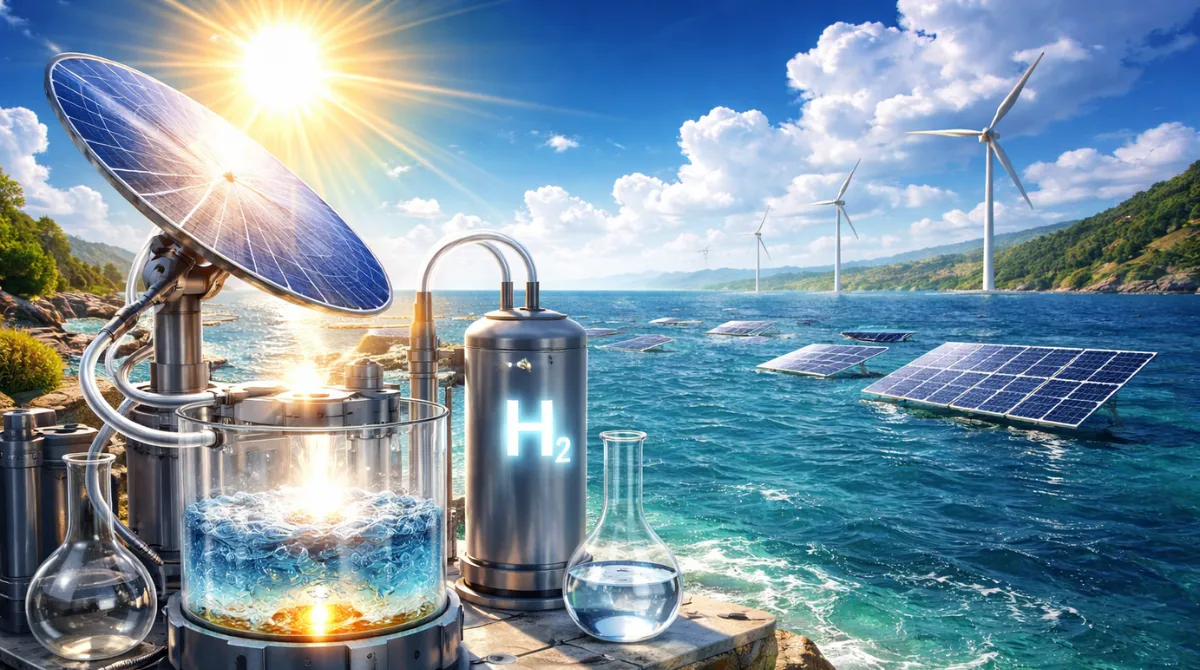
Researchers at the University of Sydney have developed a new technique to produce hydrogen from seawater using sunlight and liquid gallium. The approach offers a cleaner alternative to conventional hydrogen production, which often relies on high heat or fossil fuels.
The method uses small droplets of liquid gallium exposed to light. Sunlight triggers a photothermal effect, heating the metal and allowing it to react directly with water. As the reaction proceeds, hydrogen from seawater is released in gas form.
Unlike many laboratory-only solutions, the process works with both freshwater and seawater. Light also disrupts the oxide layer that typically forms on gallium, preventing the reaction from stopping and allowing hydrogen generation to continue efficiently.
Key Steps in Hydrogen From Seawater Production
- Liquid gallium droplets absorb sunlight
- Heat activates a reaction between gallium and water
- Hydrogen gas escapes during the reaction.
- Gallium oxyhydroxide forms as a byproduct
- Researchers convert the byproduct back into liquid gallium.
Why Hydrogen from Seawater is Important
| Advantage | Impact |
| Low-temperature operation | Lower energy requirements |
| Seawater compatibility | Reduces freshwater dependence |
| Recyclable gallium | Supports circular production |
The ability to regenerate gallium makes the system reusable, reducing material waste and improving long-term feasibility. The peer-reviewed journal Nature Communications published the study, highlighting growing momentum around sunlight-driven hydrogen from seawater technologies.