
Elon Musk pushed back against growing comparisons between Tesla and Nvidia in autonomous driving and said real competition remains years away. He stressed that building a system that handles everyday driving is achievable, but mastering rare and dangerous edge cases takes far longer.
At CES 2026, Nvidia revealed its Alpamayo open-source AI models for self-driving vehicles. The company also confirmed a deployment partnership with Mercedes-Benz, targeting CLA sedans in early 2026. The announcement reignited debate around Tesla vs Nvidia autonomous driving leadership.
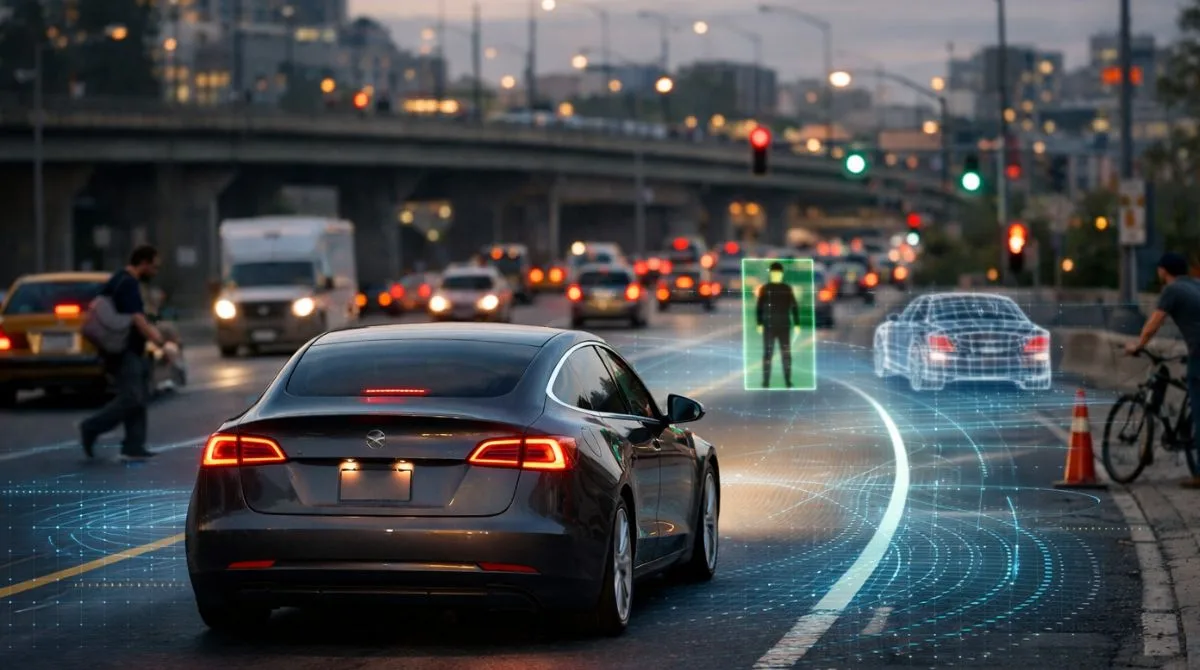
Musk responded on X and explained that autonomy becomes extremely difficult after reaching near-perfection. He said the final one percent includes unpredictable scenarios that appear rarely but carry high safety risk. Tesla tackles this challenge by training its system on real-world data gathered from millions of vehicles driving daily.
What Defines The Long Tail Challenge:
- Rare driving events occur infrequently but demand flawless responses
- AI struggles to generalize extreme or unusual situations
- Real-world exposure accelerates learning more than simulations
Musk added that traditional automakers often slow progress due to longer development cycles. While he supports Nvidia’s success, he does not expect its platform to rival Tesla’s autonomous system for five to six years.