

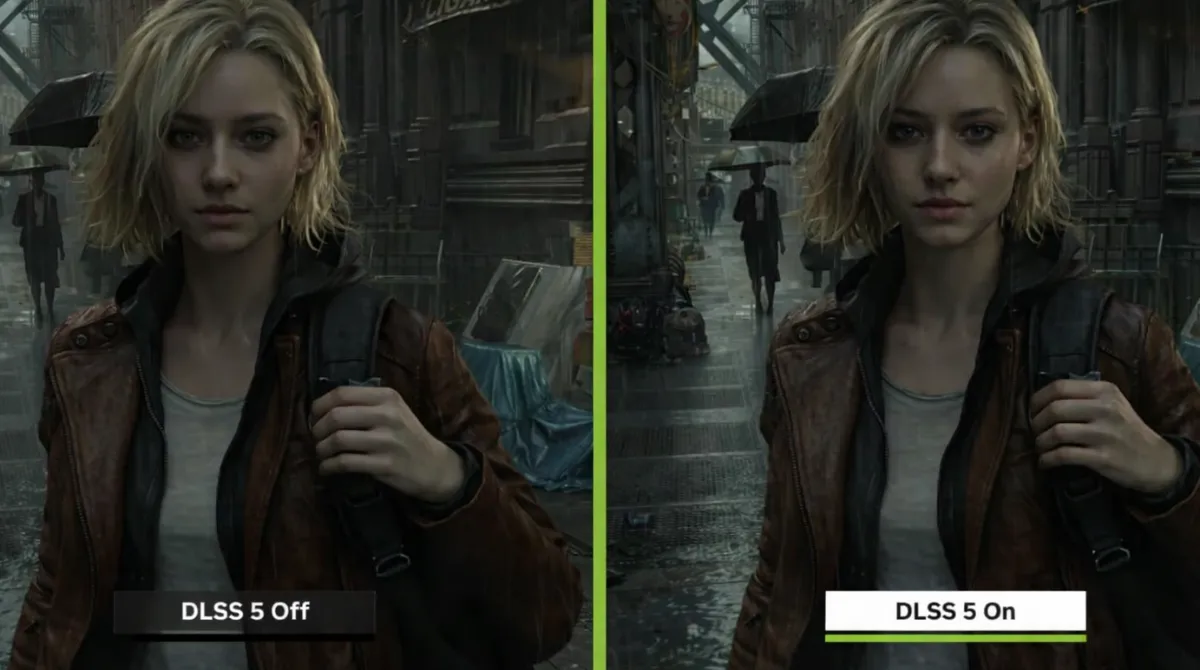
NVIDIA DLSS 5 is set to launch in fall 2026 as the company’s next step in AI-assisted game rendering. The update centers on a real-time neural rendering model that works from each frame’s color data and motion vectors to produce lighting and material detail that is meant to stay stable, repeatable and tied to the original 3D scene.
NVIDIA says the system can improve difficult visual surfaces such as skin, fabric and hair while giving developers control over intensity, masking and color grading. It also keeps the same Streamline integration path used for current DLSS and Reflex tools, which could lower the barrier for studios already using NVIDIA’s ecosystem.
The broader industry signal is important. NVIDIA DLSS 5 is slated for support across major publishers and for planned use in titles including Starfield, Hogwarts Legacy, Assassin’s Creed Shadows, Resident Evil Requiem and The Elder Scrolls IV: Oblivion Remastered.
The bigger question is not only technical performance. Early reaction to preview footage showed concern that AI-generated output may alter faces and other artistic details in ways players and developers do not accept. That creates a real test for NVIDIA’s message that the technology enhances realism while still respecting original art direction and developer control.