

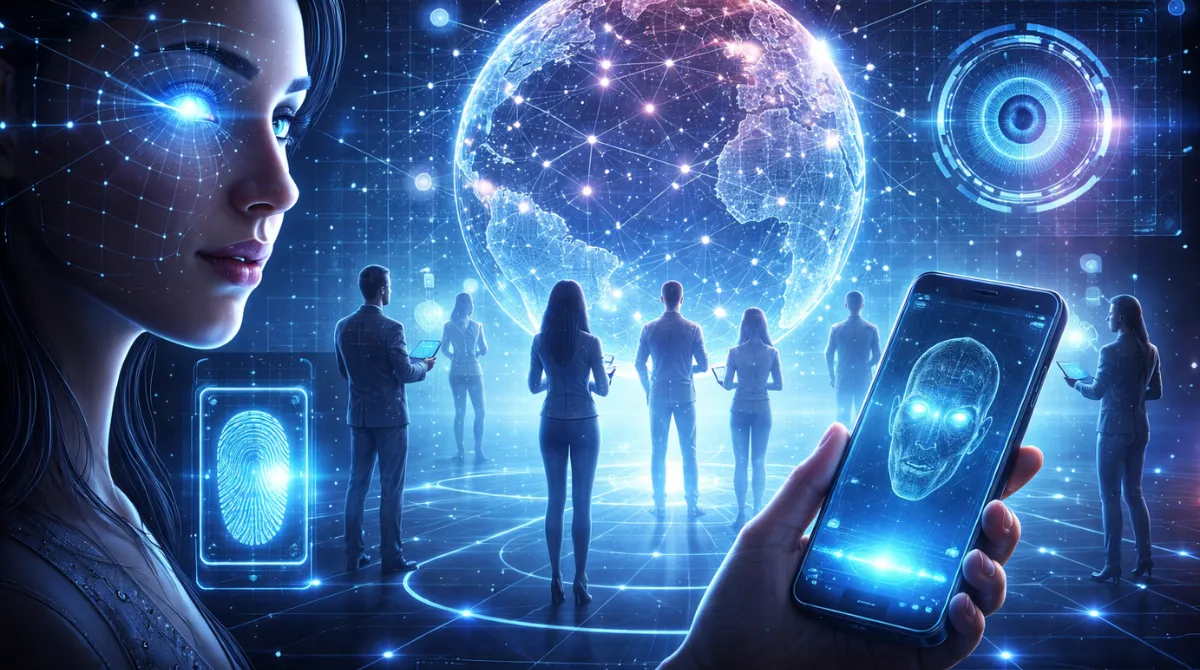
OpenAI is reportedly exploring the idea of a biometric-first social platform designed to verify that every account belongs to a real human. The concept centers on identity verification rather than content distribution, marking a different direction from existing social networks.
At the core of this effort is World ID, a system created by Tools for Humanity, a company co-founded by Sam Altman. World ID relies on a biometric device called the Orb, which scans a person’s iris to generate a unique digital identifier.
How Orb-based Verification Works
- The Orb confirms the presence of a living human using sensors and software
- The system captures an iris scan and converts it into an encrypted iris code
- It does not store raw biometric images after encryption
- The encrypted identifier recognizes returning users as the same individual
According to Tools for Humanity, once an identifier is created, it cannot be fully erased. This design ensures persistent verification but raises long-term privacy considerations.
Why OpenAI is Exploring Biometric Verification
Reports suggest OpenAI is testing biometric methods to limit bot activity and AI-generated accounts. A verified-only network could offer a cleaner signal of real human interaction, especially as synthetic content increases.
As OpenAI explores biometric identity to distinguish real humans from bots, it is also reinforcing trust-first environments beyond social platforms. This broader push toward verified human participation is already visible in controlled AI workspaces like OpenAI Prism, where authenticated users and structured research workflows take priority over open content distribution.
| Key element | Details |
| Developer | Tools for Humanity |
| Verification method | Iris-based biometric scan |
| Incentive | Worldcoin tokens in some regions |
| Status | Early-stage internal development |
The OpenAI biometric social network remains experimental, with no confirmed launch timeline or feature list. After reports surfaced, Worldcoin saw a brief rise in WLD token prices, reflecting renewed market attention around human verification technology.