
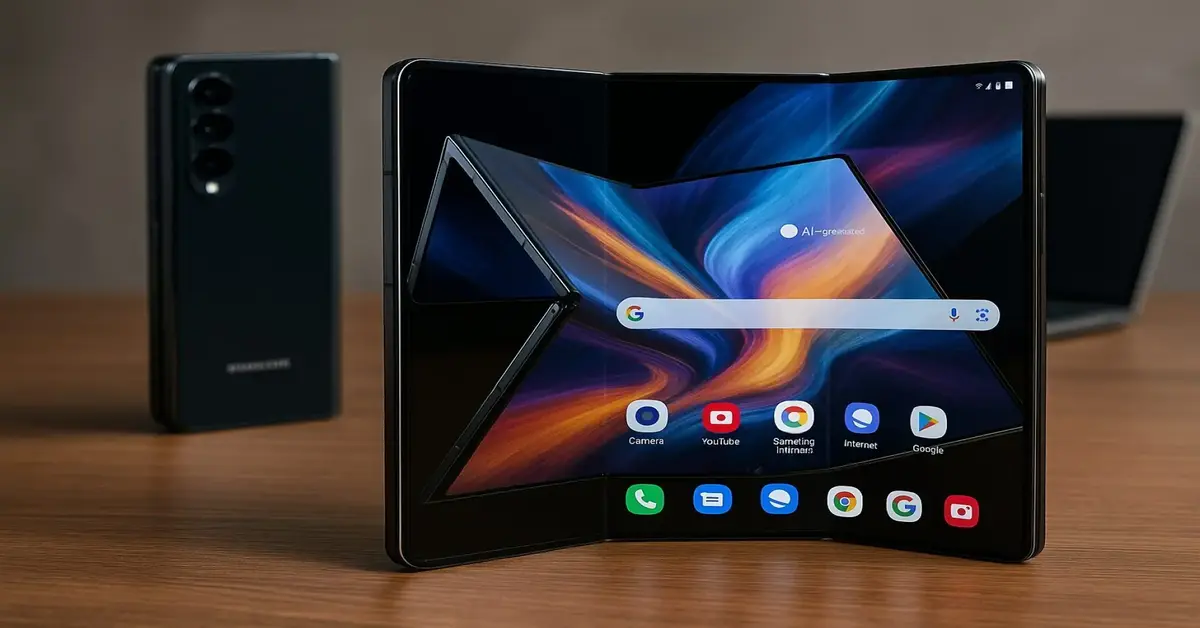
Samsung Electronics continues to push technological boundaries with its latest foldable smartphone line and ambitious semiconductor deals. The Galaxy Z Fold 7 and Galaxy Z Flip 7, recently unveiled at Galaxy Unpacked, build on Samsung’s leadership in foldables while introducing advanced AI features. Both devices feature Galaxy AI capabilities, including real‐time translation, note transcription, photo editing, and document summarization optimized for productivity, creativity, and smart communication.
The Galaxy Z Fold 7 boasts a stunning 200 MP rear camera with Samsung’s ProVisual engine, delivering pro‑grade imaging and cinematic low‑light performance. Its 8‑inch main screen and elongated 21:9 cover display enhance multitasking and content access. Durability has been improved with Armor FlexHinge, advanced Armor Aluminum, and Corning Gorilla Glass Ceramic 2 and Victus 2, making this the slimmest and toughest Fold series device yet. The Z Flip 7 also impresses with its 4.1‑inch Flex Window outer display, streamlined design, Exynos 2500 chipset, and support for Samsung DeX, making it a key choice for productivity on the go.
Demand has surged for both models. In the U.S., Z Fold 7 has recorded the highest pre‑order volume in Galaxy Z history, and combined preorder growth for Fold 7 and Flip 7 exceeds 25% over last year. Fold 7 alone is selling nearly 50% faster than its predecessor. Samsung and its carriers saw a 60% preorder jump relative to previous models.
On the semiconductor front, Samsung has secured a landmark US$16.5 billion multiyear agreement with Tesla to produce next‑generation AI6 chips on its cutting-edge 2nm fabrication process at its Texas foundry, slated to begin operations in 2026. These chips will power Tesla’s autonomous vehicles, humanoid robot Optimus, and Dojo AI data centers. The deal is expected to significantly strengthen Samsung’s position in high-end foundry, narrowing the competitive gap with TSMC.
Samsung’s semiconductor business has faced recent headwinds, including a 48–55% year-over-year drop in Q2 net and operating profit, due to weak demand, U.S. export restrictions, and supply chain delays. Despite these pressures, executives remain optimistic about a turnaround driven by AI demand, higher memory chip prices, and momentum from strategic partnerships like the Tesla deal.
Taken together, Samsung’s aggressive investment in AI‑enabled hardware from foldable smartphones to advanced semiconductor production cements its ambitions to lead the next era of connected, intelligent devices worldwide.