

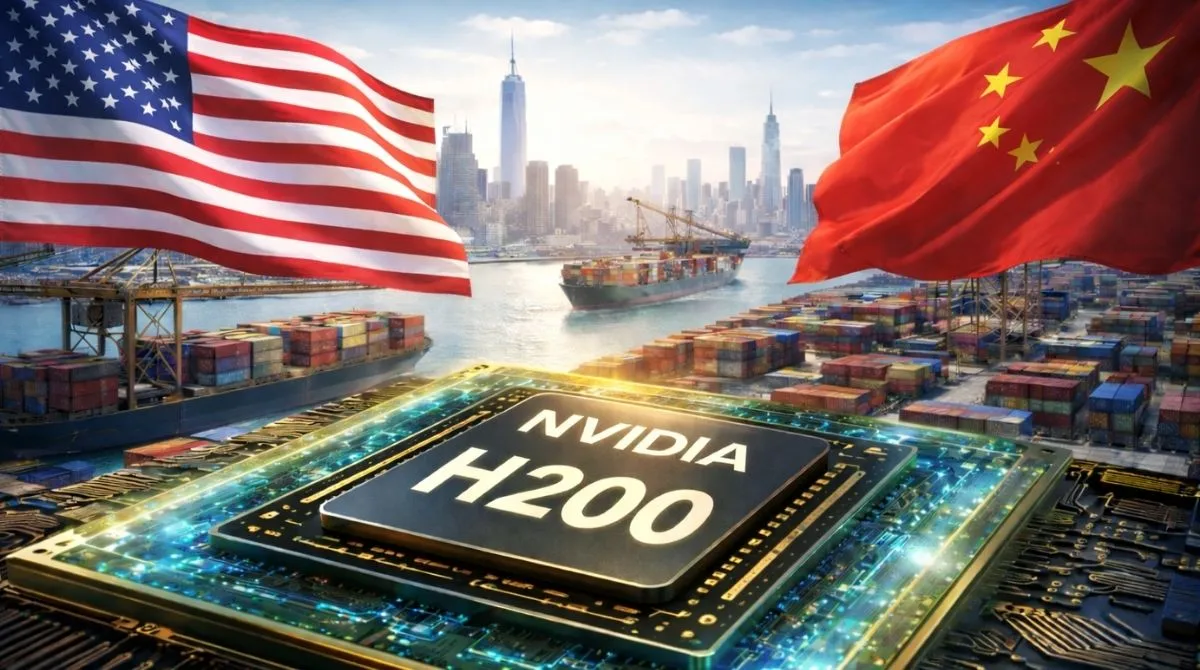
The U.S. has adjusted its export controls to allow limited shipments of high-performance of NVIDIA AI processors to China under tighter oversight. The move opens a narrow pathway for deliveries of advanced accelerators while maintaining safeguards tied to national security and end use.
Under the revised framework, exports proceed only after independent testing, formal certifications and binding assurances that the hardware will not support military activity. Volumes remain capped, meaning overseas buyers receive fewer units than domestic customers. This structure aims to balance commercial demand with control enforcement.
This tightly controlled approach reflects a broader shift in Washington’s China chip policy, where limited access to advanced AI hardware is paired with stronger oversight. A recent export deal framework shows U.S regulators are increasingly tying AI chip shipments to compliance and revenue-based safeguards to address national security concerns.
China responded by narrowing its own purchasing rules. Authorities now permit imports only in special circumstances, with approvals handled case by case and largely reserved for research institutions and select non commercial projects. Officials continue to flag concerns about reliance on foreign chips while backing local semiconductor development.
Key conditions shaping shipments
- Third-party verification before export approval
- End-use guarantees focused on civilian research
- Quantity limits to manage distribution balance
Nvidia clarified that it does not require upfront payments for orders, easing speculation around procurement terms and reinforcing confidence for approved buyers.