

WhatsApp opening its platform to rival AI chatbots signals a shift from a single assistant experience toward a broader chatbot ecosystem inside messaging. For users, it can mean more choice in how they search, create and get help without leaving chats.
For businesses, it raises the bar for speed, personalization and always-on support, while also increasing the need for strong governance. The biggest question is how WhatsApp will balance innovation with privacy and trust.
What The WhatsApp AI Chatbot Integration Means?
Allowing third-party AI chatbots on WhatsApp turns the app into a distribution channel for multiple assistant providers rather than a closed AI feature. That changes how people discover tools, because the assistant is reached where conversations already happen.
It also changes expectations for responsiveness. Users will increasingly assume they can ask a chatbot to summarize, translate, draft or retrieve details mid-chat and get a useful result instantly.
Why WhatsApp Is Allowing Rival AI Chatbots?
Opening the platform can accelerate adoption of AI features without relying on one model or one vendor. It also helps WhatsApp keep users inside the app by expanding the range of assistant capabilities available in chat.
From a platform strategy view, supporting multiple providers can reduce backlash around lock-in while stimulating competition on quality, safety, latency and cost. That competitive pressure can improve the experience for both individuals and organizations.
How Third-Party AI Chatbots Will Work On WhatsApp?
Third-party AI chatbots will typically run as accounts or integrations that can be messaged like a contact, added to threads, or invoked when needed. The exact mechanics depend on WhatsApp’s product design and policy enforcement, but the experience will likely feel native inside chats.
In practice, there are a few building blocks that determine how these chatbots behave.
- Discovery and entry points. Users may find chatbots through search, directories, verified profiles, or business-provided links inside customer conversations.
- Conversation boundaries. Some chatbots may only operate in direct messages, while others can support group chats with clear consent prompts.
- Tool access. Capabilities like retrieval from a knowledge base, ticket creation, or product lookup depend on permissioned connectors.
- Identity and verification. Verified labeling and transparent provider details can help users distinguish legitimate assistants from impersonators.
Those mechanics will shape how safe and reliable the ecosystem feels. They will also influence how quickly businesses can deploy automation without harming the user experience.
Impact On Messaging, Customer Support And Engagement

When AI assistants become common in a messaging app, the tone and pace of communication can change. People may send shorter prompts, request summaries and expect instant answers rather than waiting for a human reply.
For support teams, AI can absorb repetitive questions and reduce queue pressure. It can also surface context to agents so handoffs happen faster and with fewer back-and-forth messages.
Engagement can improve when chatbots reduce friction, but it can drop if bots feel intrusive or inaccurate. The winning pattern is helpful automation with clear escalation paths to a person.
- Faster first response. Automated triage can acknowledge issues immediately and collect key details upfront.
- Higher consistency. Approved knowledge articles and policy rules keep answers aligned with brand and compliance requirements.
- Better routing. Intent detection can route billing, technical and sales requests to the right team with relevant context.
As these patterns mature, users will judge brands less by channel availability and more by how smoothly the conversation resolves.
What This Means For AI Competition And Big Tech?
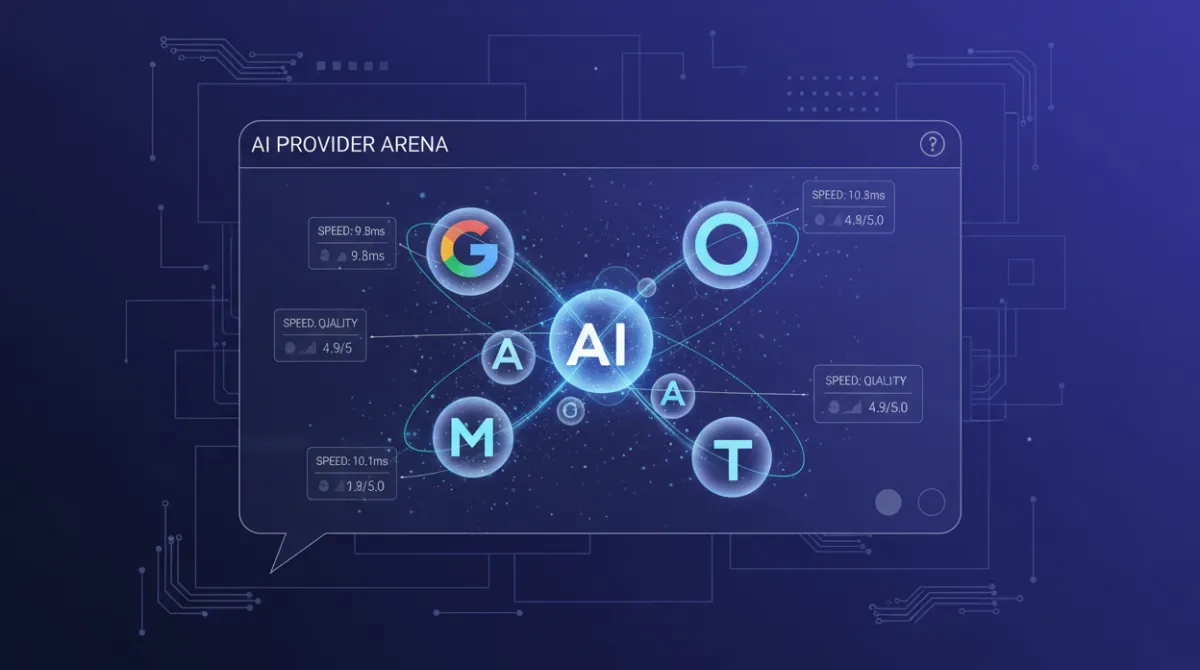
Bringing multiple AI providers into WhatsApp creates a high-visibility battleground for assistant quality. Providers will compete on answer accuracy, speed, multimodal capabilities and how well they handle sensitive or ambiguous requests.
It also pressures incumbents to offer clearer controls, better safety features and more transparent data practices. When users can switch assistants in the same interface, the difference between providers becomes easier to compare.
For the broader market, this can shift distribution power toward messaging platforms. If WhatsApp becomes a primary place where people interact with AI, assistant providers will need strong product differentiation rather than relying on standalone apps.
Privacy, Data And Security Concerns
Privacy is the make-or-break issue for AI inside personal messaging. Users will want to know what information a chatbot can see, what is stored and whether conversation content is used to train models.
Businesses will also need clarity on data handling, especially for regulated industries and customer data that includes personal identifiers. Strong security depends on consent, minimization, encryption boundaries and enforceable retention rules.
Key areas to evaluate before using any chatbot inside WhatsApp include the following.
- Data access scope. Understand whether the chatbot only sees the messages it receives or can access broader conversation history.
- Retention and deletion. Look for controls that allow users and businesses to delete conversations and define retention periods.
- Model training policies. Confirm whether content is used for training and whether opt-out options exist.
- Provider accountability. Prefer providers that publish security practices, incident handling processes and clear terms.
Even with strong platform rules, users should treat any AI assistant as software that can make mistakes. Sensitive data should be shared only when the provider’s safeguards and permissions justify it.
How Businesses Can Benefit From WhatsApp AI Chatbots?
For businesses, WhatsApp is already a high-intent channel where customers ask for pricing, availability, troubleshooting and order updates. AI chatbots can reduce operational load while improving response quality if they are deployed with tight guardrails.

The most durable benefits come from pairing conversational AI with reliable back-end systems such as CRM, order management and knowledge bases. Without that grounding, chatbots drift into generic answers that frustrate customers.
Business value tends to cluster around a few repeatable outcomes.
- Deflection of routine inquiries. Automate FAQs, status checks and basic troubleshooting so agents focus on complex cases.
- Lead capture and qualification. Collect intent, budget range and requirements in chat and hand qualified leads to sales teams.
- Operational coordination. Route internal approvals, schedule changes and reminders in a conversational workflow.
- Localization at scale. Provide multilingual support that matches customer language preferences with consistent terminology.
To make those benefits real, teams should define what the bot is allowed to do, what it must never do and when it must escalate to a human.
Operational Checklist For A Safe Rollout
Launching a chatbot inside WhatsApp is not only a technical project. It is also a policy and quality project that needs ownership across customer experience, security and legal.
- Define permitted intents. Limit the bot to clear use cases such as order status, returns, appointment scheduling, or basic troubleshooting.
- Prepare approved knowledge. Maintain a single source of truth and update it regularly to prevent outdated answers.
- Set escalation triggers. Route to humans when confidence is low, when the customer is upset, or when sensitive topics appear.
- Log and review outcomes. Track resolution rates, deflection and complaint signals, then refine prompts and content weekly.
- Implement access controls. Restrict who can change bot behavior, connectors and data permissions.
Once the foundation is in place, optimization becomes a continuous loop rather than a one-time launch.
Comparing Options For Users And Businesses
As rival AI chatbots arrive, people will compare them on different criteria than a standalone app. In-chat performance, trust signals and control over data will matter as much as raw intelligence.
The table below summarizes practical comparison factors for selecting or approving a chatbot for WhatsApp use.
| Evaluation Area | What To Check | Why It Matters |
|---|---|---|
| Privacy Controls | Data retention options, training opt-out, deletion tools | Reduces risk and increases user trust |
| Accuracy And Grounding | Knowledge base integration, citation behavior, fallback rules | Prevents wrong answers and lowers support escalations |
| Speed And Reliability | Latency, uptime, performance under load | Keeps chat experience smooth and reduces abandonment |
| Safety And Compliance | Content filtering, audit logs, role-based access | Helps meet internal policies and regulatory expectations |
Using a consistent evaluation framework makes it easier to compare providers and to explain decisions internally.
What To Expect Next From WhatsApp AI Strategy?
WhatsApp’s AI strategy is likely to evolve around controls, monetization and ecosystem governance. Users will want simpler ways to understand which assistant is active, what it can access and how to switch or revoke permissions.
For businesses, expect more tooling around verified bot identities, analytics dashboards and integration pathways that connect AI chats to support platforms. The platform will also need stronger anti-spam enforcement to prevent low-quality bots from degrading the messaging experience.
Over time, the most valuable improvements may be invisible. Better consent flows, clearer disclosure and tighter boundaries on data sharing can determine whether AI chatbots feel like a helpful upgrade or a privacy tradeoff.
Conclusion
WhatsApp opening the door to rival AI chatbots can increase choice and accelerate innovation in everyday messaging. It can also raise new risks around privacy, impersonation and inconsistent quality if governance lags behind growth.
Users should prioritize transparency and control over what a chatbot can see and store. Businesses should focus on grounded answers, safe escalation and measurable performance, so automation improves trust rather than replacing it.