


AI agents have moved from experimentation to operational priority in 2026. Leaders want systems that can take goals, make decisions within guardrails and complete work across tools without constant supervision.
This shift is driven by rising service expectations, complex software stacks and pressure to do more with stable headcount. AI agents promise measurable gains when they are deployed with clear scope, governance and accountability.
What Are AI Agents?

AI agents are software systems that can plan, act and adapt to achieve a defined outcome. They use models for reasoning and language, plus connectors to business systems such as CRMs, ticketing tools, calendars and databases.
Unlike a simple chatbot, an agent does more than respond. It can break work into tasks, choose actions, call tools, verify results and keep state across a workflow.
Most business-grade agents include key building blocks that support reliability and control.
- Goal and policy layer. Defines what success looks like and what the agent must not do.
- Planning and tool use. Selects actions such as drafting, searching internal knowledge, updating records, or routing approvals.
- Memory and context. Maintains relevant details across a case, customer, or process.
- Observability. Logs actions and decisions for auditing, evaluation and incident response.
With these components in place, agents can operate as digital coworkers that execute bounded work rather than generic assistants.
Why Businesses Are Investing In AI Agents?
Businesses are investing in AI agents because many knowledge processes are still manual, fragmented and slow. Teams jump between systems, rekey data and chase approvals, which creates delays and errors.
AI agents address this gap by coordinating actions across systems and making routine decisions consistent with policy. That makes them attractive for leaders focused on productivity, quality and speed.
Several business drivers tend to show up across industries.
- Customer expectations. People expect faster support, clearer updates and fewer handoffs.
- Process complexity. Modern operations rely on many SaaS tools that rarely share context well.
- Talent constraints. Specialists spend too much time on administrative tasks instead of expert work.
- Risk and compliance pressure. Standardized decisioning and audit trails reduce operational surprises.
Investment is also influenced by maturity in identity, APIs and data governance, which makes agent deployment more feasible than it was a few years ago.
How AI Agents Are Different From Traditional Automation?
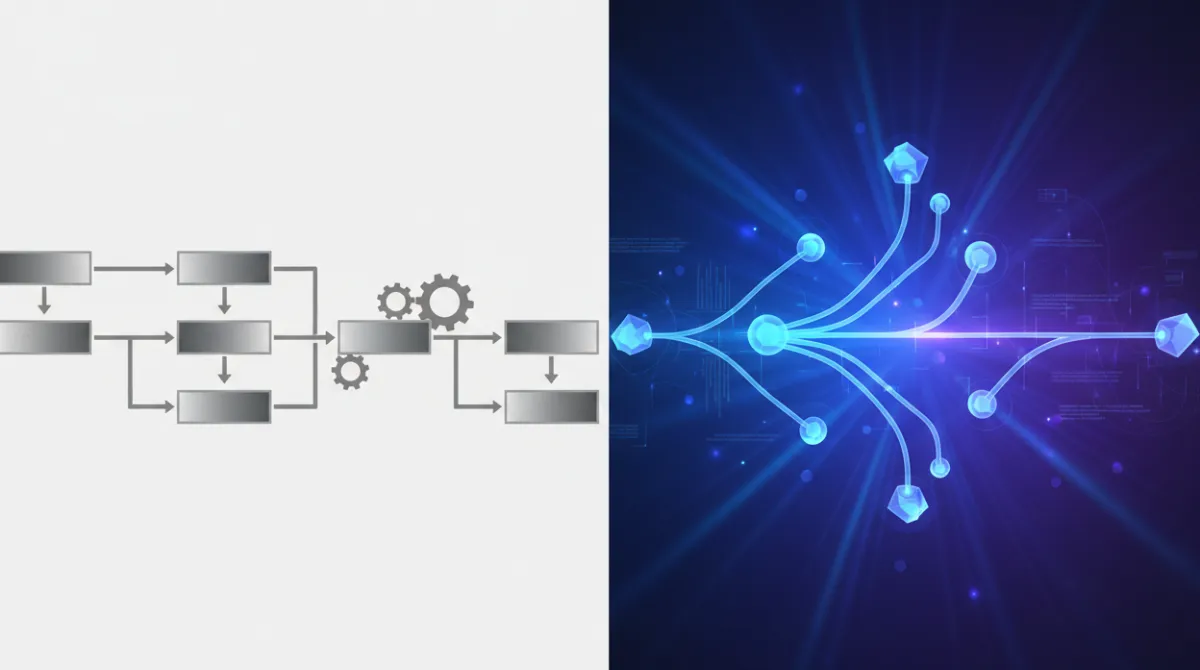
Traditional automation excels when rules are stable and inputs are clean. It typically follows fixed paths, such as if-then logic, scripts, or workflow engines that rely on predictable fields and forms.
AI agents are better when work is semi-structured and requires judgment, language understanding, or flexible planning. They can handle messy requests, interpret intent and select among tools to reach the goal.
The differences become clearer when comparing capability, risk and control.
| Dimension | Traditional Automation | AI Agents |
|---|---|---|
| Input Type | Structured fields and triggers | Structured and unstructured language |
| Decision Logic | Fixed rules and deterministic flows | Policy-guided reasoning and planning |
| Tool Interaction | Predefined integrations | Dynamic tool selection within guardrails |
| Failure Handling | Stops or retries a known path | Can recover, ask for clarification, or escalate |
| Governance Needs | Change control and testing | Change control plus evaluations and monitoring |
This distinction matters because agents are not a replacement for automation platforms. Many strong deployments combine both, using automation for deterministic steps and agents for judgment-heavy work.
Key Business Benefits Of AI Agents
When implemented with clear boundaries, AI agents can improve throughput without sacrificing quality. The biggest gains often come from reducing coordination work and eliminating rework caused by missed context.
Benefits also tend to compound because agents create standardized execution patterns across teams.
- Faster cycle times. Agents can move work forward asynchronously, including follow-ups and status checks.
- Higher consistency. Policy-based decisions reduce variation across shifts, regions and teams.
- Lower operational load. Repetitive triage, summarization and routing can be delegated safely.
- Better knowledge use. Agents can retrieve internal documentation and apply it during execution.
- Improved handoffs. Clear notes, next actions and structured updates reduce dropped work.
These benefits are strongest when success metrics are defined early, such as resolution time, backlog size, error rates and compliance outcomes.
Common Use Cases Of AI Agents In Business
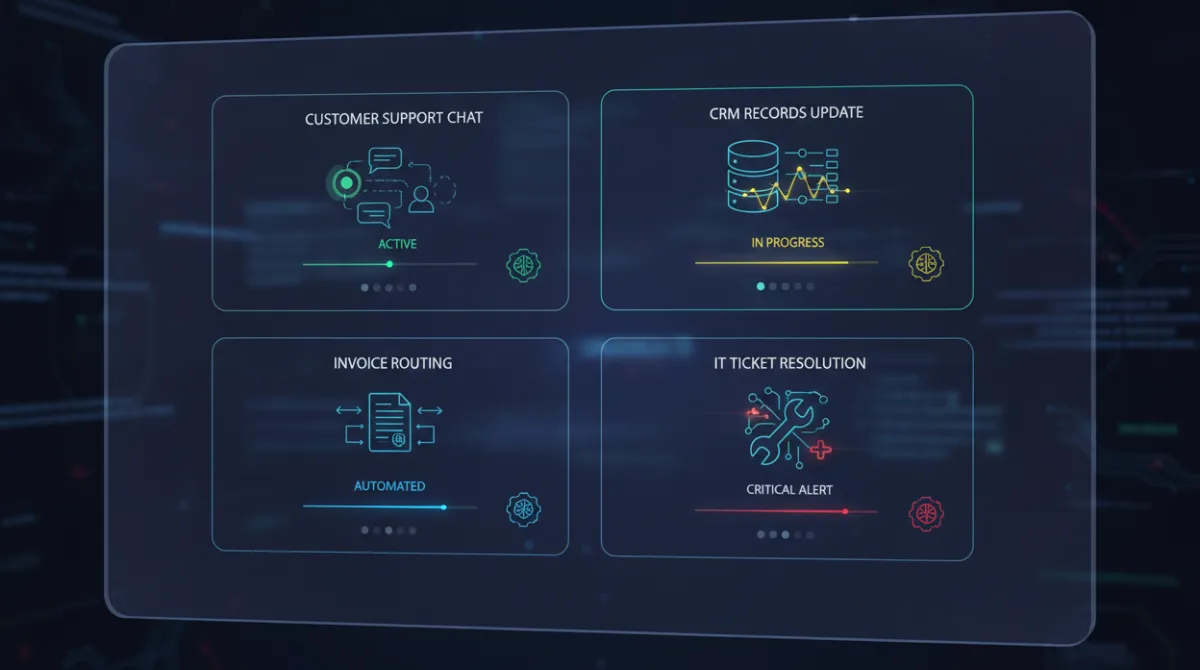
AI agents work best in processes that are repeatable but not perfectly standardized. They thrive where language, exceptions and cross-tool coordination are common.
Common use cases include both customer-facing and internal operations.
- Customer Support Triage And Resolution. Classify requests, pull account context, draft responses and escalate based on policy.
- Sales Operations And CRM Hygiene. Update records, create follow-ups, summarize calls and flag pipeline risks.
- Finance And Procurement Workflows. Validate invoices, route approvals and gather supporting documents.
- IT Service Management. Diagnose common issues, trigger runbooks and keep tickets updated with actions taken.
- HR People Operations. Answer policy questions, generate letters and coordinate onboarding tasks.
Across these areas, the agent’s value comes from doing the connective work that humans often handle through inboxes, meetings and manual updates.
Challenges Businesses Face When Adopting AI Agents
Adoption challenges are less about model quality and more about operational readiness. Agents touch real systems, so companies need strong controls to prevent errors, data leaks and policy violations.
Several issues commonly slow rollouts or reduce ROI if they are not addressed upfront.
- Unclear scope. Agents fail when they are asked to do everything instead of a bounded workflow.
- Data access and permissions. Poor identity management can create both security risk and broken experiences.
- Evaluation and testing. Teams need repeatable tests, regression checks and quality scoring for outputs and actions.
- Tooling reliability. APIs change, systems go down and rate limits hit, so graceful fallback matters.
- Change management. Employees need training, new SOPs and clear escalation rules.
Addressing these constraints early supports trust, compliance and predictable performance across departments.
Are AI Agents Replacing Human Workers?

AI agents are reshaping roles more than they are removing entire functions. The biggest shift is that routine coordination work becomes automated, while humans focus on judgment, relationships and complex exceptions.
In many teams, agents act as a first-pass operator that prepares work for review. Human oversight remains essential for sensitive decisions, ambiguous edge cases and accountability.
Companies that treat agents as augmentation tend to see better outcomes. They redesign workflows to clarify who approves, who owns the final call and when the agent must escalate.
How Businesses Can Start Using AI Agents?
Successful adoption begins with a narrow workflow where value and risk are both easy to measure. Starting small also helps teams build governance muscle, including logging, evaluation and incident response.
A practical rollout follows a disciplined sequence that prioritizes safety and measurable impact.
- Select A High-Value Bounded Workflow. Choose one process with clear inputs, outputs and owners.
- Define Policies And Guardrails. Set what the agent can access, what actions it can take and when it must escalate.
- Connect The Right Tools. Integrate only the systems required, with least-privilege permissions.
- Design Human Review Points. Add approvals for risky actions such as refunds, contract changes, or access grants.
- Evaluate And Monitor Continuously. Track quality, errors, drift and tool failures with clear thresholds.
After the first workflow stabilizes, expansion is easier because patterns for security, testing and oversight are already in place.
The Future Of AI Agents In Business
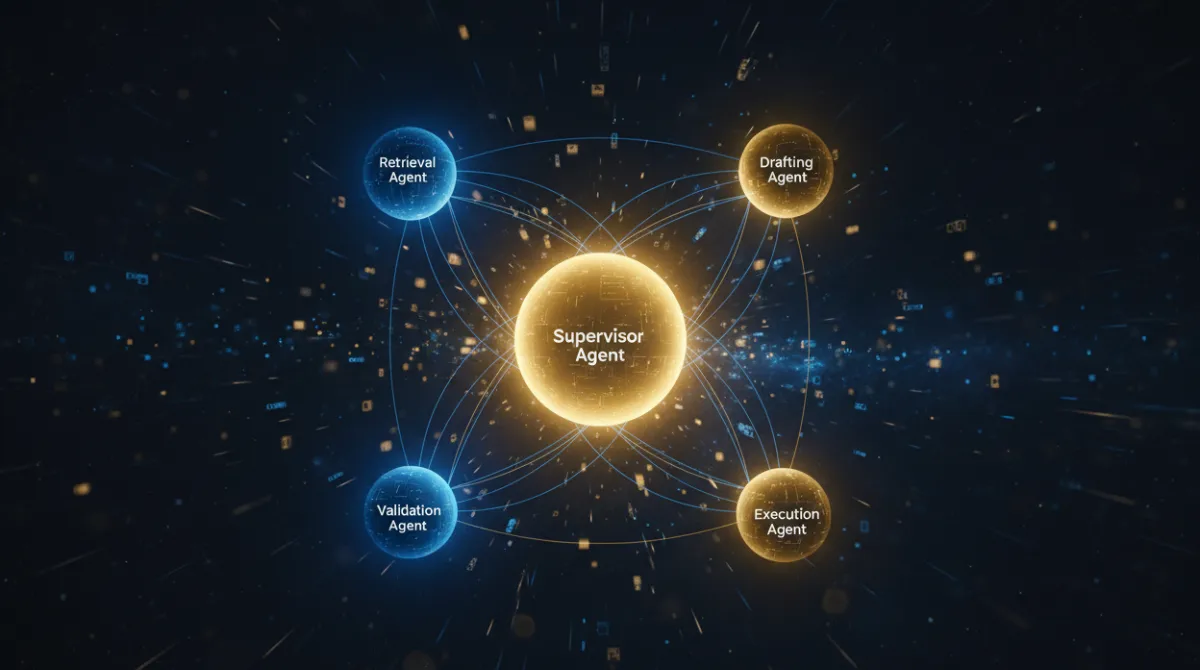
The next phase of AI agents will focus on deeper integration with business systems and tighter governance. Expect more standardized agent orchestration, stronger auditability and clearer separation between planning and execution.
Organizations will also push toward multi-agent setups where specialized agents collaborate under a supervisor agent. This can improve reliability by separating tasks such as retrieval, drafting, validation and action execution.
As adoption grows, competitive advantage will come from proprietary workflows, clean internal knowledge and strong operational controls. The companies that win will treat agent performance like any other production system, with accountability and continuous improvement.
Final Thoughts On AI Agents As A Business Trend
AI agents are a growing business trend in 2026 because they can execute real work across tools, not just generate text. They offer a path to faster operations, better consistency and improved customer experiences when deployed responsibly.
The most sustainable results come from clear scope, strong permissions, human oversight and rigorous evaluation. With those foundations, AI agents can become a durable layer of execution in modern organizations.