

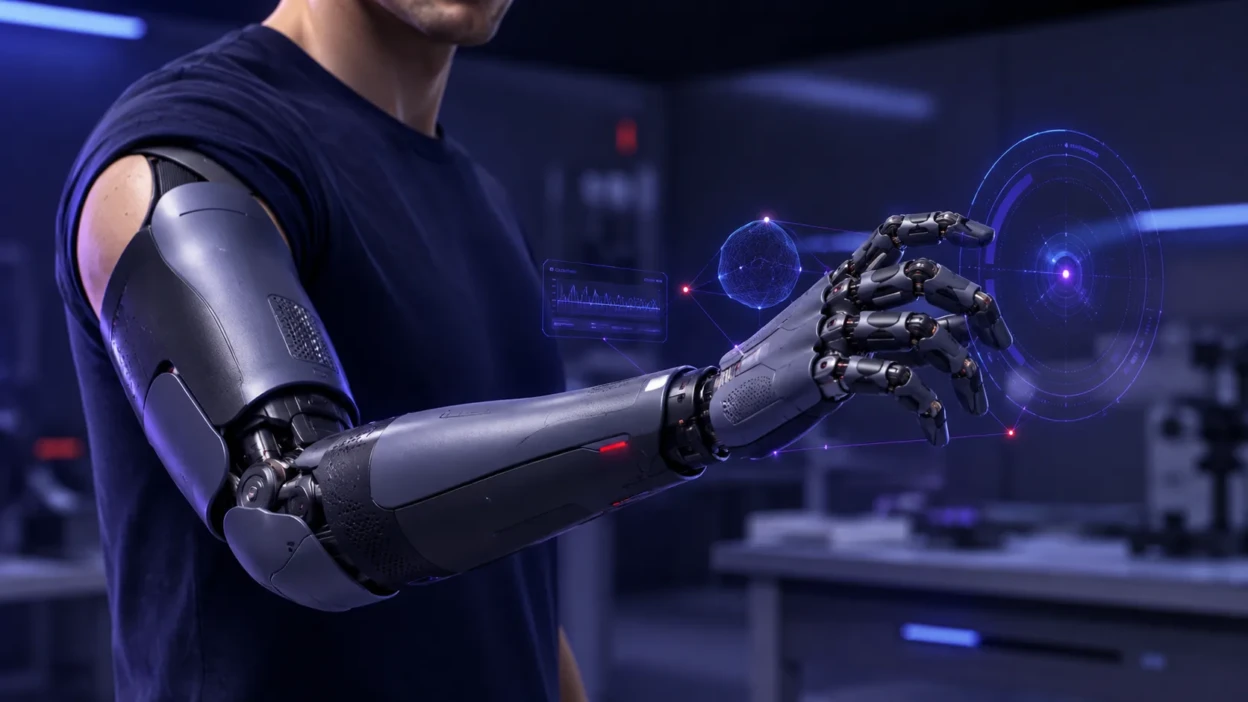
Australian researchers are developing a new bionic arm designed to be lighter, safer and easier to control than many existing prosthetic devices.
The technology is being developed by Meablex, a startup backed by the University of Melbourne. The team describes the device as Australia’s first fully integrated bionic arm because its hand, adjustable socket, sensors and control system work together as one complete solution.
Many traditional bionic hands are made from heavy and rigid materials such as metal. This can make them uncomfortable to wear for long periods. A heavy device may also create safety problems when it does not move as expected.
The new bionic arm uses lightweight soft robotic materials and advanced 3D printing. Its prosthetic hand, known as the X-Limb, is designed to reduce weight while still helping the user perform everyday hand movements.
One of the most important parts of the system is its adjustable socket. The socket connects the artificial arm to the remaining part of the user’s limb.
Standard prosthetic sockets usually have a fixed shape. However, a person’s limb size can change during the day because of exercise, heat, blood flow or other physical activity. Children may face an even bigger problem because they continue to grow and regularly need new sockets.
The Meablex socket can be adjusted by the user when their limb changes size. This could provide a more comfortable fit and reduce the need for frequent replacements. It may also allow children to use the same system for longer as they grow.
The bionic arm also introduces a different way of reading muscle movements. Many current prosthetic arms use electrical sensors placed on the skin. These sensors detect signals created when the user moves muscles in the remaining part of the arm.
However, sweat, movement and changes in the socket’s position can affect those electrical signals. This may cause delays or make the prosthetic hand more difficult to control.
The Australian system uses magnetic sensors inside the socket to detect small muscle movements. These sensors are designed to work more reliably during normal daily activities and are less likely to be affected by sweat.
Artificial intelligence and machine learning can then help translate the detected muscle movement into a command for the bionic hand. For example, the system may understand when the user wants to open the hand, close it or hold an object.
The project could make advanced prosthetic technology more practical for people with upper-limb loss. A lighter hand, adjustable fitting and improved control system may help users wear the arm for longer periods and complete daily tasks with greater confidence.
The team plans to begin clinical trials later in 2026. These trials will examine the arm’s comfort, safety and performance with users in real-world conditions.
A commercial launch is being targeted for early 2027. However, the device will first need to complete clinical testing and receive the required regulatory approvals.
The project shows how artificial intelligence, soft robotics, magnetic sensing and 3D printing can work together to improve assistive technology. It may also support the development of more affordable and accessible bionic arms in the future.