


FinOps is a practical operating model that helps teams understand, manage, and optimize cloud costs without slowing down delivery. It brings finance, engineering, and product together around shared visibility, clear ownership, and repeatable cost controls.
What FinOps Means?
FinOps stands for cloud financial operations. The goal is simple – make cloud spending measurable, accountable, and continuously optimized while keeping the speed benefits of the cloud.
Cloud costs behave differently than traditional IT budgets because usage can change daily. FinOps creates a steady way to connect usage to business value and to guide decisions with real cost data.
Why Cloud Costs Get Out Of Control?
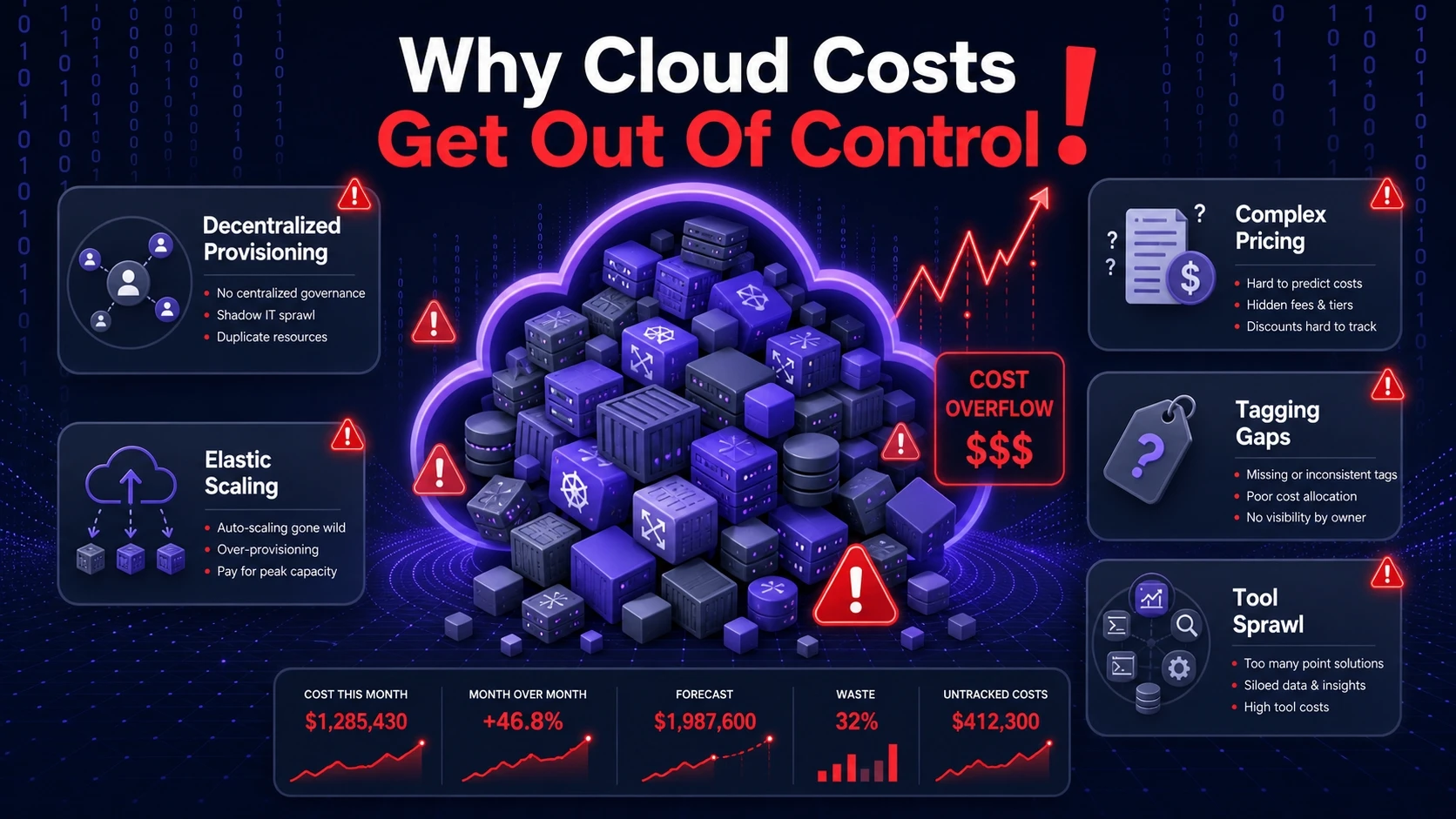
Cloud makes it easy to provision resources quickly, which can also make it easy to overspend. Cost risk increases when teams lack visibility, guardrails, or clear ownership for spend.
- Decentralized provisioning: Multiple teams can spin up services without consistent cost standards.
- Elastic scaling: Auto-scaling is helpful, but it can scale waste as well as demand.
- Complex pricing: Discounts, tiers, data transfer, and managed services add hidden cost drivers.
- Tagging gaps: Missing tags break chargeback, reporting, and accountability.
- Tool sprawl: Overlapping services and environments raise baseline spend and make cleanup harder.
Once you know the common causes, FinOps can address them with a structured approach that fits how teams already work.
Core Principles Of FinOps
FinOps is not a one-time project. It is a continuous practice that combines culture, process, and data to keep costs aligned with outcomes.
- Shared accountability: Engineering owns usage decisions while finance supports governance and forecasting.
- Visibility first: Teams need timely cost data that maps to services, environments, and products.
- Business value focus: Spend is evaluated against performance, reliability, and revenue impact.
- Iterative optimization: Small improvements made consistently beat large cleanups done rarely.
- Automation and guardrails: Policies, alerts, and budgets reduce manual effort and prevent drift.
These principles work best when leadership supports them and teams have a clear way to act on cost insights.
The FinOps Lifecycle
Most FinOps programs follow a simple loop that repeats as cloud usage evolves. Each phase builds on the previous one, and none of them is optional for long-term control.
- Inform: Establish cost visibility with consistent tagging, allocation rules, and dashboards that teams trust.
- Optimize: Reduce waste through rightsizing, scheduling, storage cleanup, and smarter purchasing options.
- Operate: Put governance in place with budgets, alerts, approval workflows, and regular review rituals.
When the loop is running, cost control becomes part of day-to-day delivery instead of an end-of-quarter scramble.
FinOps Roles And Responsibilities
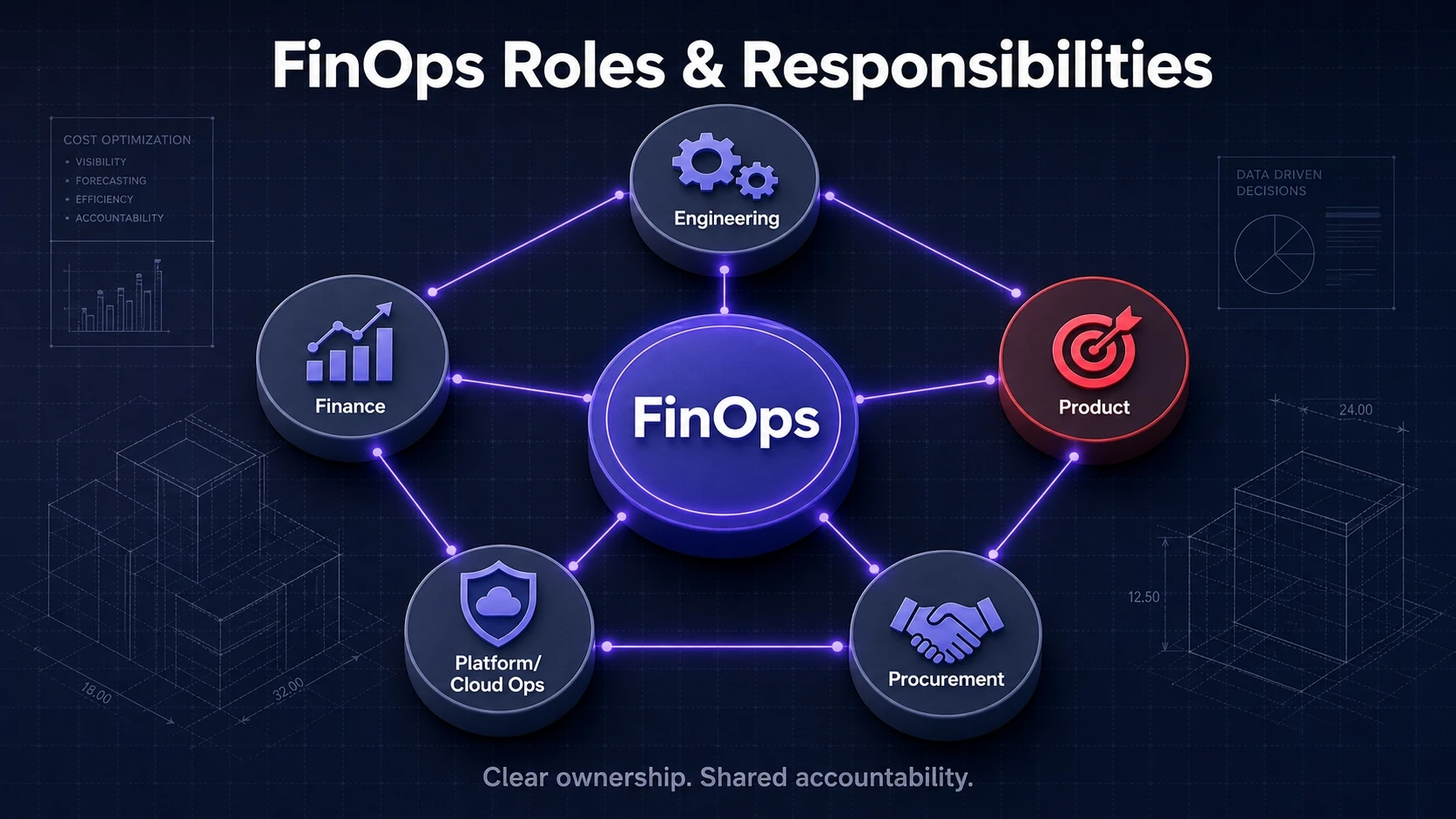
FinOps succeeds when responsibilities are clear and decisions are made close to the workload. A lightweight FinOps team or champion group can coordinate standards while product teams own execution.
- Engineering: Builds and operates services, implements efficiency fixes, and follows tagging and budgeting standards.
- Finance: Improves forecasting, manages chargeback or showback, and helps translate spend into financial reporting.
- Product and business owners: Set priorities, approve tradeoffs, and validate that spend matches customer value.
- Platform and cloud operations: Defines guardrails, templates, policies, and baseline tooling for cost governance.
- Procurement and vendor management: Supports commitments, discount programs, and contract alignment with usage patterns.
Clear ownership also reduces friction, since teams can resolve cost questions quickly and keep projects moving.
Key Metrics That Matter In FinOps
FinOps metrics should help teams make decisions, not just report spend. The best metrics connect cost to usage, performance, and product outcomes.
- Cost allocation coverage: Percentage of cloud spend mapped to a team, service, product, or environment.
- Unit cost: Cost per transaction, per customer, per API call, or per workload hour based on your business.
- Waste rate: Spend tied to idle resources, over-provisioning, unused storage, or orphaned assets.
- Commitment utilization: How effectively reserved capacity or savings plans match actual usage.
- Forecast accuracy: Difference between planned and actual spend over a defined period.
Metrics like unit cost make optimization decisions easier because they show whether cost changes improve or hurt business efficiency.
Common FinOps Practices That Reduce Spend
FinOps is built on repeatable practices that teams can apply across compute, storage, networking, and managed services. These actions are most effective when tied to ownership and tracked over time.
- Tagging standards and enforcement: Require tags for team, environment, application, and cost center to improve allocation.
- Rightsizing and performance tuning: Match capacity to actual demand and remove oversized instances and databases.
- Scheduling nonproduction: Stop or scale down dev and test environments outside working hours when appropriate.
- Storage and data lifecycle management: Apply retention rules, tiering, and deletion policies for stale data.
- Commitment planning: Use reserved capacity when usage is steady, and keep flexibility for variable workloads.
- FinOps reviews: Hold regular cost reviews with engineering and product to approve optimizations and tradeoffs.
These practices also reduce security and reliability risks by removing unused assets and making environments easier to govern.
FinOps Governance And Guardrails
Governance keeps optimization from being optional. It defines the rules that prevent cost drift while still allowing teams to ship quickly.
- Budgets and alerts: Notify owners early when spend trends exceed targets.
- Policy as code: Enforce standards for regions, instance families, and required tags.
- Approval workflows: Review high-cost resources, new managed services, and large scaling changes.
- Chargeback and showback: Make teams aware of what they spend, and allocate costs to the right owners.
- Cloud cost anomaly detection: Detect spikes quickly so teams can fix issues before billing cycles close.
Good governance is explicit and documented. It should also be revisited often as your architecture and usage mature.
FinOps Tools And Reporting
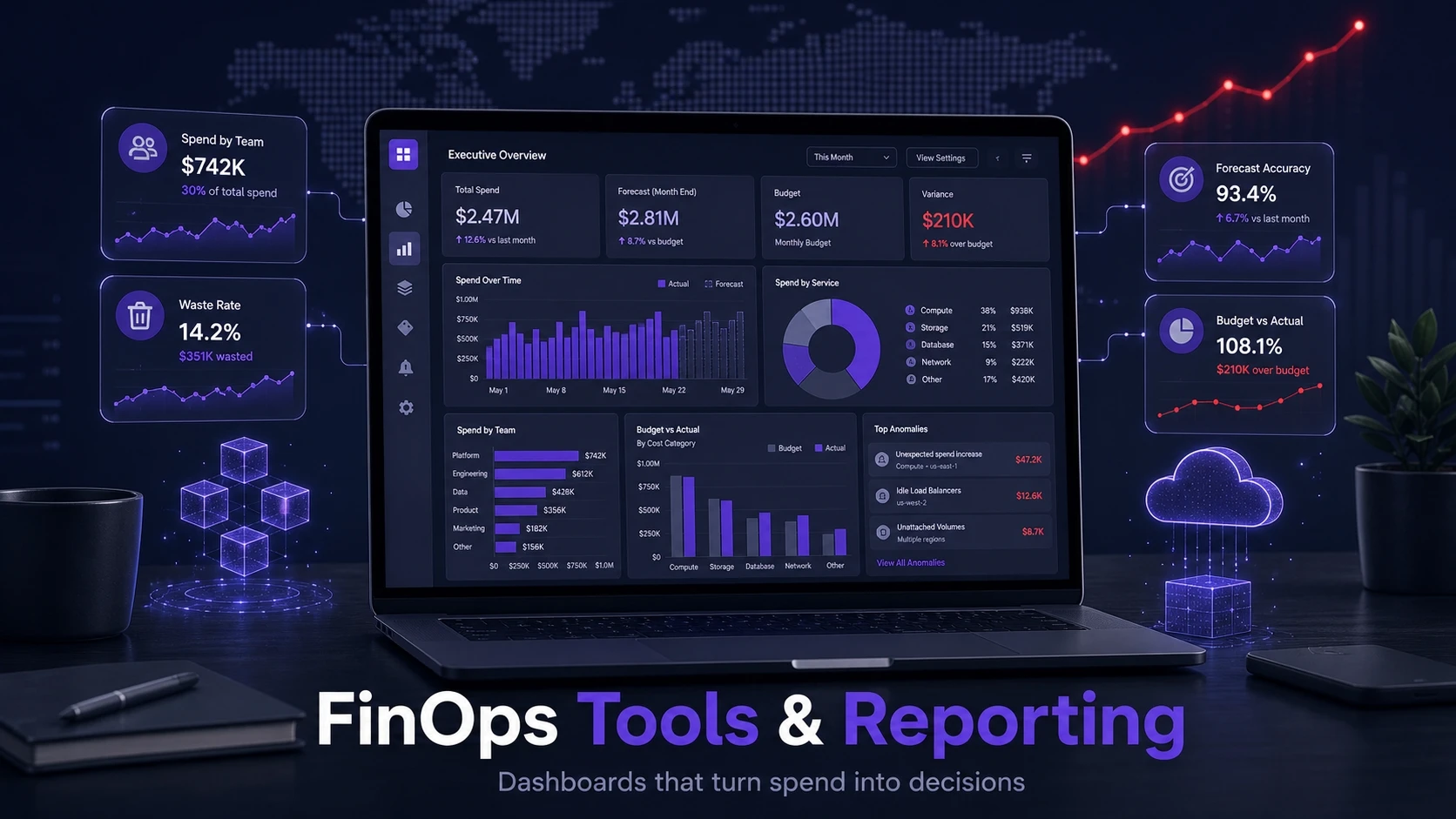
FinOps needs reliable reporting to build trust and drive action. Teams typically combine cloud billing data with tagging, organizational structure, and workload telemetry to create dashboards and alerts.
For teams that need help standing this up end-to-end, TechBonafide supports cloud operations and cost governance programs that align engineering and finance. This includes tagging strategy, reporting foundations, guardrails, and automation so teams can control spend with less manual effort.
| FinOps Need | What To Track | Practical Output |
|---|---|---|
| Visibility | Allocation coverage and top cost drivers | Dashboards that map spend to teams and services |
| Optimization | Waste rate and commitment utilization | Backlog of rightsizing and cleanup actions |
| Governance | Budgets, alerts, and policy compliance | Guardrails that prevent unowned spend growth |
| Planning | Forecast accuracy and unit cost trends | Better budgeting and clearer product tradeoffs |
Strong reporting should lead directly to action. If a dashboard cannot trigger a decision, it needs to be simplified or tied to an owner.
How To Start A FinOps Program?
Getting started is easier when you focus on foundations first and expand based on impact. A small set of rules and routines can deliver control quickly when backed by leadership.
- Define ownership: Assign cost owners for each product, service, or environment and document responsibilities.
- Standardize tagging: Create a minimal required tag set and enforce it through templates and policies.
- Build a cost allocation model: Decide how shared services and platform costs will be distributed fairly.
- Set budgets and alerts: Create thresholds that trigger notifications early enough to respond.
- Create an optimization backlog: Track actions with owners, deadlines, and expected savings.
- Establish a review cadence: Run regular cost reviews tied to engineering planning and product priorities.
Once the basics are stable, expand into unit economics, commitment planning, and deeper automation.
Conclusion
FinOps is the discipline of controlling cloud costs through shared accountability, strong visibility, and continuous optimization. It helps teams spend with intent while keeping engineering fast and focused.
When you combine clear ownership, practical guardrails, and consistent reporting, cloud spend becomes a manageable lever instead of a surprise. The best results come from treating FinOps as an operating rhythm, not a one-off cost reduction effort.
Frequently Asked Questions
Is FinOps only for large enterprises?
FinOps works for small teams and large organizations because cloud cost problems scale with usage, not headcount. Smaller teams often benefit faster since they can standardize tagging and ownership quickly. The key is to start with simple controls and expand as spend grows.
How is FinOps different from cloud cost optimization?
Cost optimization is a set of tactics like rightsizing and scheduling. FinOps is the operating model that makes those tactics repeatable through ownership, governance, and shared metrics. Optimization becomes one part of a continuous loop rather than an occasional cleanup.
What is needed to make FinOps work long term?
Long-term success requires accurate allocation, clear accountability, and a steady cadence of reviews tied to engineering planning. Automation helps, but culture matters just as much because teams must treat cost as a product quality signal. Strong leadership support keeps guardrails consistent when priorities shift.