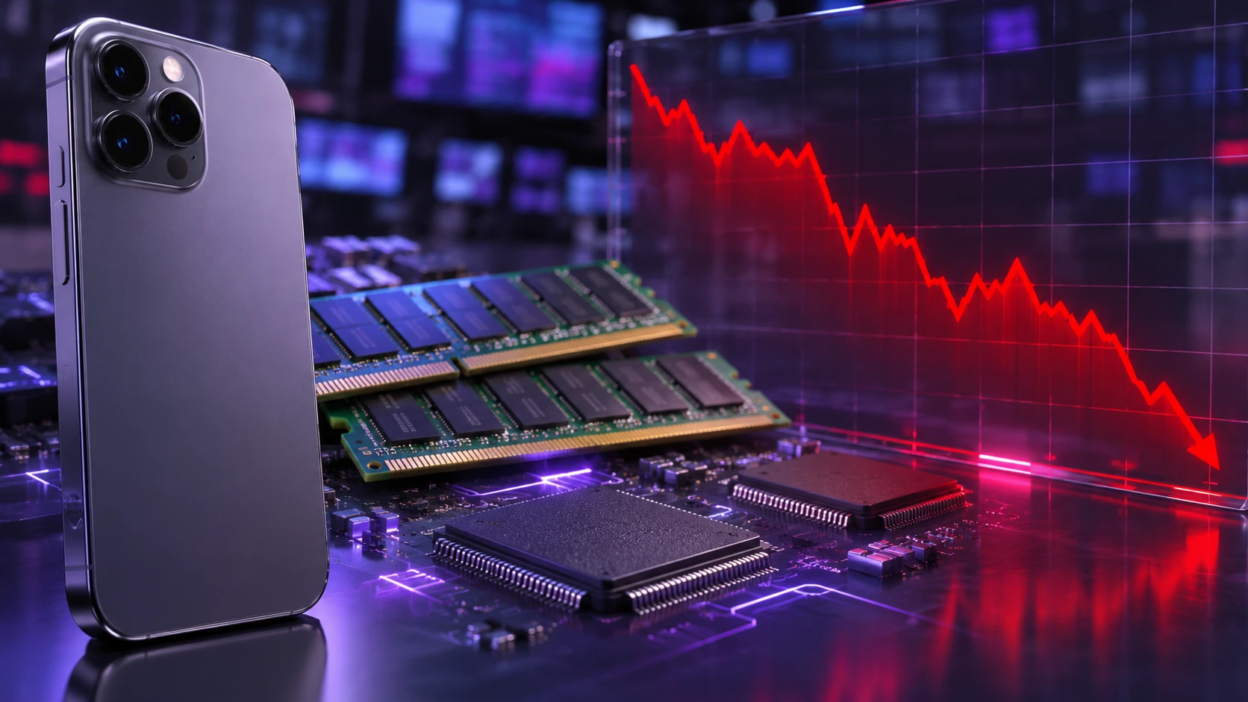
Apple (NASDAQ: AAPL) shares fell about 4% in U.S. premarket trading on Tuesday, November 3, 2026, after the company warned that higher memory chip prices could reduce its profit margins during the upcoming holiday quarter. The decline followed strong quarterly earnings and record iPhone revenue, but investors remained concerned about rising manufacturing expenses and the additional costs of Apple’s new Siri AI features.
Apple reported its fiscal fourth-quarter 2026 financial results on Monday, November 2. For the quarter ending September 26, 2026, the company recorded revenue of $114.5 billion, representing a 12% increase from a year earlier. Diluted earnings per share rose 14% to $2.10. Despite these positive results, investors focused on Apple’s warning that higher memory costs could reduce profitability during the December quarter.
Before the earnings announcement, TechBonafide had examined the memory-cost challenges facing Apple’s new CEO, highlighting the financial pressures the company faced ahead of its first quarterly results under John Ternus.
Smartphones and computers use RAM to run applications and flash memory to store photos, videos, and other files. Meanwhile, AI data centers require large amounts of specialized memory, including high-bandwidth memory (HBM), to support demanding computing tasks. Although these memory types serve different purposes, growing AI demand can influence manufacturers’ production priorities and contribute to higher costs across memory markets. TechBonafide previously explained how AI-driven memory shortages could raise smartphone and PC prices, showing why the issue extends beyond Apple.
Apple CEO John Ternus, who took over the leadership role in September 2026, described the current rise in memory prices as unusually severe. Apple has partly reduced the impact by using memory components purchased earlier at lower prices and finding savings on other parts. However, these cost advantages are expected to become smaller as older supplies are used up. Ternus also warned that memory purchase prices could continue increasing beyond the December quarter.
Apple reported a company-wide gross margin of 47.9% for the September quarter, as reflected in its consolidated financial statements. This figure included a favorable impact of approximately one percentage point from tariff refunds. For the December quarter, Apple expects its overall gross margin to fall to between 45% and 46%, mainly because of higher memory costs and additional Siri AI expenses. Gross margin shows how much revenue remains after the direct costs of making products and delivering services. The forecast applies to Apple’s overall business rather than a separately reported iPhone profit margin.
Apple’s expanding Siri AI features are adding another cost to its financial outlook. Some AI tasks can run directly on devices, while more demanding requests may require cloud computing resources. Apple expects expenses related to supporting these cloud-based features to affect its services costs as more customers use Siri AI. At the same time, the company continues investing in AI development and software improvements. TechBonafide previously covered Apple’s Gemini-powered Siri strategy, which provides additional context about the company’s expanding artificial intelligence services.
Despite these concerns, Apple’s iPhone business continues to perform strongly. The company reported approximately $57.58 billion in iPhone revenue for the September quarter, representing growth of about 17% from a year earlier. The results exceeded market expectations and showed that customer demand remains healthy, especially for Apple’s premium smartphone models.
Apple launched the iPhone 18 Pro and iPhone 18 Pro Max on September 18, 2026, leaving only nine days of sales within the fiscal quarter that ended September 26. The company’s official iPhone 18 Pro launch announcement confirms the release date. Despite this limited sales period for its newest premium models, Apple recorded its strongest September quarter for iPhone revenue. The result highlights the continued importance of iPhone sales to Apple’s overall business.
Apple has already increased prices across several product lines, including Mac and iPad models earlier in 2026 and iPhones in September. Company executives said these adjustments have helped offset some of the pressure from more expensive memory components. However, Apple has not announced another iPhone price increase specifically in response to its November earnings outlook. If memory costs continue rising, the company may need to absorb additional expenses, find savings elsewhere in manufacturing, or consider further pricing changes. Any future price adjustments remain uncertain.
Despite the margin warning, Apple expects its revenue for the December quarter to grow between 7% and 10% compared with the same period a year earlier. The company believes this could make the holiday quarter its highest-revenue quarter ever, although supply constraints remain a concern. This outlook shows that Apple expects sales growth to continue even as higher memory prices and Siri AI expenses put pressure on profitability. For investors, the main question is whether strong demand will be enough to offset these rising costs.
Investors will now watch how Apple manages its memory supplies, production expenses, and Siri AI spending during the holiday shopping season. The company’s next quarterly results will provide a clearer picture of whether strong iPhone sales can balance rising costs. For now, Apple’s roughly 4% premarket stock decline on November 3 highlights investor concerns about future profitability, even as the company continues reporting record iPhone revenue.