
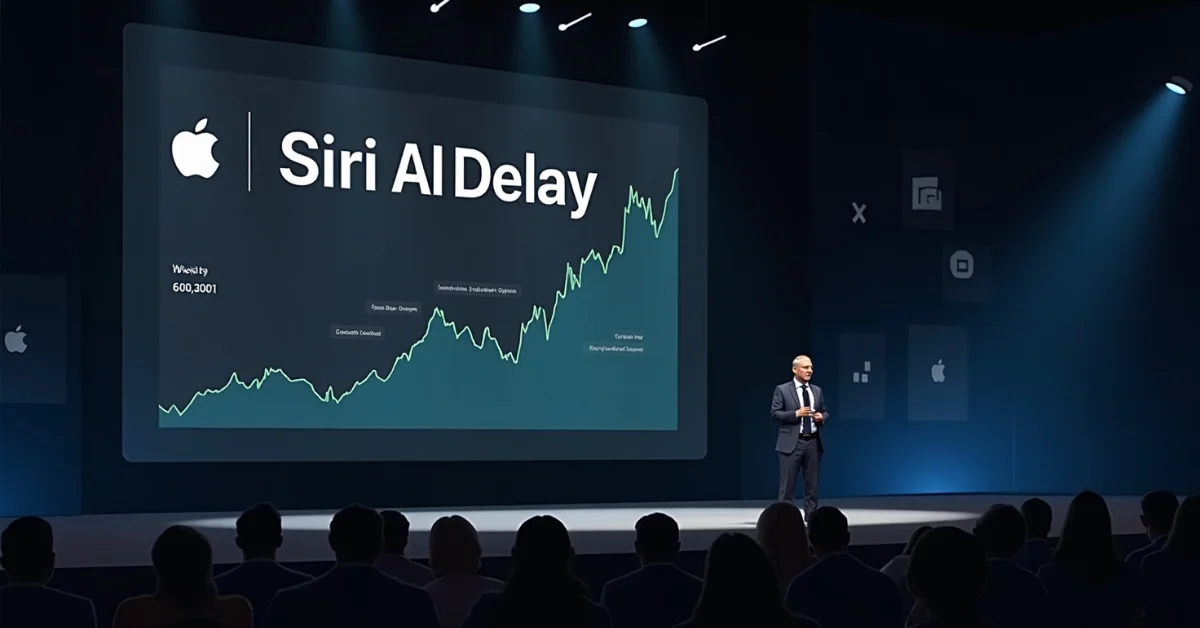
Apple’s annual Worldwide Developers Conference (WWDC) unfolded this week amid mounting scrutiny over its artificial intelligence efforts especially the fate of the beleaguered voice assistant, Siri. Investors, developers, and industry analysts had expected a breakout moment in generative AI. Instead, Siri received a restrained nod, with no major feature announcements and confirmation that a long-promised overhaul would be delayed into next year.
During Monday’s keynote, Apple senior vice president of software engineering Craig Federighi acknowledged the gap. “We’re continuing our work to deliver the features that make Siri even more personal,” he said, adding that the assistant’s AI enhancements needed “more time to reach our high‑quality bar.”
While Siri’s fate remains on hold, Apple unveiled a suite of AI-driven features integrated throughout its ecosystem:
- Live Translation for phone calls, FaceTime, and Messages
- Call Screening with intelligent responses to spam or unknown callers
- Workout Buddy, a fitness AI coach on Apple Watch leveraging personal data
- An expanded Foundation Models framework now allows developers to run AI models directly on devices, enabling powerful offline capabilities without relying on the cloud.
Despite these enhancements, the company’s caution signals a departure from the bold, AI-first messaging pushed by rivals like Google and Microsoft.
Apple’s cautious tone didn’t sit well with Wall Street. Its share price fell between 1.2% and 2.5% during the keynote erasing up to $75 billion in market value in direct response to the Siri update delay.
Wedbush Securities analyst Dan Ives described it as a hard downgrade to Apple’s momentum in the AI space. Dipanjan Chatterjee of Forrester Research remarked that the lack of progress around Siri had become strikingly noticeable, adding that it’s time for Apple to propel its voice assistant forward.
Google’s I/O keynote earlier this year showcased Gemini-powered, context-aware assistants, and Microsoft embedded similar AI tools across Windows. Meanwhile, tech analysts point out that Siri simply failed to keep pace its ambitious overhaul remains incomplete, and branding alone can’t bridge the gap in capability.
One Wired editorial went further: “It’s time to kill Siri,” suggesting Apple might need a complete rebrand or reboot rather than persisting under a dated moniker.
Despite the urgency, Apple appears unfazed by short-term optics. It has long favored a ‘slow and steady’ development approach, entering markets later but with strong, polished products. Analysts argue this remains its competitive edge, but caution that the AI race may not tolerate such latency.
According to Carolina Milanesi of Creative Strategies, while Siri’s upcoming capabilities will offer a more personalized experience, this doesn’t imply that Apple’s current intelligence features are lacking.
All eyes now turn to next year, when Apple must deliver the upgraded Siri or risk losing relevance. In the meantime, they’ll continue building out AI across iOS, macOS, and watchOS, strengthening the ecosystem while hoping to reclaim the AI narrative.
Meanwhile, partnerships like Apple’s integration of OpenAI’s ChatGPT in image processing, and ongoing talks albeit inconclusive about embracing models from Google, hint at a shifting, more open future.
Apple’s WWDC may have dazzled with new features and system-wide refinements, but investors and consumers alike are fixated on Siri. The assistant’s makeover is no longer optional it’s central to whether Apple can right the AI ship and compete in the next era of technology.