

Barclays has upgraded its outlook on three major European airlines, Air France‑KLM, Lufthansa, and IAG from “underweight” to “equal weight.” This decision came after all three carriers reported stronger-than-expected second-quarter results, supported by easing fuel prices, a softer U.S. dollar, and surprisingly resilient travel demand, particularly for premium cabins.
Barclays also raised its price targets:
| Airline | Previous Target | New Target |
| Air France‑KLM | €5.40 | €10.50 |
| Lufthansa | €5.20 | €7.20 |
| IAG | 235 pence | 370 pence |
The bank noted that while transatlantic demand is softening, the decline is slower than anticipated. High-paying leisure passengers are still filling first-class and business-class seats, even as economy demand starts to dip. IAG, in particular, has benefited from strong demand in South American routes.
Key Points:
- All three airlines upgraded to “equal weight” by Barclays
- Q2 profits beat expectations due to premium travel demand
- Falling oil prices and a weaker dollar reduce operating costs
- Structural risks remain, including labor unrest and regulatory challenges
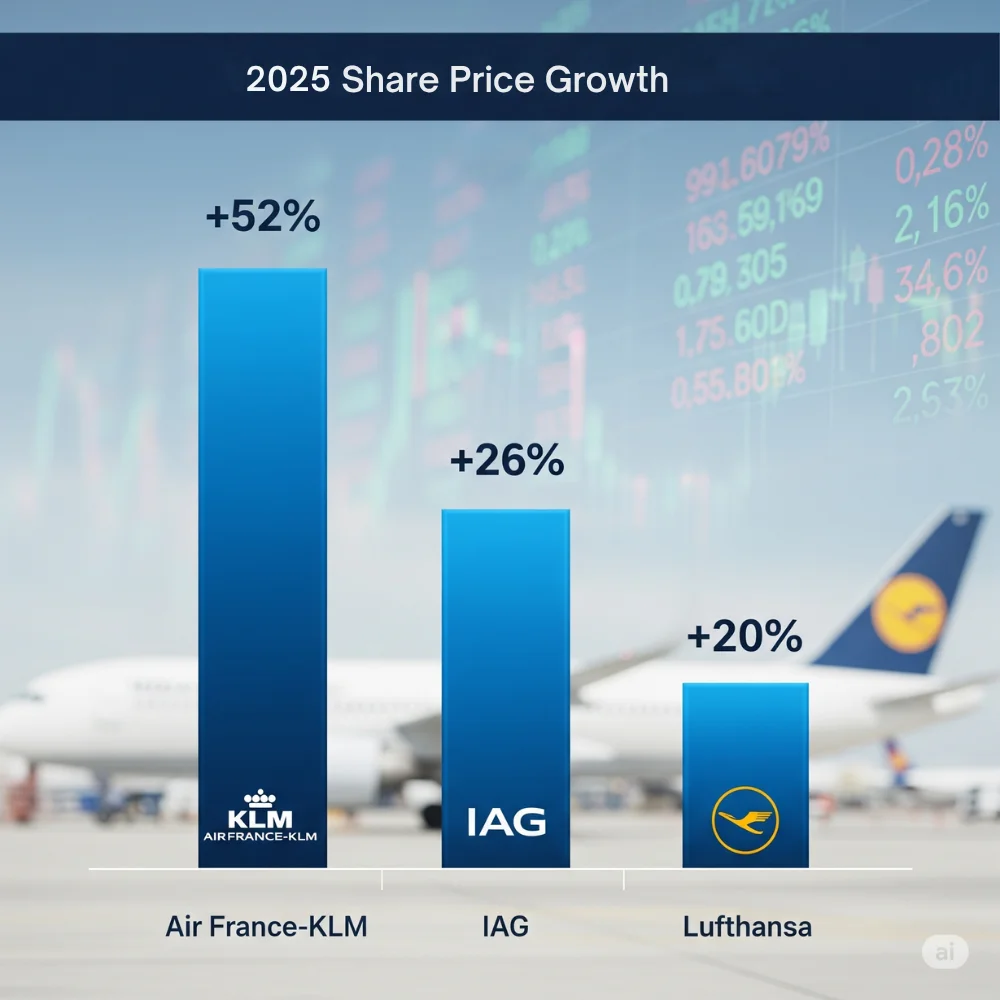
So far in 2025, all three airline stocks have seen notable gains:
| Airline | Share Price Growth in 2025 |
| Air France‑KLM | +52% (14% gain in one day) |
| Lufthansa | +20% |
| IAG | +26% |
Breaking down the Q2 performance:
Air France‑KLM reported a profit of €736 million, up from €513 million last year. Strong performance came from premium routes like Paris to New York.
Lufthansa earned €871 million in operating profit, a 27% year-on-year increase. The airline benefited from strong U.S. travel demand and cost efficiencies, including shifting some operations to Rome and gains from owning ITA Airways.
IAG, the owner of British Airways, posted €1.68 billion in operating profit, a 35% jump from the previous year driven by solid performance in the U.S., Europe, and Latin America.
Barclays still maintains a cautious stance overall. While there are positives like premium cabin demand and lower fuel costs, risks such as labor disputes, stricter regulations, airport taxes, and union pressures could limit long-term upside.