
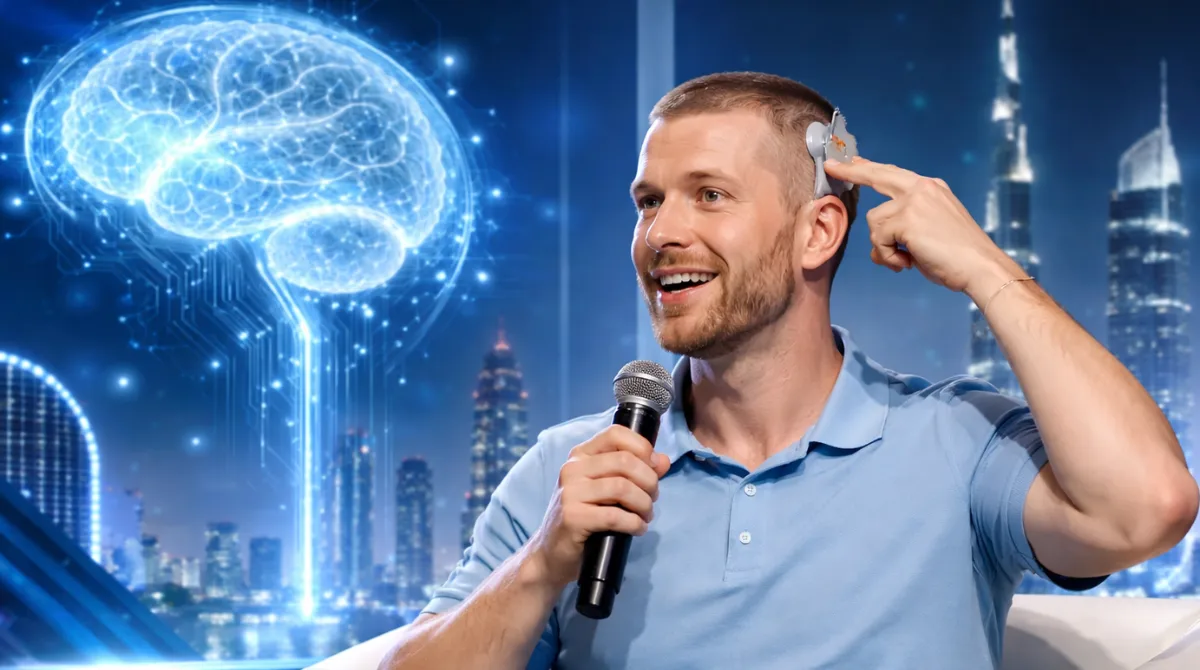
Noland Arbaugh, the first human to receive a Neuralink brain implant, shared how the technology reshaped his life during remarks at a Dubai summit. Paralyzed below the shoulders after a 2016 swimming accident, Arbaugh described the implant as a turning point in his daily independence.
He became Neuralink’s first participant in early 2024, undergoing surgery at Barrow Neurological Institute in Phoenix. Shortly after the procedure, he publicly revealed himself as “Participant 1” during a Neuralink event.
The implanted device uses more than 1,000 electrodes to read neural signals and convert them into digital commands. This allows hands-free interaction with computers using thought alone.
What the Neuralink implant enables
- Move a cursor and type without physical movement
- Browse the internet and read independently
- Play video games using neural signals
- Train with the system for several hours each day
Arbaugh said these abilities significantly improved his quality of life and sense of autonomy. With renewed independence, he enrolled in community college courses focused on neuroscience prerequisites and began exploring public speaking and professional opportunities.
He also shared that he met Elon Musk via FaceTime on the day of his surgery and later connected with him in person. Arbaugh emphasized that his decision to participate was driven by a desire to help advance brain-computer technology for others living with paralysis.
| Key Detail | Information |
| Injury year | 2016 |
| Implant surgery | Early 2024 |
| Core function | Thought-controlled computing |
| Daily usage | Multiple hours for research and training |