
Sony, Meta and Apple are taking different paths in future computing because they are solving different problems. Sony prioritizes immersive entertainment and proven gaming ecosystems, Meta prioritizes scalable social platforms and Apple prioritizes premium mixed reality as a new personal computer.
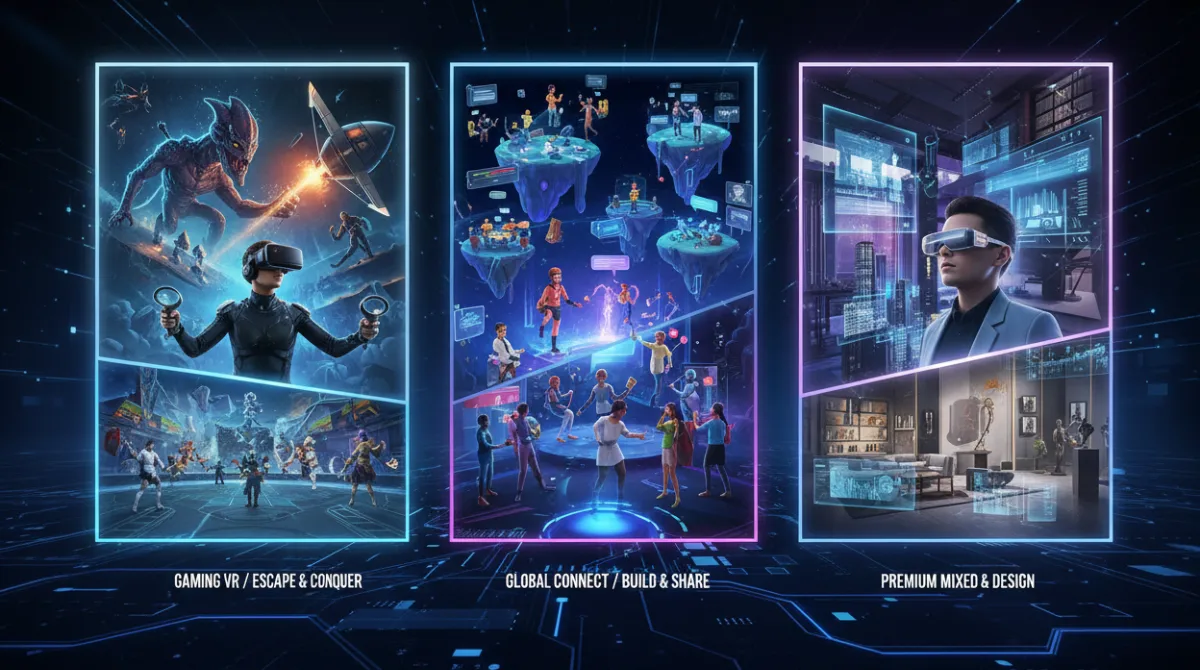
These strategies will likely coexist, with each pushing the others to improve hardware comfort, software quality and developer tools. The biggest impact will come from the company that turns spatial computing into a daily habit while earning long-term trust.
Why Sony, Meta and Apple Differ in Future Computing?
Future computing is not only about screens on your face. It also covers input methods, spatial interfaces, developer ecosystems, silicon, sensors and the way people pay for experiences.
Sony leans on entertainment and console-grade ecosystems, Meta targets mass adoption through scale and Apple focuses on premium personal computing. Those priorities influence everything from display choices to app distribution.
These strategies also reflect different definitions of success. One path aims to sell compelling experiences, another aims to grow a social platform and another aims to redefine the personal computer with spatial UI.
How Sony Is Shaping Future Computing Through Gaming?
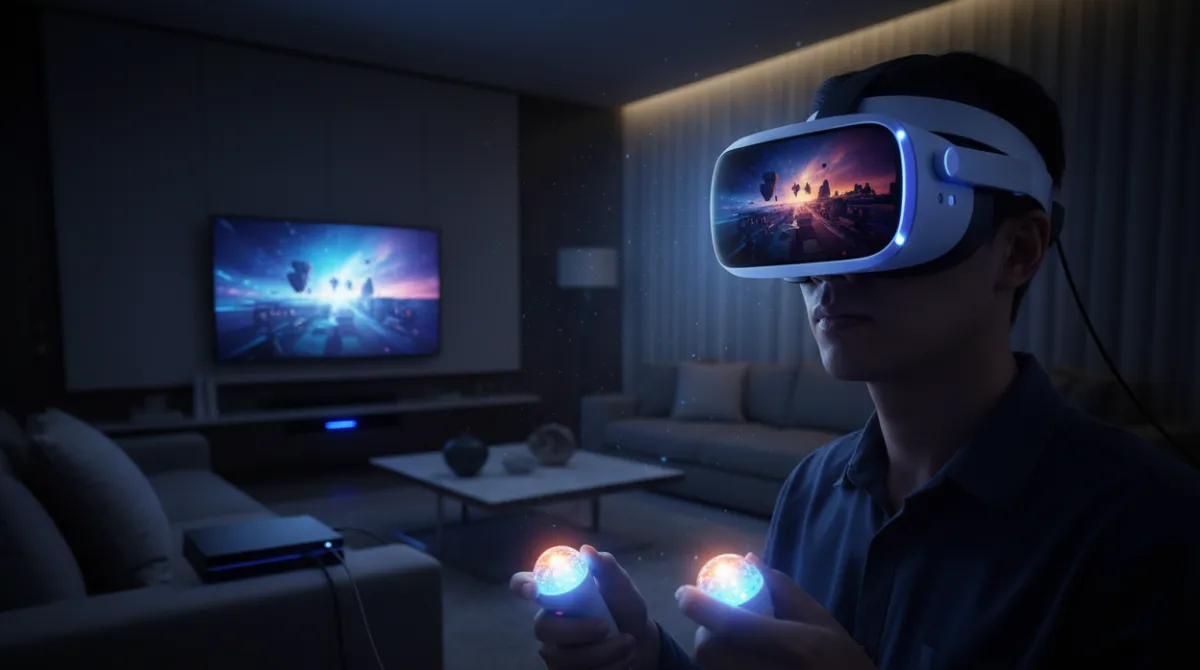
Sony approaches future computing by treating immersive hardware as an extension of its entertainment stack. Gaming is the anchor, with cinematic presence, responsive tracking and content depth carrying more weight than broad productivity.
This approach benefits from a familiar on-ramp. Console players already understand controllers, curated storefronts and paying for premium titles, which reduces friction compared with brand-new categories.
Sony can also connect hardware to a wider media engine. Music, film and interactive storytelling help build worlds that justify immersion and keep users returning for long sessions.
Strengths In Sony’s Immersive Entertainment Model
Sony’s advantage comes from shipping high-fidelity experiences that feel complete on day one. Tight integration with established game studios makes it easier to deliver content that uses VR well rather than treating it as a side mode.
- Content-first momentum. Strong first-party and partner pipelines encourage adoption by delivering must-play experiences.
- Known performance targets. Console-style optimization can produce consistent frame rates and predictable user comfort.
- Controller-led interaction. Familiar inputs lower the learning curve and support competitive play.
- Living room readiness. Entertainment use fits existing habits, which can drive repeat use and social play.
That foundation positions Sony to make immersive computing feel like a natural upgrade for people who already pay for premium entertainment.
Limitations Sony Must Solve To Expand Beyond Gaming
Gaming can be a strong wedge, but it can also narrow perception. If immersive hardware is seen only as a console accessory, it may struggle to become a general-purpose computing layer.
- Broader utility. Productivity, communication and lightweight creation tools need a clearer role.
- Session flexibility. Short, frequent use cases are harder to build when the default expectation is a long play session.
- Developer diversity. Entertainment studios are not the same as enterprise and creator toolchains.
Solving these constraints would help Sony’s immersive entertainment strategy map onto wider future computing expectations.
Why Meta Is Betting On VR, AR And The Metaverse?
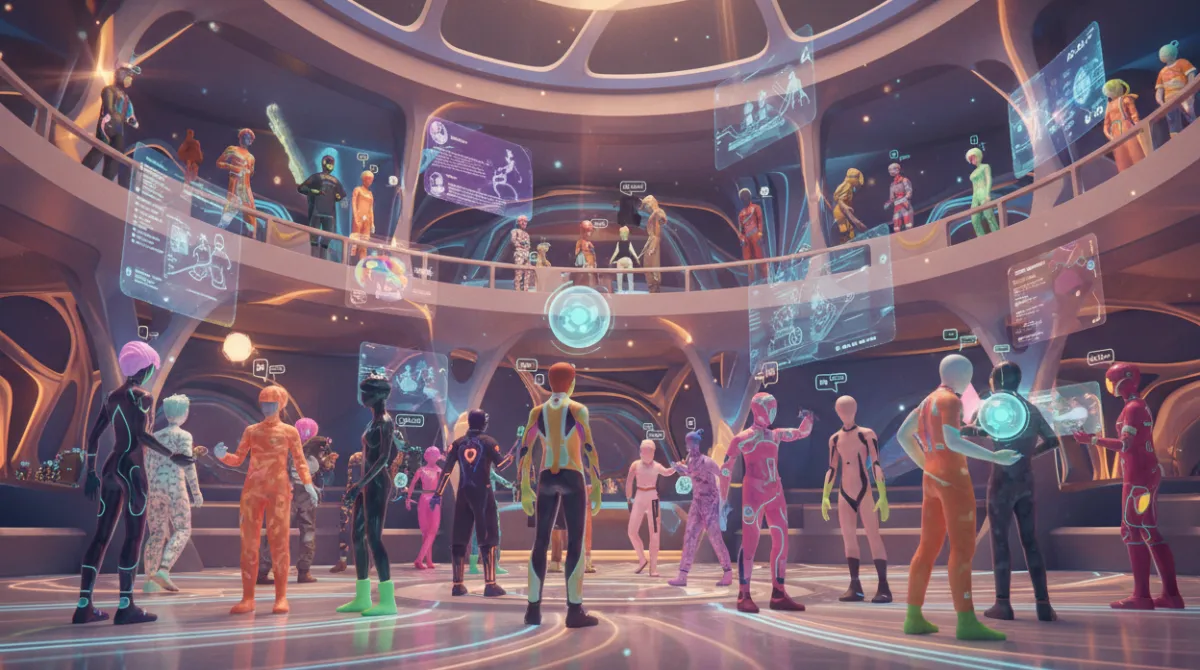
Meta is betting on VR and AR as the next major social and platform layer. The metaverse direction is less about a single device and more about persistent identity, shared spaces and scalable distribution.
This strategy pushes toward mainstream affordability and frequent usage. Meta’s long-term goal is to build a platform where social presence, creators and commerce can grow without relying on other mobile gatekeepers.
Meta’s Scale And Platform Play
Meta optimizes for adoption through price accessibility, iterative hardware cycles and broad developer reach. The company also leans on social graphs and community features to make virtual spaces feel populated and alive.
- Mass-market pricing pressure. Competitive hardware pricing can grow the install base and attract developers.
- Platform tooling. SDKs, analytics and distribution support help teams ship and improve apps quickly.
- Social by default. Shared rooms, avatars and events aim to make VR and AR more habitual.
- Experimentation culture. Rapid iteration encourages novel interaction patterns and new content formats.
If that flywheel works, Meta’s approach could normalize spatial interaction for millions of people, not only enthusiasts.
Challenges In The Metaverse Bet
Scale introduces its own risk. A large user base must still translate into long-term retention, meaningful content quality and trust around privacy, safety and moderation.
- Comfort and wearability. Headsets must become lighter and more glasses-like for all-day use.
- Content depth. Social spaces need reasons to return beyond novelty and events.
- Trust and governance. Identity, safety tools and data practices must meet high expectations.
Meta’s path depends on turning spatial computing into a platform people choose daily, not a device they try occasionally.
How Apple Is Building Future Computing Through Mixed Reality?
Apple is building future computing around premium mixed reality with an emphasis on personal computing quality. The focus is on high-resolution displays, precise sensors, polished UI and deep integration with existing Apple devices and services.
This is a top-down strategy. Rather than chasing the lowest price, Apple is aiming for a device that feels like a new kind of computer, with spatial windows, strong media playback and refined interaction.
Apple’s Premium Mixed Reality Positioning
Apple’s advantage is consistency across hardware, software and developer economics. When the company defines a platform, it tends to define a standard for interface patterns, performance expectations and privacy posture.
- High-end user experience. Display clarity, audio and hand-eye interaction are treated as non-negotiables.
- Strong ecosystem pull. Cross-device workflows can reduce friction for people already using Macs, iPhones and iPads.
- Developer monetization norms. Paid apps and subscriptions are familiar to Apple’s customer base.
- Spatial productivity fit. Multitasking, media work and communication align with premium personal computing habits.
This approach positions Apple to make mixed reality feel like a serious workstation, not only an entertainment headset.
Tradeoffs Of A Premium First Strategy
Premium positioning can slow adoption, especially when a category is still forming its everyday use cases. It also raises expectations for comfort, battery life and the breadth of high-quality apps at launch and beyond.
- Price elasticity. Higher cost narrows the early market and can limit developer reach.
- Content ramp. Premium hardware needs premium experiences, not thin ports.
- Wear time. A computer you wear must feel effortless across long sessions.
Apple’s bet is that a premium mixed reality computer can lead the category, then expand over time as the technology becomes smaller and more accessible.
What Makes Sony, Meta And Apple Different In The Future Computing Race?
The most visible difference is each company’s center of gravity. Sony leads with immersive entertainment, Meta leads with platform scale and social presence and Apple leads with premium computing integration.
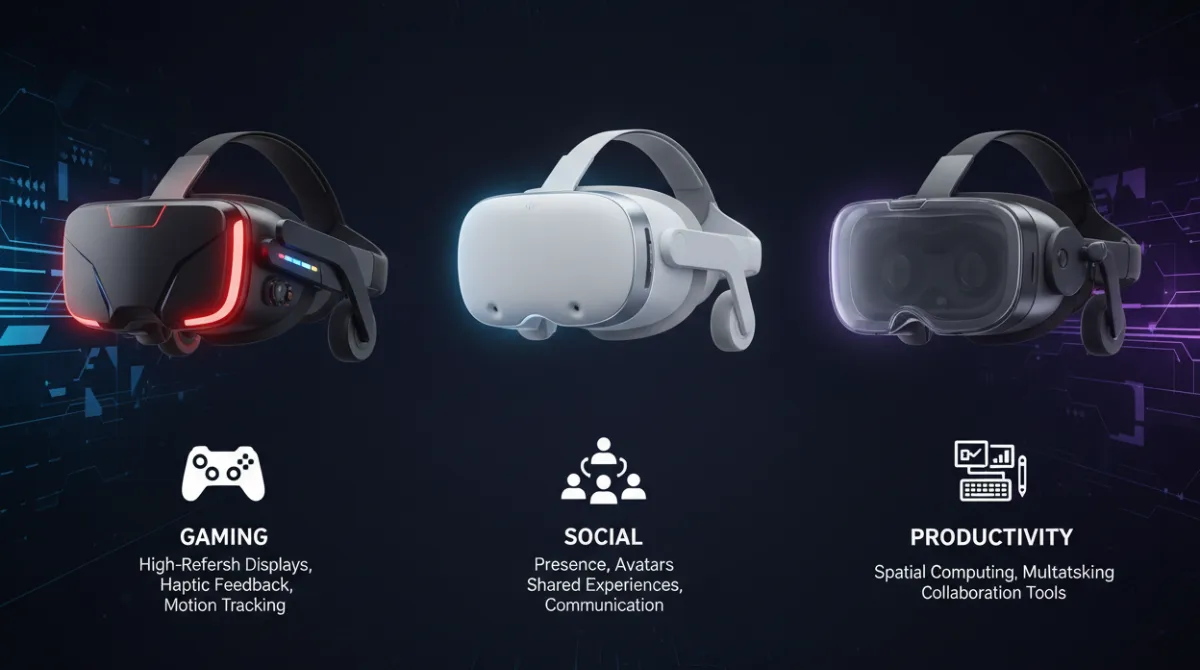
Those choices shape product decisions such as input, storefront rules, content priorities and developer incentives. Over time, they also shape what users expect when they hear the phrase future computing.
| Company Focus | Primary Goal | Likely Near-Term Strength |
|---|---|---|
| Sony Gaming And Immersive Entertainment | Premium experiences that sell hardware and software | High-fidelity content and console-grade performance |
| Meta VR AR And The Metaverse | Platform scale and social ecosystem growth | Large install base and rapid iteration |
| Apple Premium Mixed Reality | Spatial personal computing with polished UX | Integration across devices and strong UI standards |
| Developer Angle | Different incentives and distribution rules | Distinct app catalogs and content investment patterns |
These contrasts explain why the market will likely support multiple winners rather than a single dominant approach.
Which Company Could Have The Biggest Impact On Future Computing?
Impact depends on the definition of future computing. If the goal is to mainstream headsets quickly, Meta’s scale-first strategy has the clearest path to large user numbers.
If the goal is to set quality expectations for spatial UI and mixed reality interaction, Apple’s premium approach can influence design norms across the industry. If the goal is to prove that immersive experiences can be consistently great and commercially durable, Sony’s entertainment-led model can keep VR culturally relevant.
Several factors will decide who leads in the long run. The winners will be the teams that improve comfort, reduce friction and deliver software people miss when they take the headset off.
- Wearability and comfort. Lighter devices, better balance and heat management determine daily use.
- Input and interaction. Hands, eyes, voice and controllers must feel reliable across lighting and environments.
- App depth. A few standout experiences are not enough to sustain a new computing platform.
- Trust. Clear privacy controls and safety systems shape long-term adoption.
As these variables improve, the category can expand from niche usage into a wider computing shift.