

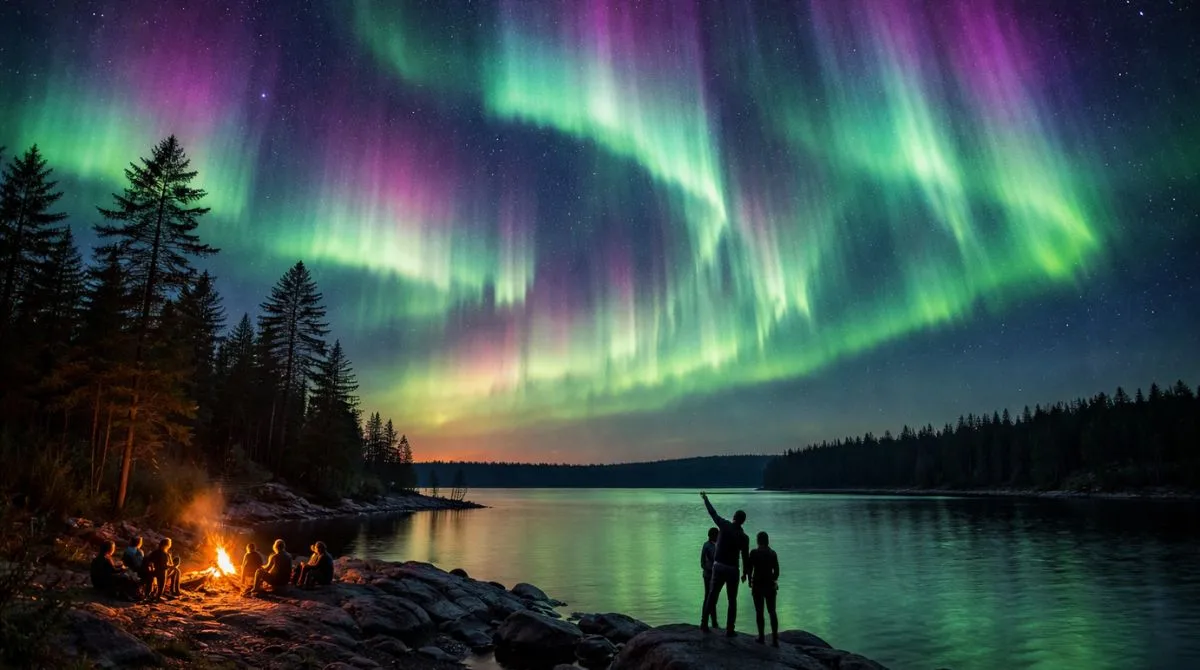
Skywatchers across parts of the United States may have a rare opportunity to see the northern lights tonight as aurora activity strengthens after sunset. Forecasts suggest visibility across as many as 15 states during the overnight hours.
This event is being driven by a fast-moving stream of solar wind flowing from a large coronal hole on the Sun. Data from the NOAA Space Weather Prediction Center indicates conditions favorable for minor geomagnetic storm activity, with brief periods of stronger activity possible into January 18.
Auroras typically stay close to the northern border, but increased geomagnetic activity can push visibility farther south. The most intense activity is expected between 1 a.m. and 7 a.m. Eastern Standard Time, when skies are darkest.
States with Possible Aurora Visibility:
- Alaska
- Washington
- Montana
- Idaho
- Wyoming
- North Dakota
- South Dakota
- Minnesota
- Wisconsin
- Michigan
- Iowa
- Maine
- Vermont
- New Hampshire
- New York
Aurora Timing and Conditions:
| Factor | Details |
| Peak viewing window | 1 a.m. to 7 a.m. EST |
| Geomagnetic storm level | Minor (G1), with isolated periods of moderate (G2) activity |
| Aurora visibility range | From Alaska to parts of the Northeastern United States |
| Primary solar driver | High speed solar wind from a large coronal hole on the Sun |
Clear skies away from city lights will offer the best chance to spot the northern lights as they ripple across the horizon.