
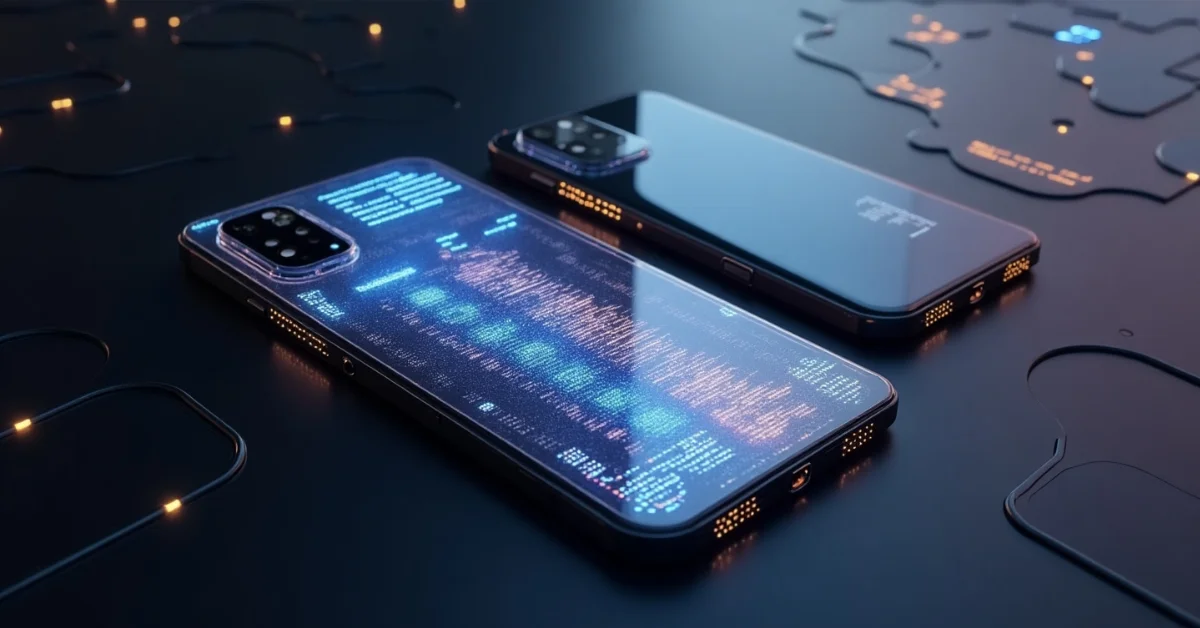
British startup Nothing is stepping boldly into the flagship arena with its latest smartphone offering the Phone 3, priced from US $799 (with a higher-end $899 variant featuring 16 GB RAM), designed to challenge premium rivals like Samsung, Google, and OnePlus.
The most notable update is the evolution of its signature ‘Glyph’ lighting system into the new ‘Glyph Matrix’ a compact 25×25 LED grid that goes beyond visual appeal to offer more functional and expressive capabilities. In live demos, this matrix animates for notifications, acts as a countdown timer, spirit level, and even supports mini‑games like “Rock‑Paper‑Scissors.” Nothing hopes third‑party developers will adopt its new SDK to custom code additional interactions.
The phone retains the brand’s signature transparent panel, but introduces a tri‑column aesthetic reminiscent of ’90s gamer nostalgia, with Gorilla Glass Victus protection and IP68 water/dust resistance.
A 6.67‑inch AMOLED display with 1.5 K resolution, 120 Hz refresh rate, and 1.87 mm slim bezels anchors the visual experience . It’s built for both usability and modern flair.
On the camera front, the Phone 3 packs a quad‑50 MP setup a main lens, ultrawide, 3 × telephoto (up to 60× digital zoom and 10 cm macro), plus a 50 MP front shooter each capable of 4 K/60 fps video. Tech editor Richard Priday hailed this quad-array as “a unique flagship camera system in 2025”.
A subtle but clever innovation: the rear dot turns into a recording indicator during video capture.
Under that transparent hood sits Qualcomm’s Snapdragon 8S Gen 4, which, though slightly below the top-tier “Elite” chip, offers significant improvements up to 36% faster CPU, 88% GPU gains, and 125% AI acceleration versus Phone 2. It comes in two variants: 12 GB/256 GB or 16 GB/512 GB .
Fueling the device is a 5,150 mAh battery, a jump over its predecessor, paired with 65 W wired charging capable of reaching 50 percent in 19 minutes and likely support for fast wireless and reverse charging.
Running on Nothing OS 3.5, based on Android 15, the device comes with a commitment to 5 years of operating system updates and 7 years of security patches. A forthcoming OS 4.0 (Android 16) is expected later this year.
AI features shine through Essential Space, including a handy “Flip to Record” for voice notes with automatic transcription and summary. Also debuted is Essential Search, a universal AI search bar that can find anything from apps to celestial trivia, and improves its suggestions over time.
In their live preview and video coverage, Engadget commended the Phone 3 for its bold design and the whimsical charm of the Glyph Matrix, describing it as ‘a tiny, playful dot matrix screen’ featured in the company’s most premium device to date. The phone’s balance of standout features with solid mid‑to‑upper-tier components (display, battery, UI) contrasts with rival flagships, but its quirk-driven approach may be exactly its advantage .
The Phone 3 stands as Nothing’s most ambitious release to date a true flagship equipped with cutting-edge design, powerful specifications, AI-powered features, and robust long-term software support. While it may not match rivals in the raw performance tier, its personality-rich UI and user‑centric innovations offer plenty of character. As Engadget concluded, “That could be all some people need to be convinced.”
- Price: Starting at US $799 (12 GB/256 GB), $899 (16 GB/512 GB).
- Pre‑orders: Begin July 4; open sales from July 15, with fan‑drop access on July 12.
- Colors: Black and White.
Nothing’s Phone 3 may divide opinion but its fearless design, playful touches, and long‑term roadmap clearly mark it as a standout entry in this year’s flagship phone race.