
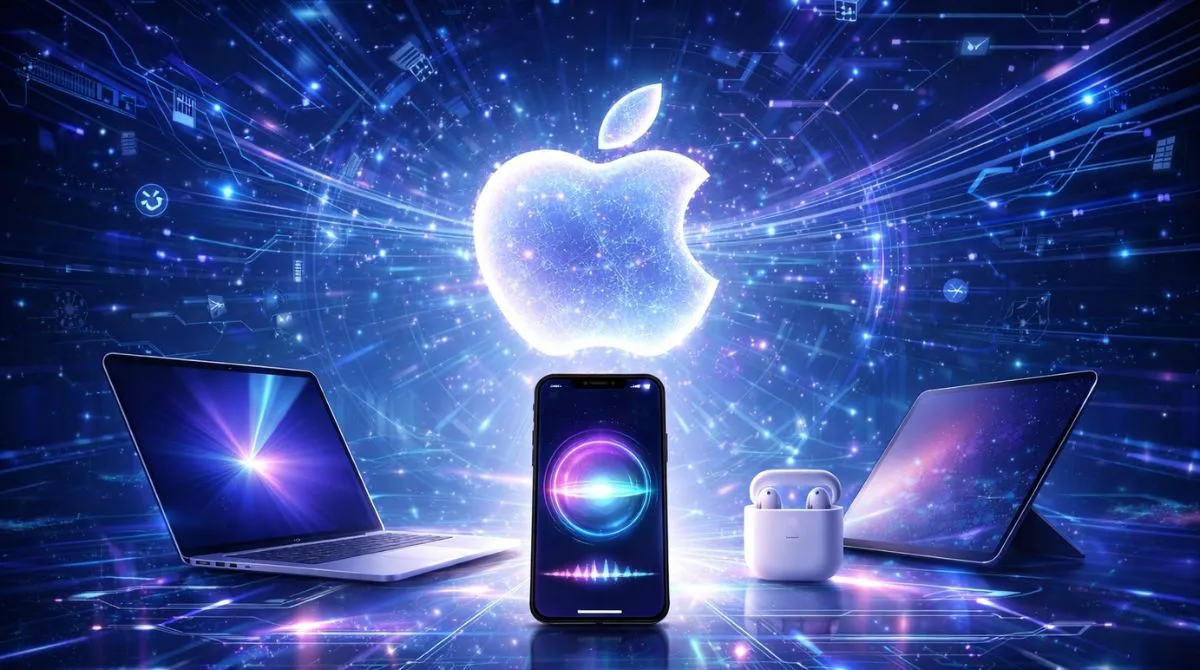
Apple Intelligence is reshaping the landscape of virtual assistants by enhancing Siri’s capabilities and setting new standards for AI interaction. This innovation focuses on blending advanced machine learning with user privacy, creating AI experiences that feel more natural, responsive and secure.
Foundations of Apple Intelligence
At its core, Apple Intelligence is Apple’s approach to embedding smarter artificial intelligence directly into devices and services. This includes improving speech recognition, contextual understanding and proactive assistance by leveraging on-device processing. This evolution aligns with how artificial intelligence is changing IT by shifting intelligence closer to devices instead of relying solely on centralized cloud systems.
Unlike traditional cloud-reliant AI systems, Apple emphasizes privacy first technologies. This encourages a balance where complex computations happen locally, reducing dependency on external servers and enhancing data security.
Enhancing Siri with Apple Intelligence
Siri has evolved from basic command execution to an adaptive assistant capable of nuanced interactions. Recent reports indicate Apple may leverage Google Gemini to power AI-enhanced Siri, signaling a strategic expansion of Siri’s underlying intelligence. Apple Intelligence fuels this leap by:
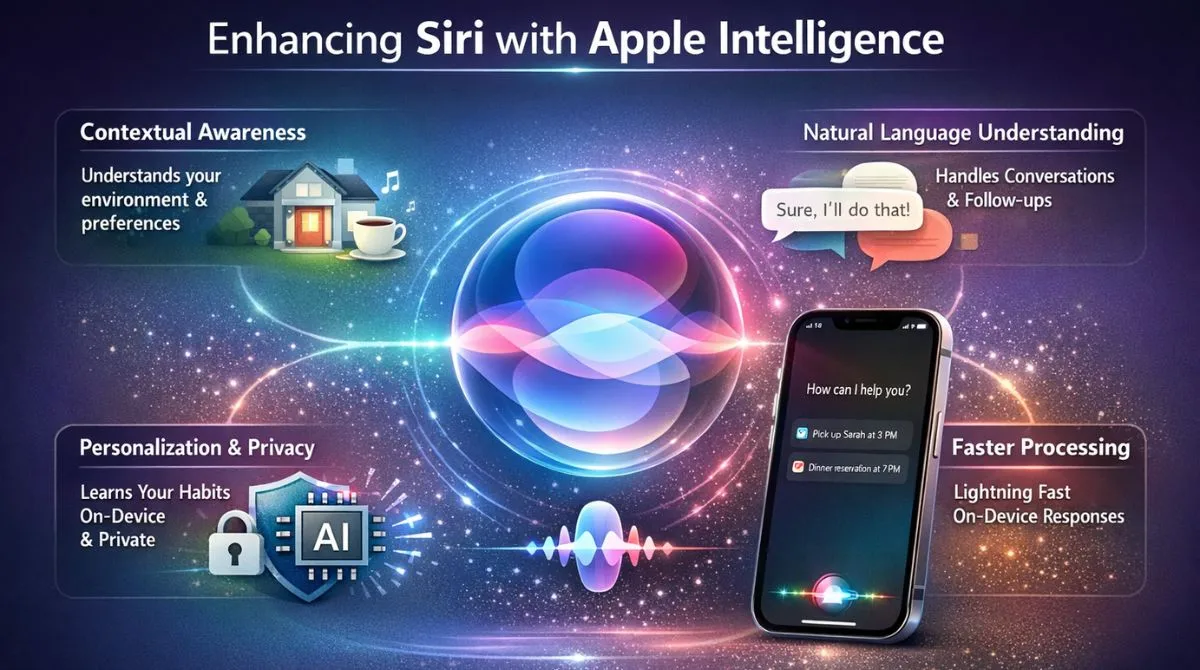
- Contextual Awareness: Siri now understands subtle cues about your environment and preferences, making responses more relevant.
- Natural Language Processing Improvements: Enhanced algorithms help Siri grasp conversational nuances, idiomatic expressions and follow-up questions seamlessly.
- Personalization: The assistant learns user habits and tailors suggestions without compromising privacy, thanks to on device learning.
- Faster Processing: On-device AI chips accelerate speech recognition, allowing Siri to respond swiftly without relying heavily on internet connectivity.
These enhancements collectively make Siri more intuitive and dependable, attracting users who seek a seamless AI experience.
Key Technologies Driving Apple Intelligence
Several sophisticated technologies underpin Apple Intelligence and its impact on AI assistants:
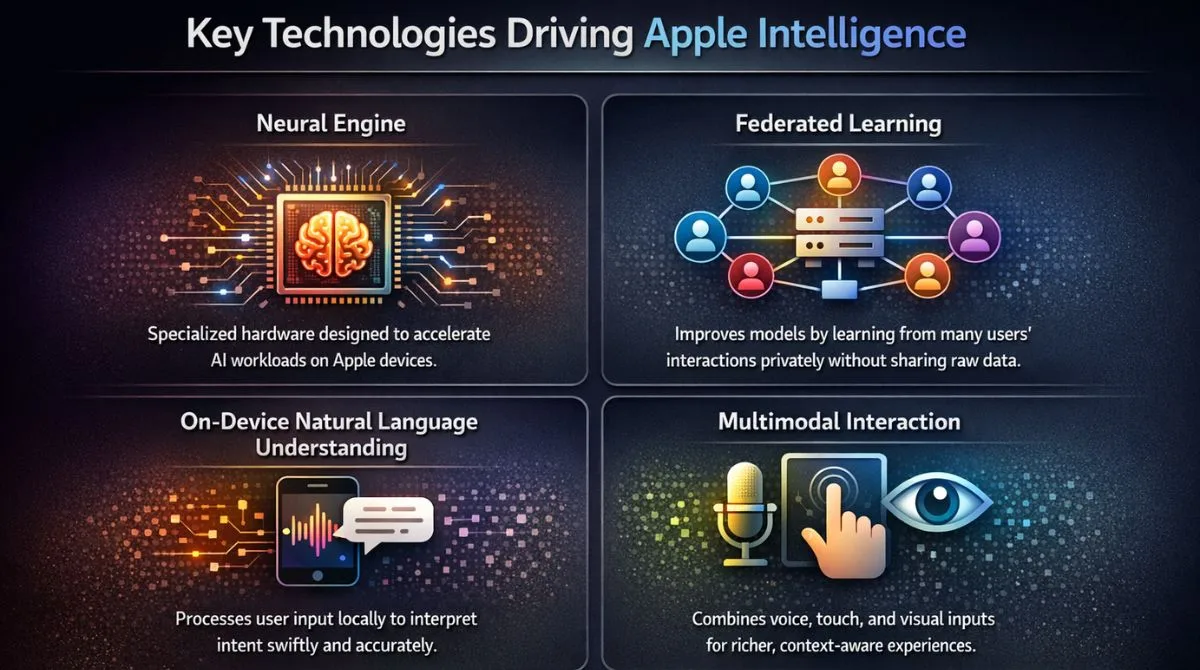
- Neural Engine: Specialized hardware designed to accelerate AI workloads on Apple devices.
- Federated Learning: Allows models to improve by learning from many users’ interactions privately without sharing raw data.
- On-device Natural Language Understanding: Processes user input locally to interpret intent swiftly and accurately.
- Multimodal Interaction: Combines voice, touch and visual inputs to create richer, context aware experiences.
Each component contributes to making AI assistants smarter, quicker and more privacy-conscious.
Implications for the Future of AI Assistants
The integration of Apple Intelligence points toward significant trends and possibilities for AI assistants moving forward:
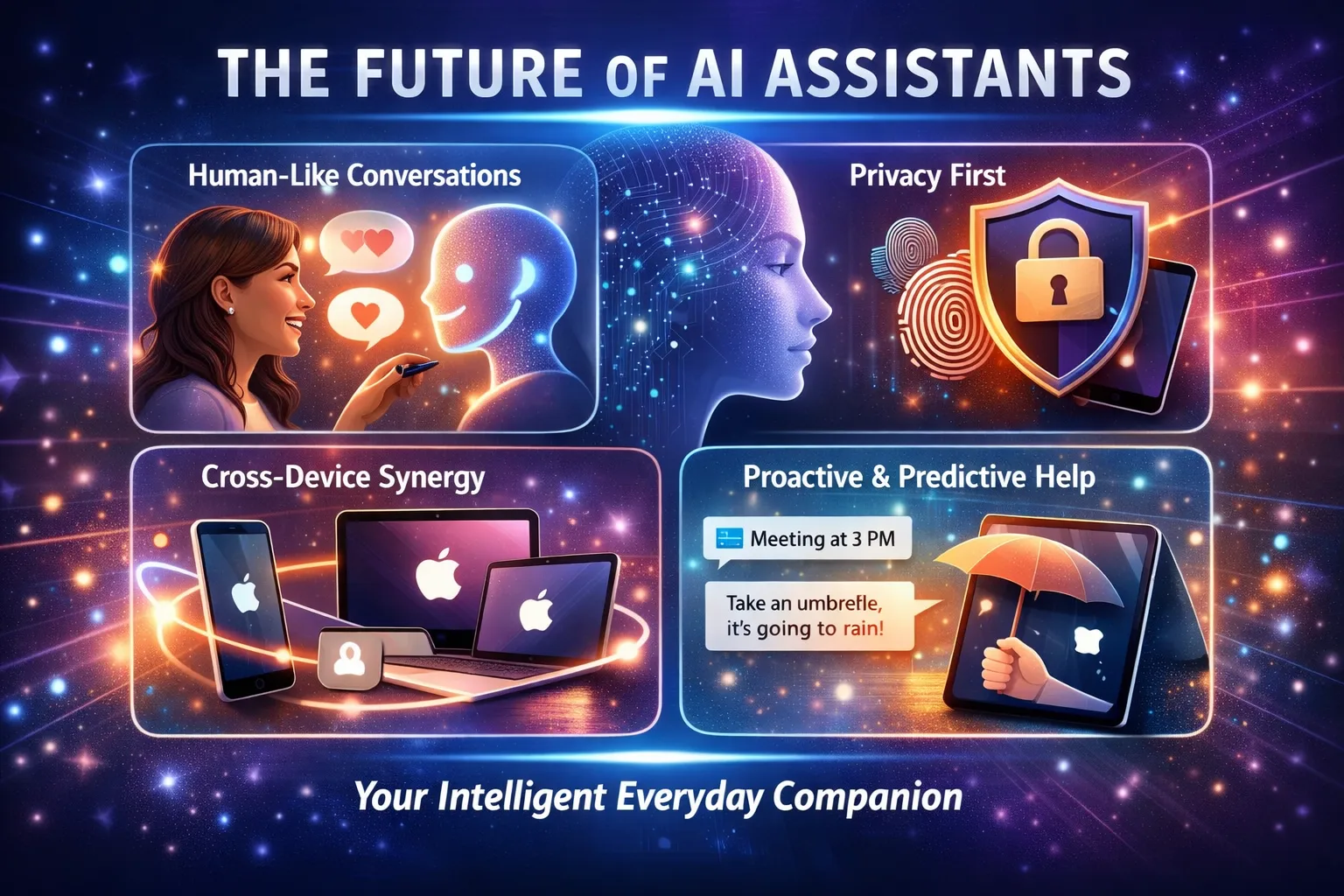
- More Human-like Conversations: AI that can engage fluidly and understand emotional subtleties.
- Privacy as a Priority: Users gain advanced AI functionality without sacrificing control over their personal data.
- Cross-device Synergy: Assistants that seamlessly operate across Apple’s ecosystem, enhancing continuity and convenience.
- Proactive and Predictive Assistance: AI anticipates needs and offers timely help without explicit commands.
These directions highlight a future where AI assistants become indispensable daily partners.
Comparing Apple Intelligence with Other AI Approaches
Apple Intelligence is distinct due to its firm commitment to privacy and local processing. Unlike competitors that primarily rely on cloud based analytics, Apple’s approach reduces latency and potential data exposure.
This design choice fosters user trust and creates a sustainable model for future AI development, especially where sensitive data is involved.
| Aspect | Apple Intelligence | Traditional AI Assistants |
|---|---|---|
| Data Processing | On device with privacy focus | Cloud-based with extensive data sharing |
| Latency | Low latency due to local computing | Higher latency needing internet connection |
| Personalization | Private, localized learning | Data aggregated for model training |
| Security | End-to-end encryption and minimal data exposure | Increased data vulnerability risks |
Conclusion
Apple Intelligence represents a transformative step in how AI assistants evolve, focusing on smarter, faster and more respectful interaction. By embedding powerful AI capabilities locally and prioritizing user privacy, Apple is redefining the expectations for virtual assistants.
This progress not only enhances Siri’s responsiveness and personalization but also sets a benchmark for future AI technologies. As AI assistants become more seamlessly integrated into daily lives, Apple Intelligence ensures they remain trustworthy, efficient and genuinely helpful tools.