

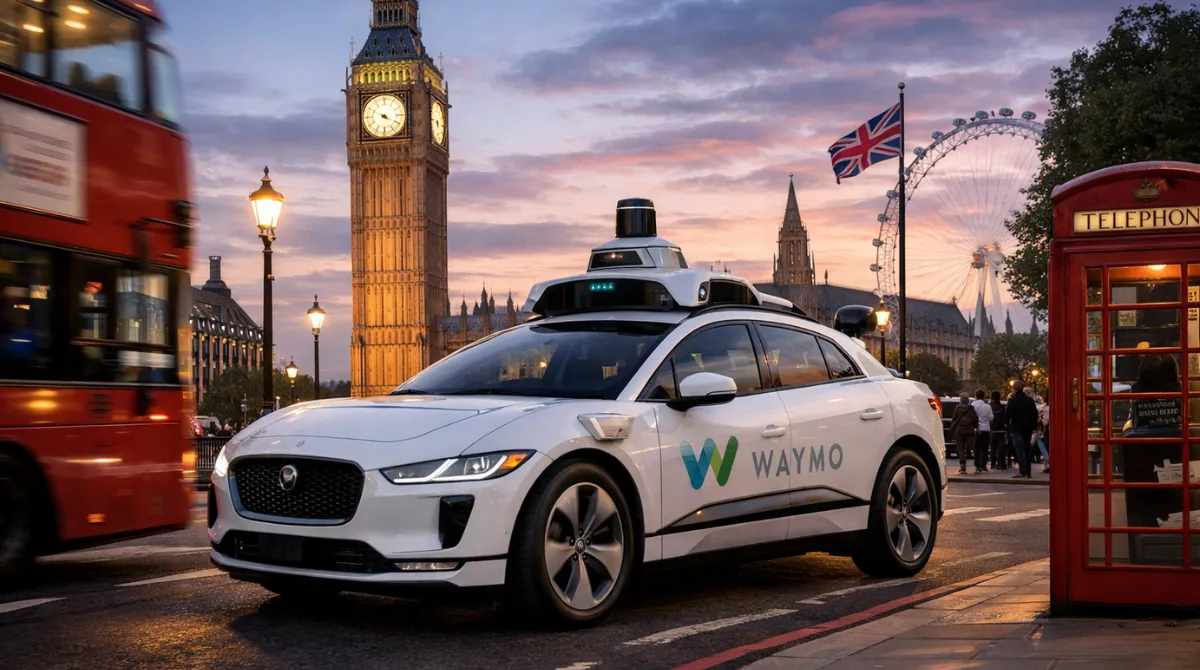
Waymo aims to launch driverless taxis in London by late 2026, marking its first commercial robotaxi service outside the United States. The plan starts earlier with a supervised pilot that uses safety drivers while Jaguar I-Pace vehicles map routes and learn London’s unique street patterns.
UK transport officials are backing passenger pilot schemes and pro-innovation self-driving rules, creating a supportive runway for commercial rollout. Government forecasts also point to major upside, including thousands of autonomous-vehicle jobs and significant economic lift by 2035.
Waymo’s operating model targets a competitive but premium position, with higher prices during peak demand. Early rides will focus on central London with a modest fleet, then expand coverage and vehicle numbers as performance and approvals scale.
What Makes London Harder than Most Test Cities
- Narrow streets and dense pedestrian traffic
- Complex junctions and inconsistent weather
- UK-specific crossing behavior, including zebra crossings
- Emergency-vehicle detection and strict local safety standards
| Area | Waymo London plan |
| Rollout timing | Supervised pilot first, fully driverless by Q4 2026 |
| Starting zone | Central London |
| Fleet strategy | Modest start, scale over time |
| Pricing | Competitive premium, peak pricing during high demand |
| Competition | Pressure on Wayve, Tesla, and other robotaxi players |