

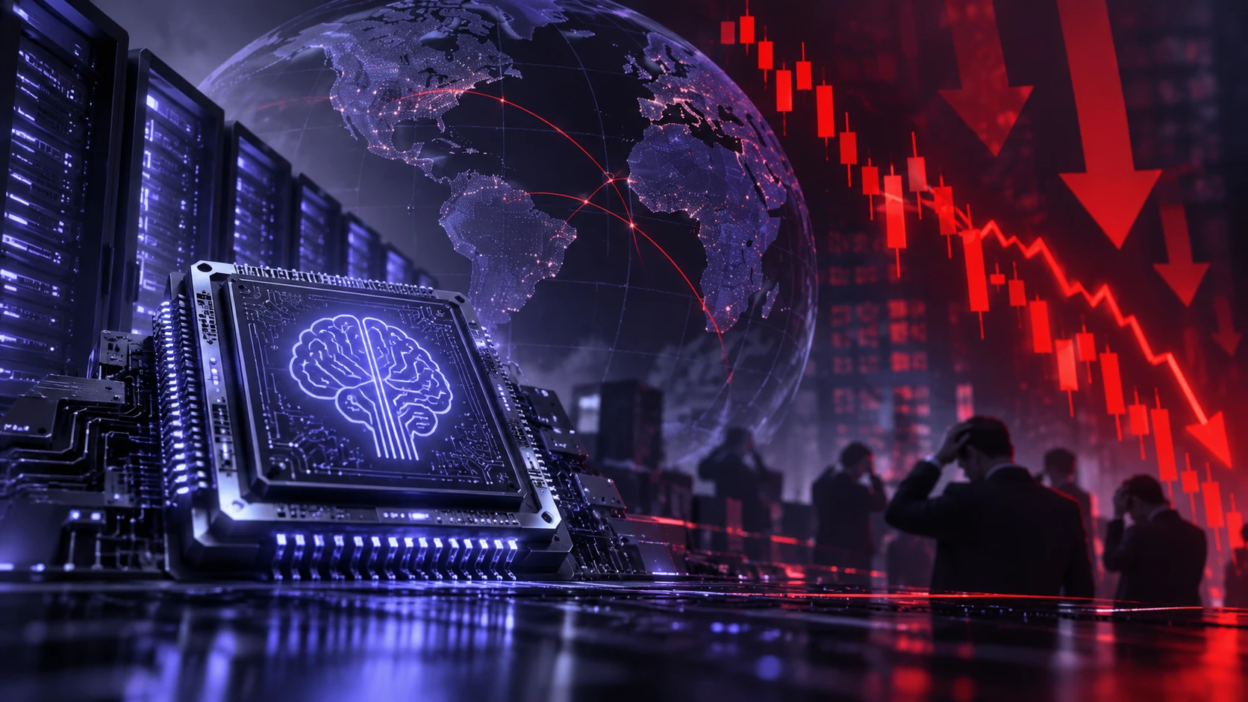
AI safety concerns have shaken global stock markets, sending Nvidia and several other major technology stocks lower as investors question whether the rapid expansion of artificial intelligence could slow down.
Nvidia shares fell more than 2% in premarket trading on Monday, September 14, while other large technology companies also came under pressure. Amazon and Meta dropped more than 1%, while semiconductor companies including Intel, Micron and Marvell recorded bigger declines. Nasdaq 100 futures also fell as investors moved away from some of the stocks most closely connected to the AI boom.
The selloff followed new warnings from leading figures in the artificial intelligence industry. Anthropic CEO Dario Amodei called for companies developing the most powerful AI systems to slow the pace of progress and give more attention to safety. OpenAI CEO Sam Altman and Elon Musk also expressed support for greater caution around increasingly advanced AI models.
These comments raised an important question for investors. Technology companies have spent billions of dollars on AI infrastructure, advanced processors, data centers and new AI models. Nvidia has been one of the biggest beneficiaries because its chips are widely used to train and run AI systems. If companies reduce or delay AI development, investors fear that demand for expensive computing equipment could also grow more slowly.
The pressure was not limited to the United States. Japan’s SoftBank, which has major investments connected to artificial intelligence, fell more than 10%. South Korea’s Kospi index also declined, while semiconductor companies in Asia and Europe came under pressure. Companies including SK Hynix, Samsung Electronics and ASML were among the technology names affected by the wider market concern.
The market reaction shows how closely technology stock valuations are now tied to expectations for continued AI growth. Investors have spent the past few years betting that companies will keep increasing spending on AI chips, data centers and computing infrastructure. Any major slowdown in that investment could affect future revenue expectations across the semiconductor and technology industries.
However, the warnings do not mean that AI development is expected to stop. The debate is mainly focused on whether companies should introduce stronger safety testing and move more carefully as AI systems become increasingly powerful. Competition between major technology companies and countries is also likely to keep investment in artificial intelligence high.
Other economic concerns are adding to market uncertainty, including higher oil prices, interest-rate expectations and questions about the high valuations of some technology stocks. This means AI safety concerns are an important reason for the latest pressure, but they are not the only factor affecting investors.
For Nvidia and the wider technology sector, the next question is whether the safety debate leads to real limits on AI development or simply stronger safeguards. A temporary market reaction could fade if investment continues at its current pace, but a significant slowdown in advanced AI projects could create a much bigger challenge for chipmakers and other companies that have benefited from the AI boom.