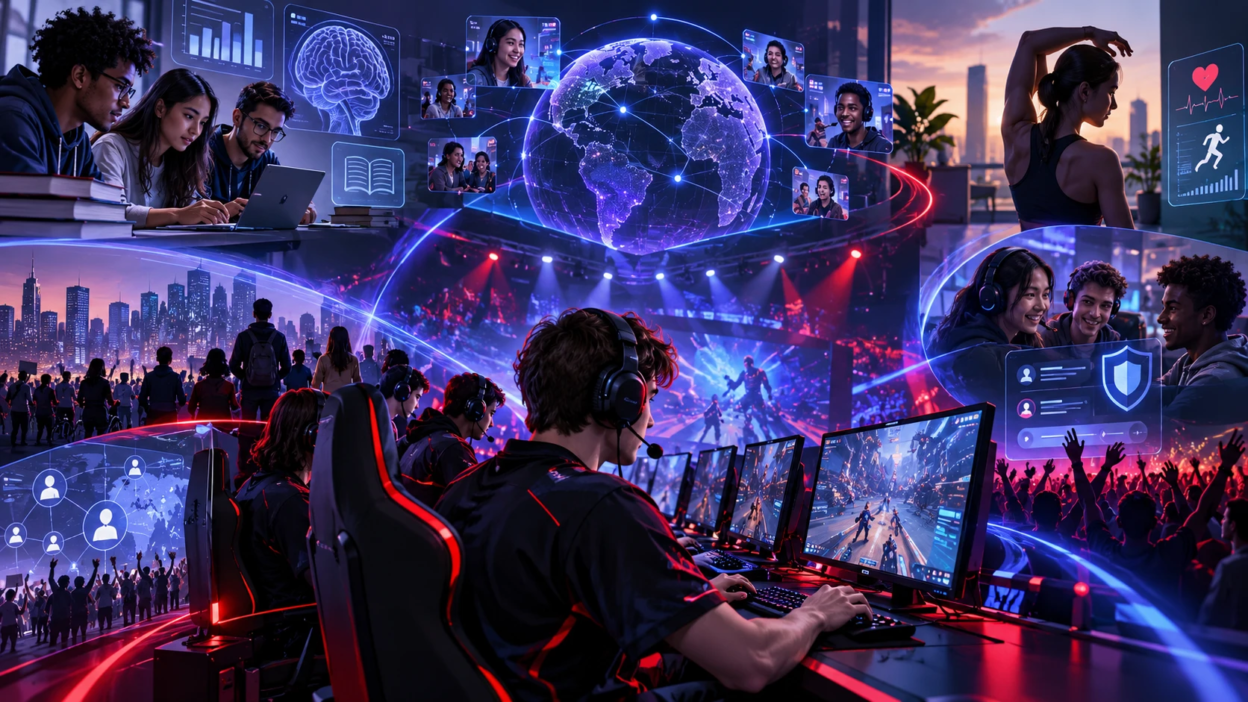
Esports now reaches beyond professional tournaments, influencing online communities, education, entertainment, career opportunities, and discussions about player wellbeing. However, its effects are not always positive or negative for everyone. This article examines how esports affects society by comparing themes found in HMCDGaming coverage with independent academic research and broader gaming surveys. It also distinguishes evidence about competitive esports from findings about general video gaming, helping readers understand the potential benefits, risks, and limits of current research.
What Esports Means in Modern Society?
Esports refers to organized competitive video gaming with structured rules, ranked play, and spectator audiences. It includes amateur ladders, collegiate leagues, and professional circuits with coaching, analytics, and training routines.
Competitive esports and casual gaming share many features, but they are not identical. Organized esports typically involves structured matches, competitive goals, tournaments, and team or individual performance, while general video gaming also includes recreational activities outside formal competitions. This distinction matters because studies about gaming habits, friendships, or screen time do not always provide direct evidence about professional esports players. Understanding both groups helps explain how competitive gaming influences participation, social interaction, and digital culture.
What HMCDGaming Commonly Focuses on?
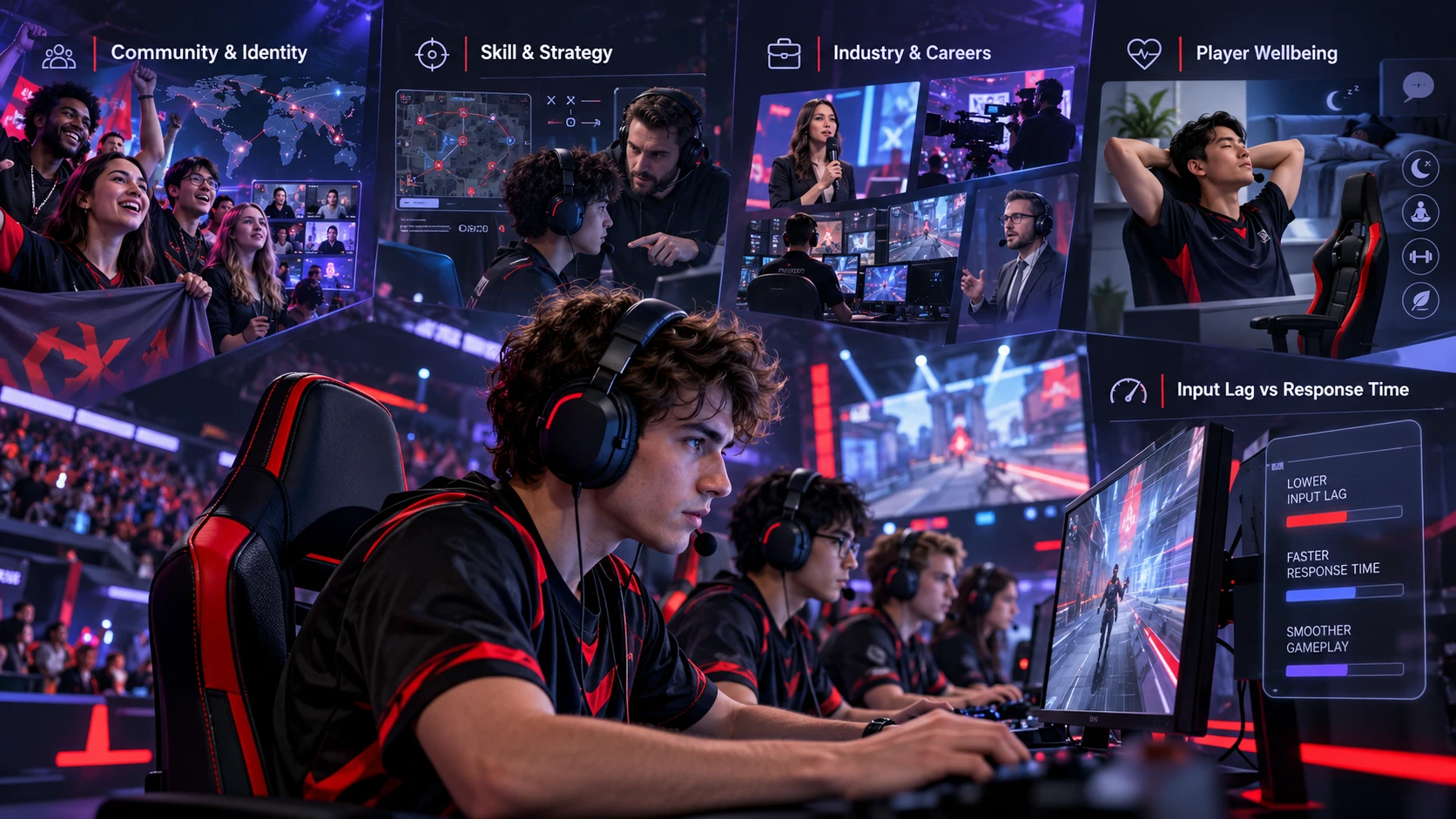
HMCDGaming’s discussion of how esports affects society presents competitive gaming through topics such as careers, player performance, digital communities, and the wider influence of esports. This provides useful context for understanding the website’s editorial perspective. However, HMCDGaming’s own commentary should be distinguished from independent academic evidence when evaluating whether esports causes particular social or health outcomes.
When esports is discussed in public, narratives can swing between hype and worry. A balanced view looks at both benefits and risks, then checks which claims are supported by data.
- Community and Identity: How teams, fan groups, and shared games create belonging and personal identity.
- Skill and Strategy: How decision speed, communication, and planning show up in competitive play.
- Industry and Careers: How roles like coaching, production, and analysis expand beyond pro players.
- Player Wellbeing: How training habits affect sleep, stress, posture, and mental health.
Competitive gaming performance also depends on technical factors that affect how quickly players receive visual feedback. For example, understanding input lag vs response time can help players distinguish display responsiveness from motion clarity. These technical considerations matter for gameplay performance, although they should not be confused with evidence about the wider social effects of esports.
Social Connections and Community Outcomes
Esports can strengthen social ties by giving people a shared goal and language. Team-based titles require communication, trust, and conflict management, especially under ranked or tournament pressure.
Pew Research Center’s 2024 survey of U.S. teens found that 47% of teen video game players had made an online friend through gaming, while 41% reported being called an offensive name during play. These findings highlight the potential for both connection and harassment in gaming communities. However, the survey covers general video gaming among American teenagers, not professional esports participants specifically, so its findings should not be applied to every competitive gaming environment.
- Positive Belonging: Communities built around teams and tournaments can reduce isolation when norms are respectful.
- Toxicity Risk: Harassment and aggressive chat can harm mental wellbeing and push players out of communities.
- Moderation and Norms: Clear rules, active moderation, and mentorship tend to improve social climate over time.
Community impact is rarely automatic. It is shaped by platform tools, leadership, and how teams respond to conflict. A practical example comes from TechBonafide’s coverage of the official Sonic the Hedgehog Discord community, where rapid audience growth created moderation challenges involving spam, automated filters, and community rules. The example demonstrates why active moderation and clear communication matter when online gaming communities expand quickly.
Mental Health and Emotional Wellbeing
Competitive gaming can support wellbeing through mastery, structured goals, and social connection. Many players value esports as a routine that builds confidence and gives a sense of progress.
A 2026 scoping review of esports mental health examined 89 studies and identified both positive wellbeing indicators, such as motivation and confidence, and mental health challenges, including anxiety and problematic gaming behavior. The researchers also noted important evidence gaps, as much of the available research was observational rather than longitudinal or experimental. Competitive pressure, coping strategies, and player environments may influence outcomes, but participation alone does not establish the cause of a mental health condition.
- Healthy Motivation: Balanced practice and realistic goals can support confidence and resilience.
- Burnout Pressure: Long training blocks without rest can reduce enjoyment and increase irritability.
- Sleep Disruption: Irregular sleep can worsen attention, mood stability, and performance consistency.
Rest and recovery should be treated as essential parts of competitive gaming rather than rewards after successful results. However, playing frequently or taking esports seriously does not automatically mean someone has a gaming disorder. The World Health Organization’s gaming disorder guidance describes a persistent pattern involving impaired control over gaming, increasing priority given to gaming, and continuation despite harmful consequences, with significant impairment in daily functioning. Teams and families should consider actual wellbeing and functioning rather than judging players solely by their gaming hours.
Physical Health and Lifestyle Effects
Esports is not inherently unhealthy, but it is sedentary by default. The physical impact usually depends on total sitting time, posture habits, and whether players add strength work, mobility, and regular breaks.
A 2026 systematic review and meta-analysis of esports health found an association between esports participation and sedentary behavior, although the available evidence did not show that esports participants generally had worse overall health than non-participants. Long gaming sessions can still make workstation comfort and regular movement important. For practical setup advice, OSHA’s monitor placement guidance recommends positioning a screen directly in front of the user, with its top at or slightly below eye level, to help reduce awkward neck positions and visual discomfort.
- Ergonomics: Proper chair height, monitor position, and wrist alignment reduce strain risk.
- Movement Breaks: Short breaks can improve focus and reduce stiffness across long sessions.
- Nutrition and Hydration: Stable meals and hydration support reaction time and energy.
Esports programs can encourage more balanced training by incorporating physical activity, recovery time, and ergonomic guidance into player routines. However, the effects of individual training interventions should be assessed through evidence and participant outcomes rather than assumed to improve performance automatically.
Education and Youth Development
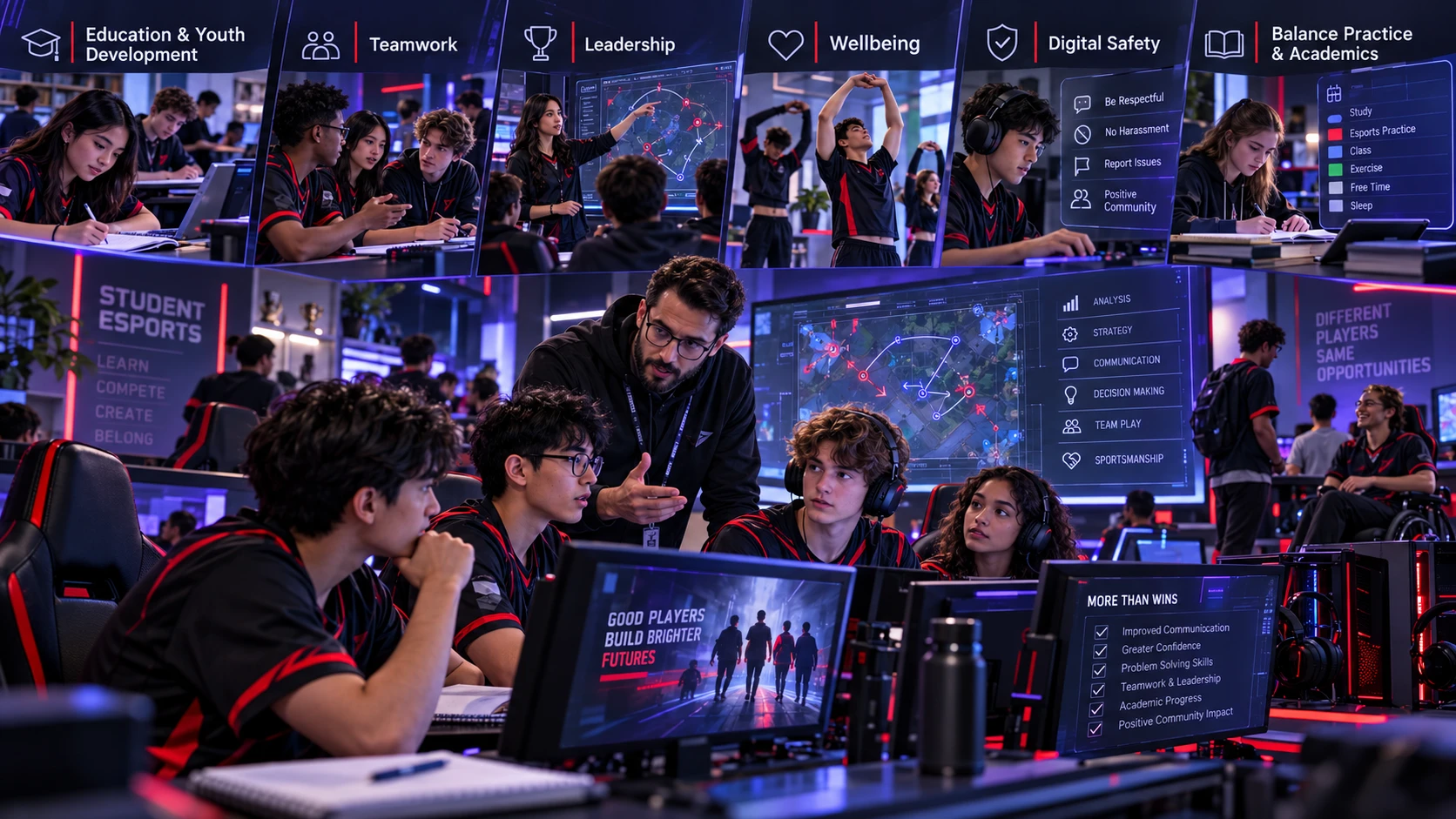
Schools and colleges increasingly treat esports as a structured extracurricular, similar to traditional sports clubs. Programs can teach teamwork, leadership, and digital citizenship when adults set clear expectations and support.
A study of university students’ perceptions of esports, published online in 2024, surveyed 628 higher-education students and conducted follow-up interviews with 46 participants about perceived opportunities to develop skills such as communication, collaboration, creativity, and critical thinking. Because the research examined students’ perceptions, its findings should not be interpreted as proof that esports automatically improves academic achievement or transferable skills. Educational programs should establish learning goals and evaluate outcomes alongside academic balance and student wellbeing.
| Societal Area | Potential Benefit | Common Risk |
|---|---|---|
| Education | Opportunities to practice teamwork, communication, and leadership | Academic imbalance and excessive practice |
| Mental Wellbeing | Social belonging, motivation, and confidence | Competitive stress, anxiety, and burnout |
| Physical Health | Structured training can encourage movement and recovery routines | Prolonged sitting, repetitive strain, and insufficient rest |
| Work And Careers | Opportunities in coaching, production, analytics, and media | Career uncertainty, competition, and unstable income |
| Online Communities | Friendships, shared interests, and international connections | Harassment, toxicity, and privacy concerns |
| Inclusion And Accessibility | Participation across locations and different physical abilities | Unequal access to equipment, accessible features, and safe communities |
This balance helps schools and parents focus on program design rather than treating esports as entirely good or entirely harmful.
What Makes an Esports Program Healthy and Educational?
An effective esports program should do more than organize matches and encourage winning. Schools, colleges, and community organizations can create better learning environments by combining structured competition with clear expectations, player protection, and opportunities for personal development.
- Define Educational Goals: Identify which skills the program aims to develop, such as communication, collaboration, leadership, or problem-solving.
- Balance Practice and Academics: Establish reasonable training schedules that protect time for coursework, sleep, physical activity, and other responsibilities.
- Provide Adult Guidance: Coaches and supervisors should help students handle disagreements, competitive pressure, and inappropriate online behavior.
- Support Physical Wellbeing: Encourage comfortable gaming setups, movement breaks, and regular opportunities for physical activity.
- Establish Digital Safety Rules: Explain reporting procedures, account privacy, respectful communication, and acceptable conduct during online matches.
- Evaluate Real Outcomes: Review participation, student feedback, academic balance, and wellbeing rather than measuring success only through match results.
The quality of an esports program depends on how it is organized and supervised. Competitive gaming may create opportunities for learning and social development, but those outcomes require intentional support rather than participation alone.
Workforce Skills and Career Pathways
Esports influences careers beyond playing professionally. Event production, shoutcasting, social media management, team operations, performance coaching, and data analysis are part of the ecosystem.
The British Esports Federation’s career guide identifies opportunities in coaching, analysis, broadcasting, event management, marketing, and community operations. Some of these roles involve skills that can also be useful in technology, digital media, and other industries. However, esports careers vary in their entry requirements, employment arrangements, and long-term stability. Aspiring professionals should develop demonstrable skills and explore opportunities beyond professional competition rather than assuming that gaming ability alone will secure employment.
- Communication Skills: Team play rewards clear callouts, listening, and fast coordination.
- Analytical Thinking: Reviewing replays builds pattern recognition and structured problem solving.
- Production Experience: Broadcast tools and live operations translate to media and streaming roles.
Career value increases when participants document skills and build portfolios rather than chasing titles alone.
Culture, Media & Public Perception
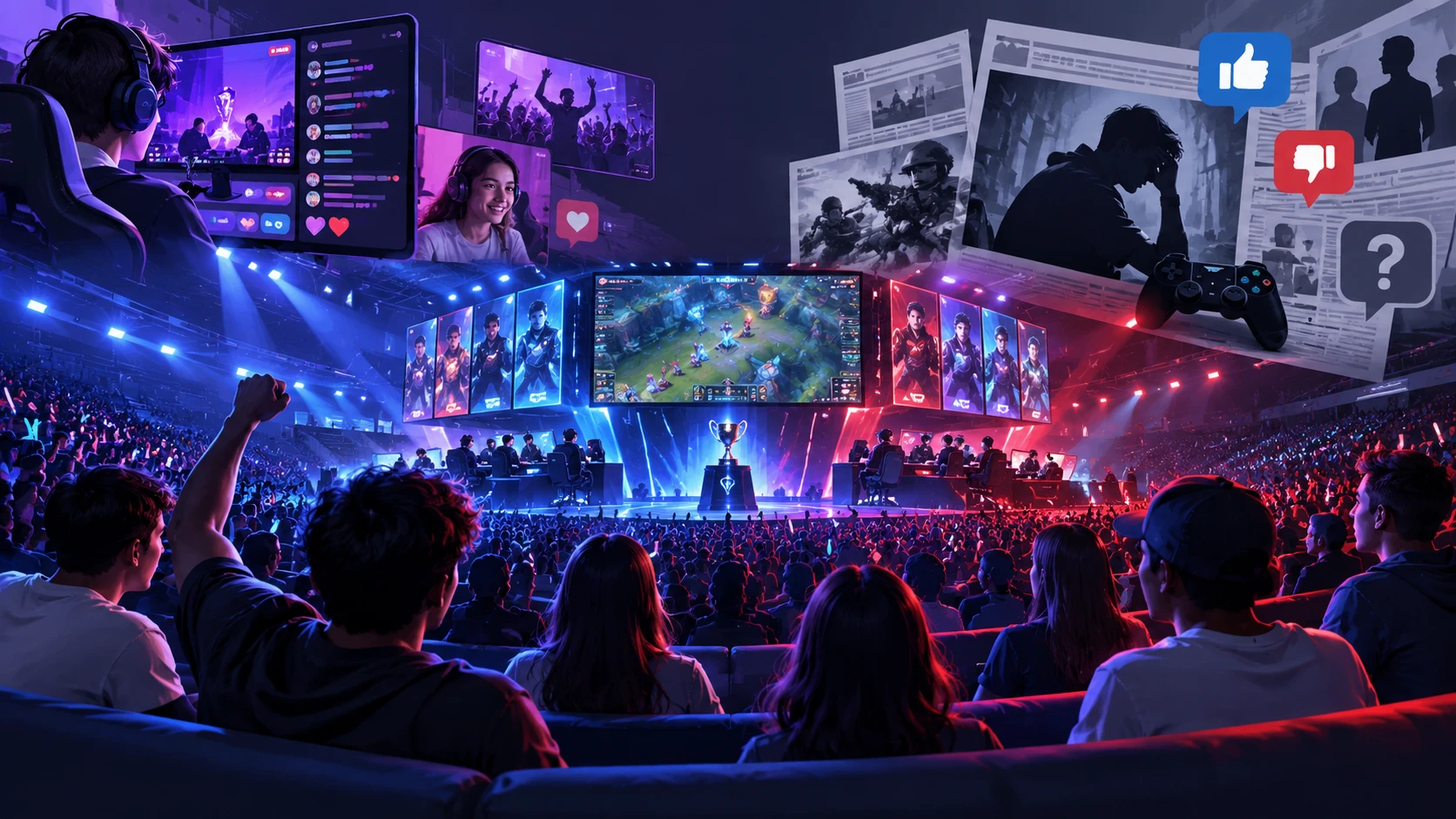
Esports shapes popular culture through streaming platforms, live arenas, and creator communities. It changes how entertainment is produced, with audiences interacting in real time and influencing content directly.
Public perception often follows media narratives about addiction, violence, or distraction. Research tends to be more nuanced, separating problematic use from high engagement and focusing on context, duration, and impact on daily functioning.
- Normalization Of Gaming: Families and workplaces increasingly treat gaming as a legitimate hobby and career interest.
- Shifting Spectatorship: Live chat and creator interaction change how audiences experience sports-like events.
- Policy Questions: Conversations about loot systems, youth protections, and platform accountability continue to grow.
A clearer public understanding of esports requires recognizing different player experiences and distinguishing entertainment, news coverage, and organized competition. For example, TechBonafide’s PBLGamevent platform analysis explains why publishing esports news and tournament coverage is different from directly organizing competitions or providing verified tournament management tools. Understanding these distinctions helps readers evaluate how gaming websites and competitive communities contribute to the broader esports ecosystem.
Inclusion, Safety and Ethical Concerns
Esports communities can be welcoming, but inclusion is not guaranteed. Gender-based harassment, racism, and accessibility barriers still affect who feels safe to participate and who leaves early.
Effective online safety begins with clear community standards and accessible reporting systems. Esports organizers should explain how players can report harassment, protect personal information, appeal moderation decisions, and access support when problems arise. Platforms can use automated moderation tools to identify suspicious activity, but human review is important for handling context and correcting mistakes. Consistent enforcement, transparent rules, and respectful community leadership can help reduce avoidable risks.
- Accessible Design: Options like remapping and readable UI support a wider range of players.
- Clear Conduct Rules: Defined boundaries reduce confusion and help communities enforce standards fairly.
- Reporting Support: Fast, transparent reporting processes improve trust in leagues and platforms.
Ethics in esports is not only about individual behavior. It also includes how platforms and organizers design incentives and protect participants.
Conclusion
Esports affects society through community building, skill development, cultural change, and new career pathways. It also brings real challenges around toxicity, wellbeing, and unhealthy training habits when structure is missing.
The main lesson is that esports is neither automatically beneficial nor inherently harmful. Its effects depend on factors such as community culture, player wellbeing, educational structure, and platform moderation. HMCDGaming offers one example of performance-oriented gaming coverage, while independent research provides a separate basis for evaluating broader claims. Players, parents, educators, and tournament organizers can support healthier esports participation by encouraging balanced routines, respectful communication, accessible communities, and evidence-based decisions.
Frequently Asked Questions
Can Esports Help Improve Social Skills?
They can, especially in team-based games that require communication and coordination. Social benefits are more likely in supportive communities with clear conduct rules. Toxic environments can create the opposite effect, so context matters.
Can Esports Affect Mental Health?
Esports is not automatically harmful, but competitive pressure and long sessions can increase stress without good recovery habits. Healthy routines, sleep, and balanced goals tend to reduce risk. If gaming interferes with daily responsibilities, seeking support is a smart step.
What Makes a Healthy Esports Program for Students?
A strong program includes academic expectations, coached practice schedules, and guidance on online behavior. It also supports breaks, ergonomics, and team culture. The goal is development and wellbeing, not constant play.