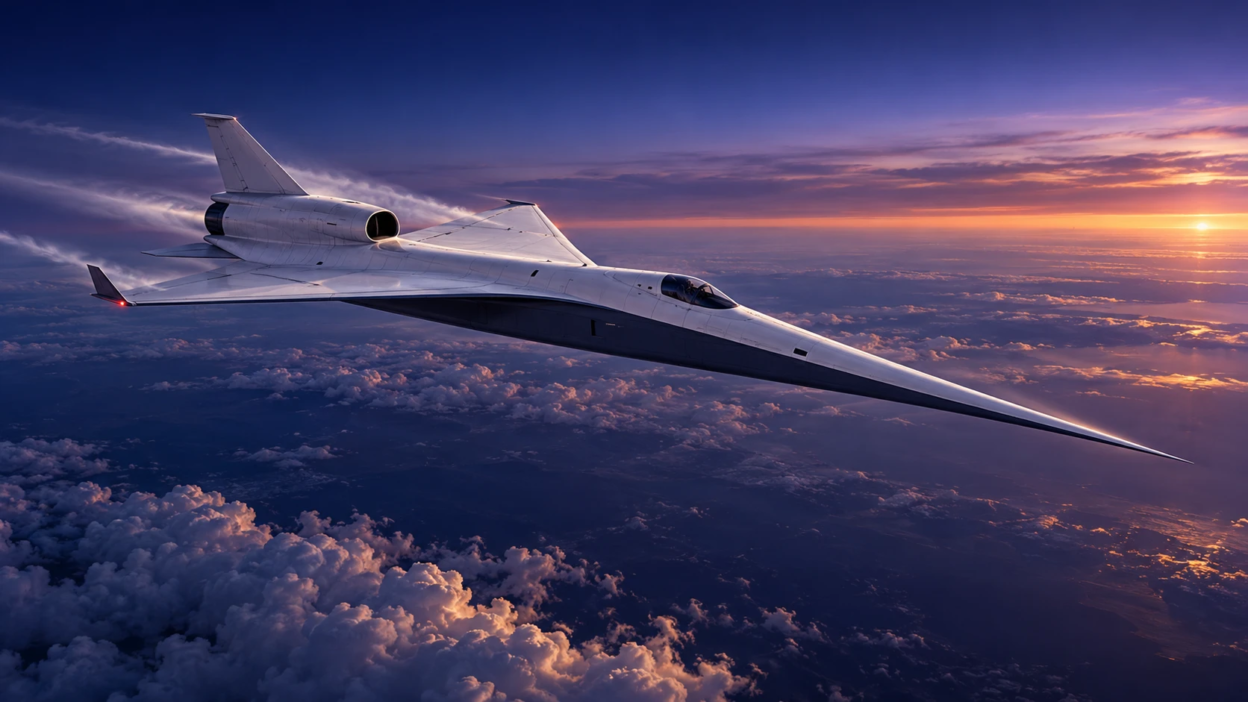
NASA’s experimental X-59 aircraft has completed 41 flights in its first year of testing, marking an important step in research on quieter supersonic travel. In an October 28, 2026 update, NASA confirmed that the plane made 40 additional flights after its first flight on October 28, 2025.
During the testing program, the X-59 has reached Mach 1.53, approximately 1,010 miles per hour, and flown above 56,000 feet. It first broke the sound barrier on June 5, 2026, and has since continued testing at different speeds and altitudes. These flights help engineers check how the aircraft performs before detailed sound measurements begin.
The X-59 is the centerpiece of NASA’s Quesst mission, which is studying how to reduce the loud sonic booms produced during supersonic flight. The project also aims to collect information about how people respond to quieter aircraft noise. That evidence could help regulators set standards for future commercial supersonic flights over land.
The X-59 has a long, narrow design intended to keep shock waves from merging into a loud sonic boom. At its planned quiet-flight conditions of Mach 1.4 and about 55,000 feet, NASA expects people on the ground to hear a softer sonic “thump,” compared with a car door closing from roughly 20 feet away. This noise level is still a prediction that NASA plans to test during upcoming flights.
The X-59 is a single-seat research aircraft, not a passenger jet, and it will not carry commercial passengers. If the noise-reduction technology works as intended, it could help aircraft manufacturers design future passenger planes that travel faster than sound without creating the same level of noise on the ground.
Commercial supersonic projects are being developed separately from NASA’s research aircraft. For example, TechBonafide’s guide to United Airlines’ future aircraft plans discusses the airline’s interest in the proposed Boom Overture passenger jet.
NASA is preparing for acoustic validation, a stage of testing that will measure and analyze the sounds the X-59 produces during flight. The mission also plans future flights over selected U.S. communities, where researchers will ask residents how they experienced the sound. NASA intends to share the results with U.S. and international aviation regulators.
Quieter supersonic aircraft could eventually shorten some flights, but routine civil supersonic travel over U.S. land still faces regulatory restrictions. The Federal Aviation Administration has proposed replacing the longstanding ban with noise-based standards, although these changes are not final. Future passenger aircraft would still need development, testing and approval before entering service.
Completing 41 flights is a major testing milestone, but the next challenge is to confirm how quiet the X-59 sounds from the ground. Those results will help show whether the technology could support future commercial supersonic travel.