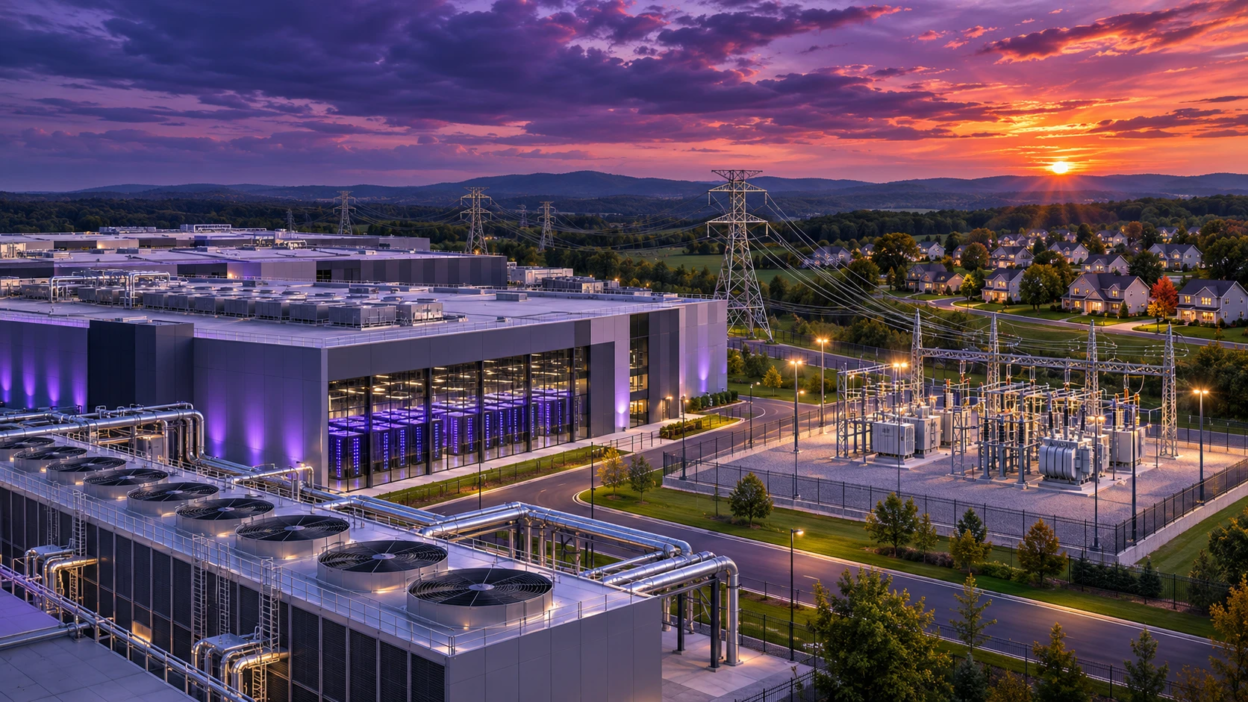
OpenAI announced new commitments on November 5, 2026, aimed at protecting American communities as the company expands its artificial intelligence data centers. The plans focus on electricity costs, water consumption, environmental protection, and public transparency. OpenAI also wants governments to introduce clearer standards for how large AI infrastructure projects are developed and operated.
OpenAI wants to prevent its growing AI infrastructure projects from placing unnecessary financial pressure on nearby households and businesses. In its November 5 announcement, the company introduced two documents: the National Community Compact and the Compute Campus Policy Blueprint. The first outlines commitments for future computing campuses OpenAI owns and operates, while the second proposes broader standards that government authorities could adopt across the industry.
Under its new commitments, OpenAI says it will pay the full cost of electricity used by future computing campuses it owns and operates. The company also promises to cover the power infrastructure needed to serve those facilities, including costs directly connected to their electricity demand. The aim is to prevent households and small businesses from having to pay infrastructure expenses created by OpenAI’s projects. However, the commitments do not guarantee that electricity prices will remain unchanged, since other factors can also affect utility bills.
OpenAI also says it will provide financial assurances before major infrastructure spending begins. These safeguards are intended to protect electricity customers if a planned computing campus is delayed, reduced in size, or canceled after utilities have committed funds. Such protections matter because large AI infrastructure projects can face construction challenges, regulatory obstacles, and contractual uncertainty. Similar concerns have appeared elsewhere in the industry, including Oracle data-center concerns involving possible project delays and contractual protections.
Another important part of OpenAI’s approach focuses on electricity shortages and grid reliability. AI data centers consume large amounts of power because they operate thousands of advanced computer processors. On November 2, 2026, OpenAI introduced its Grid Protectors Program, which aims to make future computing campuses more flexible when electricity demand is unusually high. At its planned facility in Effingham County, Georgia, an agreement with Georgia Power includes up to 1,000 megawatts of flexible demand reduction. This would allow the campus to reduce its electricity use during periods of grid stress, helping preserve power for homes and other customers.
Water consumption and environmental protection are also central to the new commitments. Under its National Community Compact, OpenAI says each future computing campus it owns and operates will have a water management plan. The company will prioritize closed-loop cooling systems, which reuse water, or other technologies designed to reduce water consumption. OpenAI also promises to publish site-specific electricity and water usage information, construction plans, and independent noise assessments. These disclosures are intended to help nearby residents better understand the environmental effects of large AI infrastructure projects.
OpenAI has also announced stronger transparency commitments for its future computing campuses. The company says it will not require public officials to sign non-disclosure agreements related to these projects, except for narrowly defined information involving legitimate security needs, trade secrets, or proprietary and competitively sensitive business details. The policy is intended to allow local officials to share more information with residents about proposed developments. However, the remaining exceptions mean that some project information could still be kept confidential.
Local communities will also have more opportunities to influence future projects. OpenAI plans to involve residents during the early planning stages and provide a local contact person throughout each facility’s operation. The company will publish annual progress reports and share information about employment opportunities, worker training, and local business participation.
OpenAI has highlighted existing community investments as examples of how its approach could work. In Effingham County, Georgia, residents helped shape a $4.8 million grant supporting free school meals for approximately 14,000 students. In Pike County, Ohio, OpenAI and SB Energy have jointly committed $6 million toward childcare support. These initiatives show how data center development could support local priorities beyond creating technology jobs.
OpenAI’s Compute Campus Policy Blueprint also encourages federal, state, and local governments to establish clearer requirements for AI infrastructure developers. The proposals include requiring large electricity customers to cover the additional grid costs they create, publishing environmental and economic impact information, and improving community involvement in project planning. OpenAI also recommends that public tax incentives include measurable commitments and ways to recover benefits if developers fail to meet agreed conditions. These proposals are intended to strengthen accountability across the AI infrastructure industry, but they would require action by the relevant government authorities before becoming binding rules.
However, OpenAI’s announcement does not mean these recommendations have become nationwide laws. Its voluntary community commitments apply to future computing campuses the company owns and operates, while the broader policy blueprint asks lawmakers and regulators to establish standards that could apply to other developers. Some US states are already addressing similar concerns through their own measures, as highlighted by TechBonafide’s coverage of Virginia’s data-center oversight measures. The distinction is important because company pledges and enforceable government regulations carry different responsibilities.
The announcement comes as technology companies continue investing heavily in artificial intelligence infrastructure. Powerful AI systems require advanced processors, reliable electricity, cooling equipment, and large computing facilities. However, growing demand for electricity is creating challenges for data-center expansion. As TechBonafide previously reported in its coverage of the AI data-center power crunch, shortages in available electricity and grid capacity could complicate future infrastructure projects. These pressures help explain why communities are demanding clearer answers about electricity prices, water availability, environmental effects, and the long-term benefits of hosting data centers.
The effectiveness of OpenAI’s commitments will depend on how they are implemented at individual data center projects. Residents and local authorities will need to examine future electricity agreements, published environmental information, and annual progress reports to understand whether the promised protections are working. If these measures deliver measurable benefits, they could provide a useful example for other technology companies expanding their AI infrastructure.
For the wider technology industry, the announcement highlights an important change in how AI infrastructure is being discussed. Building powerful data centers is no longer only about computing capacity and investment. Electricity affordability, environmental responsibility, transparency, and community involvement are becoming increasingly important parts of AI development.