

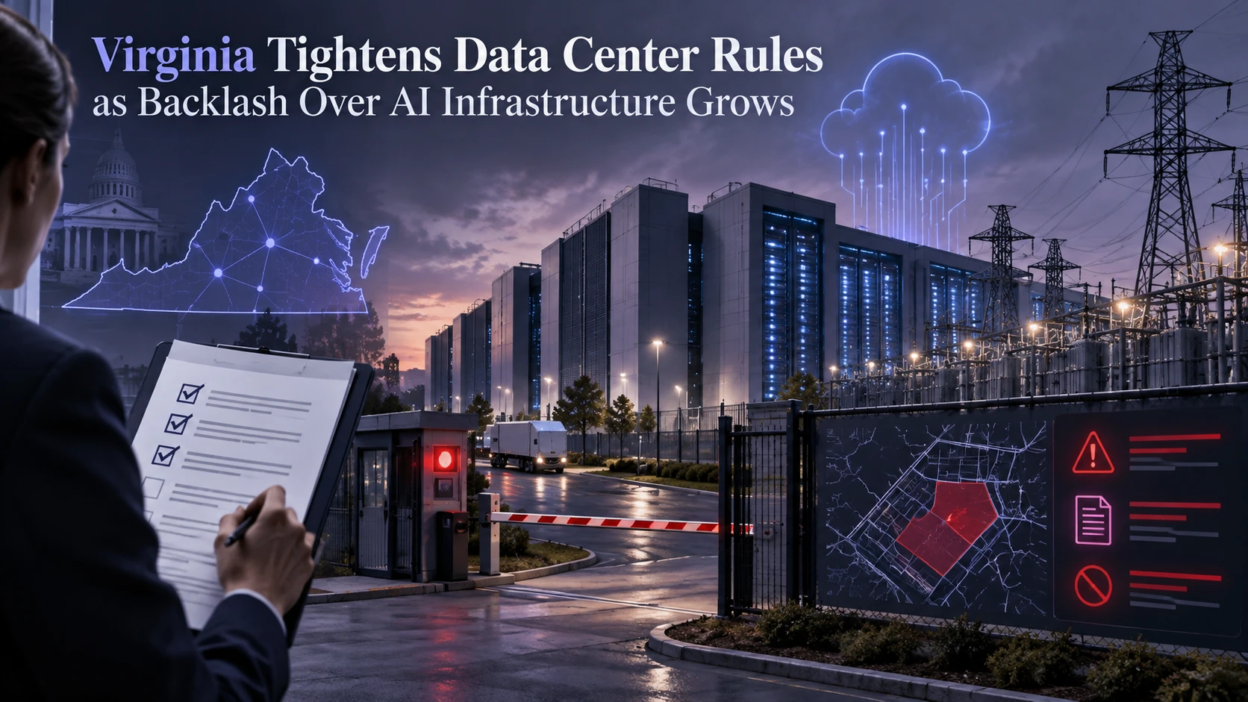
Virginia is moving to place tougher rules on data centers as concerns grow over the rapid expansion of artificial intelligence infrastructure across the state.
Virginia Governor Abigail Spanberger announced new measures on Friday, September 18, aimed at increasing oversight of data center projects. The plans include tighter permitting requirements, restrictions on the use of non-disclosure agreements for data center developments, and new clean-energy requirements.
The move is important because Virginia has the world’s largest concentration of data centers. Northern Virginia in particular has become a major hub for the servers, networking equipment and computing systems that support cloud platforms, internet services and increasingly powerful AI models.
The huge growth in artificial intelligence has increased demand for these facilities. AI systems require large amounts of computing power, which means technology companies need more servers, electricity, cooling equipment and network infrastructure.
However, the expansion has also created concerns among residents and policymakers. Data centers can consume enormous amounts of electricity, while large projects may also affect land use, water supplies, local infrastructure and nearby communities.
Electricity costs have become one of the biggest issues. Virginia has already taken steps designed to prevent ordinary households and businesses from paying infrastructure costs created specifically by large data centers.
State regulators have required data centers and other large electricity users to take greater responsibility for transmission infrastructure needed to serve their facilities. Virginia has also introduced a separate electricity consumption tax for data centers as part of broader efforts to manage the industry’s growing energy demand.
Environmental rules are also becoming stricter. New data center projects applying for certain permits from July 1, 2026, face tougher emissions requirements for the backup generators that facilities use when normal electricity supplies are interrupted.
Virginia has also given local governments additional tools to examine how proposed data center developments could affect homes, schools, farmland and surrounding communities.
The latest restrictions show how the rapid buildout of AI infrastructure is creating a new challenge for governments. Data centers provide the computing capacity needed for AI development and cloud services, but their growing energy and infrastructure requirements are increasing pressure on electricity grids and communities.
For technology companies, tougher rules could mean more requirements before large facilities can be approved and built. Developers may have to provide greater transparency about projects, meet stronger environmental standards and take more responsibility for the energy infrastructure their facilities require.
Virginia’s actions could also receive attention beyond the state. As companies continue investing billions of dollars in AI infrastructure across the United States, other states are facing similar questions about electricity demand, infrastructure costs, environmental effects and how quickly new data centers should be allowed to expand.
The challenge for Virginia will be managing continued growth in cloud computing and AI infrastructure while addressing the financial and environmental concerns surrounding increasingly large data center projects.