According to a November 6, 2026 industry report citing research firm Yole Group, global capital spending on advanced chip packaging could approach $28 billion in 2026. Nvidia and AMD are working with manufacturing partners to expand capacity for AI processors, but the $28 billion is an industrywide forecast, not a combined investment by the two companies.
The November 6 report brings together manufacturing plans announced earlier in 2026 and interviews about supply constraints. These projects aim to ease a bottleneck in packaging powerful processors used in AI data centers and cloud services.
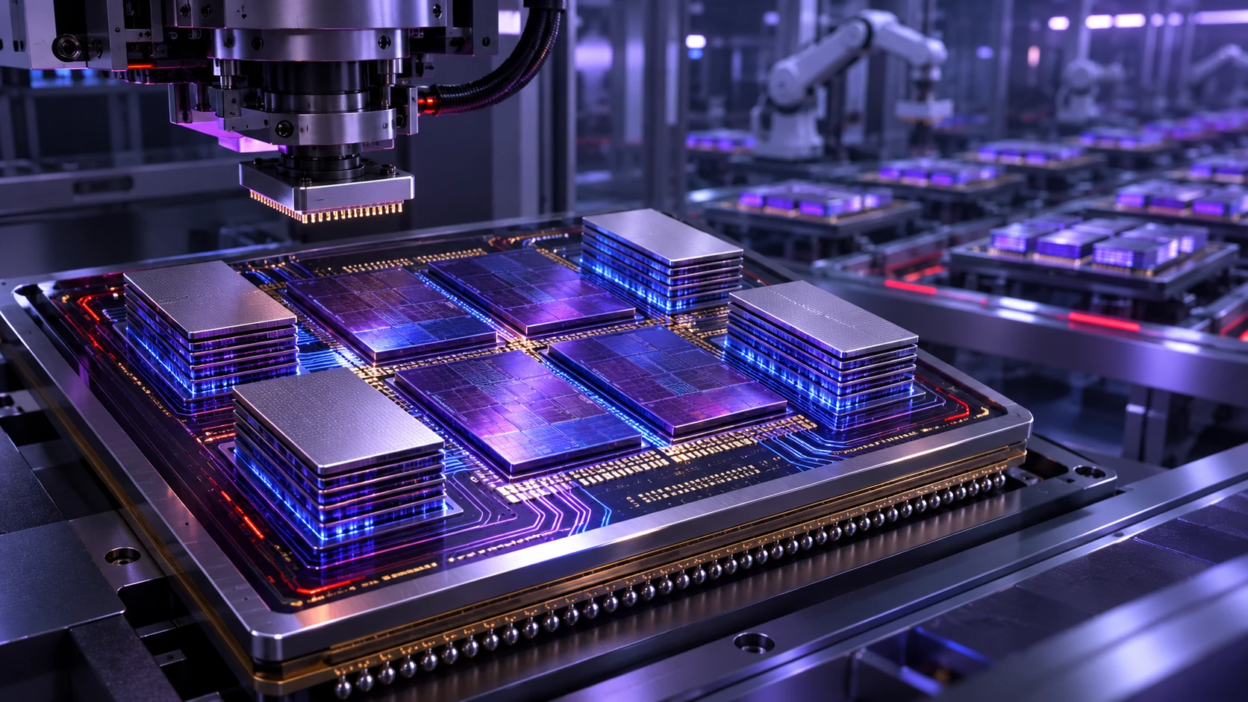
Traditional chip packaging protects silicon and connects it to a circuit board. Advanced packaging can also place processor chiplets and high-bandwidth memory (HBM) close together in one package, helping them exchange data quickly. This is particularly useful for demanding AI workloads.
The technology is particularly important for AI systems that require high processing power. AI models depend on powerful processors and fast memory connections to complete complex tasks. Advanced packaging helps improve performance by reducing the time needed to transfer information between different chip components. Readers can explore the different hardware demands in TechBonafide’s guide to AI training and inference data centers.
Taiwan Semiconductor Manufacturing Company (TSMC), the world’s largest contract chipmaker, is a major supplier of advanced packaging for AI chips. Its Chip-on-Wafer-on-Substrate (CoWoS) technology places processor components and high-bandwidth memory into closely connected packages, and it is widely used by Nvidia, AMD, and Broadcom.
However, growing demand has created challenges for manufacturers. Available advanced packaging capacity is struggling to keep up with increasing orders from AI companies. This shortage has encouraged chip designers to invest in additional production facilities and work with more manufacturing partners.
On October 21, 2026, Nvidia announced plans with Amkor Technology, Siliconware Precision Industries (SPIL), and several other suppliers to expand manufacturing capabilities for AI systems. The wider plan covers advanced packaging, chip substrates, testing, and optical engines.
Nvidia said its partnership with Amkor targets a more than 300% increase in interposer wafer capacity in South Korea by the end of 2028. Interposers help connect multiple chips inside advanced packages. The expansion is planned to support Nvidia’s current and future AI computing platforms, but the additional capacity is not yet available.
On May 21, 2026, AMD announced more than $10 billion in investments across Taiwan’s semiconductor ecosystem. The plan includes partnerships with ASE, SPIL, and other companies to develop advanced packaging and manufacturing technologies. The investment covers a broad semiconductor supply chain, not packaging alone. One example of demand for AMD-powered systems is the HPE Helios AI infrastructure order from Vultr, which involves rack-scale hardware designed for AI computing.
AMD says it has qualified a 2.5D panel-based Elevated Fanout Bridge (EFB) interconnect with Powertech Technology, also known as PTI. Panel-level packaging uses rectangular panels instead of round wafers and could improve material use and production scale. Qualification represents an engineering milestone, but it does not establish that high-volume production has started.
TSMC is also developing Chip-on-Panel-on-Substrate (CoPoS), a panel-based packaging technology intended to support larger and more complex chips. In April 2026, TSMC said it had established a pilot line and expected production to begin within a couple of years. CoWoS remains its main advanced-packaging technology for AI processors.
The investment wave also affects suppliers of equipment used to assemble and test chips. According to industry group SEMI’s July 2026 forecast, worldwide assembly and packaging equipment sales are expected to reach $6.7 billion in 2026, up 9.6% from 2025.
This $6.7 billion equipment-sales forecast is different from the nearly $28 billion advanced-packaging capital-spending estimate, which measures broader industry investment. The Yole Group outlook cited in November 6 reporting also expects revenue from advanced packaging to overtake traditional packaging revenue for the first time in 2026.
The shift shows how AI is changing the semiconductor industry. Creating smaller and faster chips is no longer the only priority. Manufacturers must also find better ways to connect processors, memory, and other components without reducing performance. Connections inside chip packages differ from optical interconnects, which help AI systems move data across suitable high-bandwidth links.
For Nvidia and AMD, expanding advanced packaging capacity could help improve AI chip availability and support the development of more powerful computing systems. However, building new factories and increasing production capacity takes time, meaning supply shortages may continue in the near future.
The next challenge for the semiconductor industry is turning these manufacturing plans into reliable production capacity. Nvidia’s supplier expansions, AMD’s advanced packaging partnerships, and TSMC’s newer technologies could help meet growing AI chip demand. However, their long-term impact will depend on production schedules, manufacturing yields, and how quickly suppliers can scale their operations.