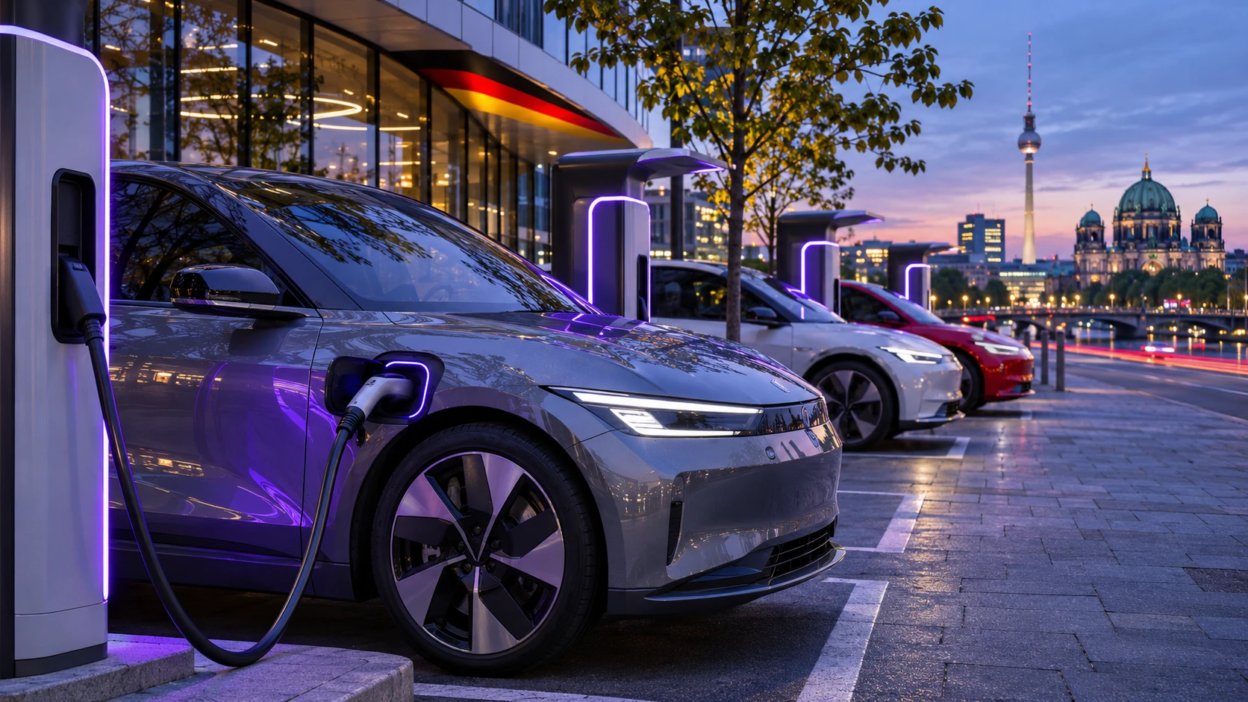
Elektromobilität, the German term for electric mobility, is gaining momentum as battery-electric vehicle registrations rise in Germany. According to VDIK’s analysis of KBA registration data, published on November 4, 2026, Germany registered 94,086 battery-electric passenger cars in October. This represents a 79.5% increase compared with October 2025, highlighting strong growth in the country’s new electric car market.
The sharp increase highlights growing demand for battery-electric cars in Germany’s new vehicle market. However, registration figures alone do not explain every reason behind the increase. Factors such as the availability of electric models, vehicle prices, government incentives, and charging options can influence demand. The October results show that battery-electric vehicles performed much more strongly than Germany’s overall new car market.
According to the latest registration figures, fully electric vehicles accounted for 37% of all new passenger cars registered in Germany during October 2026. This was a major increase from October 2025, when electric cars represented approximately 21% of new registrations.
Germany recorded 254,492 new passenger car registrations in October 2026, an increase of 1.7% compared with October 2025. Battery-electric cars grew much faster than the overall market and also exceeded the combined registrations of petrol and diesel vehicles. According to ADAC’s October 2026 registration breakdown, Germany registered 38,516 petrol cars and 23,882 diesel cars during the month, compared with 94,086 battery-electric cars. This comparison shows how strongly electric powertrains performed in the new car market.
Battery-electric vehicles (BEVs) run entirely on electricity stored in rechargeable batteries, while plug-in hybrid electric vehicles (PHEVs) combine a rechargeable battery and electric motor with a combustion engine. The two categories performed differently in October 2026. BEV registrations increased by 79.5%, while PHEV registrations declined by 7.9% to 28,499 vehicles. For more background on how these systems work, TechBonafide’s guide to electric and hybrid vehicle technology explains the batteries, motors, regenerative braking, and hybrid systems used in modern vehicles.
When battery-electric vehicles and plug-in hybrids are counted together, Germany recorded 122,585 new registrations in October 2026. These externally chargeable vehicles accounted for 48.2% of the country’s new passenger car registrations, showing that almost one in two new cars registered during the month could be charged from an external power source.
The growth was not limited to October. Between January and October 2026, Germany registered 698,230 battery-electric passenger cars, an increase of 60.7% compared with the same ten-month period in 2025. This longer-term growth suggests that the October increase was part of a wider rise in new electric car registrations rather than an isolated monthly result.
The growth of electric mobility is increasing the importance of reliable charging infrastructure. According to the European Alternative Fuels Observatory’s October 2026 update, the European Union had 1,176,554 publicly accessible EV charging points in September 2026, an increase of 13.9% compared with September 2025. These preliminary figures show continued expansion of public charging infrastructure across the EU’s 27 member countries.
Charging infrastructure remains an important part of the transition to electric transportation. Drivers need reliable charging stations at homes, workplaces, shopping centers, highways, and public parking areas. Faster charging systems and better charging availability could make electric vehicles more practical for everyday journeys.
Charging speed also depends on the vehicle, battery level, temperature, and charging equipment. Readers interested in these differences can explore our guide to how long it takes to charge a Tesla.
Battery technology is another important part of the Elektromobilität transition. Automotive manufacturers and battery developers are working to improve driving range, charging speed, energy efficiency, and battery lifespan. New battery chemistries may also help manufacturers reduce production costs or dependence on certain raw materials. TechBonafide’s comparison of solid-state and sodium-ion batteries explains how these emerging technologies differ and what they could mean for future electric vehicles. However, their wider adoption will depend on manufacturing costs, safety, performance, and production scale.
Competition is also reshaping the electric vehicle industry as established European manufacturers face pressure from international brands. German automakers must balance investment in electric vehicles, battery technology, and software with the need to control costs. One recent example is Volkswagen’s paused ID. Golf development, which highlights some of the financial challenges facing traditional manufacturers as they plan future electric models. At the same time, increasing competition is giving buyers a wider choice of electric vehicles with different prices, features, and battery options.
Despite the strong registration growth, Germany’s shift toward Elektromobilität continues to face financial and infrastructure challenges. Electric cars can cost more upfront than comparable petrol vehicles, while charging costs depend on where and how drivers recharge their batteries. The European Automobile Manufacturers’ Association’s analysis highlights the uneven availability of public charging facilities and the higher costs often faced by drivers without access to home charging. Battery manufacturing expenses, raw material availability, and electricity grid capacity are also important considerations for long-term electric vehicle adoption.
Germany’s October 2026 registrations mark an important milestone for Elektromobilität. With battery-electric cars accounting for 37% of all newly registered passenger vehicles, electric powertrains are playing a much larger role in the country’s new car market. The results also highlight the different performance of battery-electric cars and plug-in hybrids, with fully electric registrations rising strongly while plug-in hybrid registrations declined.
The next challenge is to maintain this growth. More affordable electric models, accessible charging networks, dependable batteries, and competitive ownership costs will remain important for wider adoption. Future registration figures will help show whether Germany’s strong October performance can continue into 2027.