
arrived in India to assist the Aircraft Accident Investigation Bureau (AAIB) following the June 12 crash of Air India Flight AI171, a Boeing 787‑8 Dreamliner (registration VT‑ANB), moments after takeoff from Sardar Vallabhbhai Patel International Airport, Ahmedabad, headed for London Gatwick
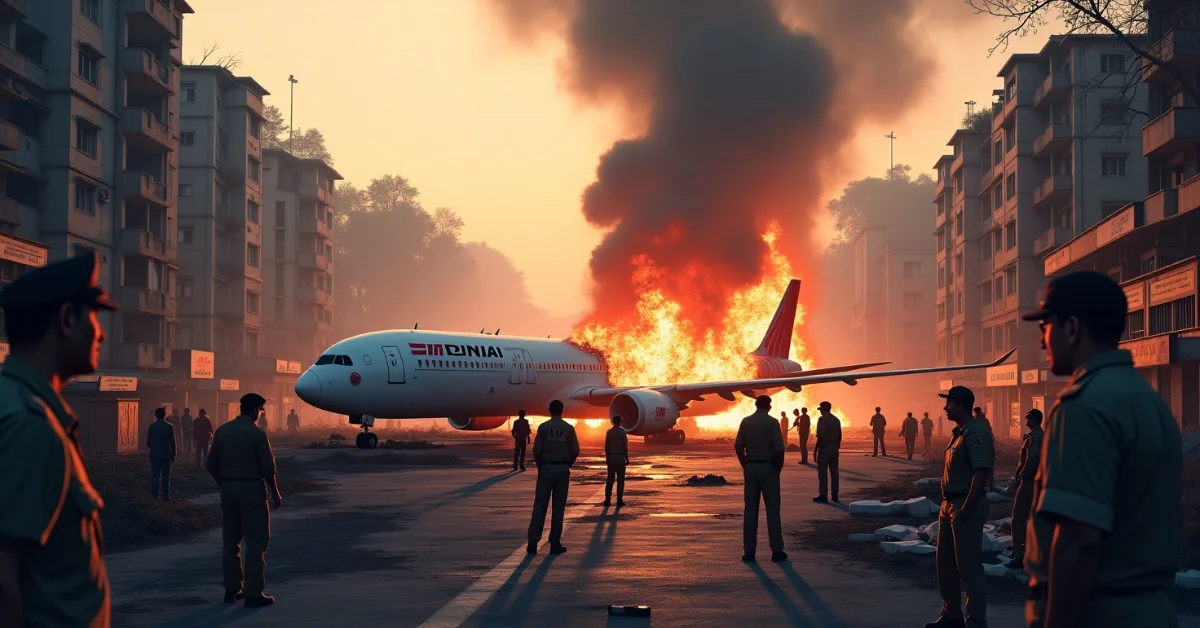
- Flight details: Departed at 13:38 IST with 230 passengers and 12 crew. Final tracking showed it reached only ~625 ft before descending sharply at ~475 ft/min and crashing roughly 30 seconds into flight, colliding with a hostel of B. J. Medical College in the densely populated Meghani Nagar area.
- Casualties: Confirmed fatalities include 241 people onboard and at least 28 on the ground. Around 60 individuals sustained injuries. The sole survivor is a 40‑year‑old British national of Indian origin, seated in 11A, who was ejected and helped from the wreckage.
- Damage & emergency response: Fire erupted upon impact, heavily damaging the hostel and surrounding buildings. Dozens of medical students were hospitalized. Emergency services, including CISF, NDRF, army personnel and local fire brigades, conducted rescue efforts. Airport operations resumed later with limited capacity.
After reviewing crash footage, veteran former NTSB investigator Greg Feith identified key areas of focus for the investigation:
- Flap configuration: At takeoff, adequate trailing‑edge flaps are essential for lift. Feith observed that the flaps looked retracted or at minimal setting “not typical of a normal takeoff” raising alarms about insufficient lift and “getting on the backside of the power curve”.
- Landing gear position: Feith noted that the aircraft’s landing gear remained extended at 600 ft a highly irregular scenario. Whether this was due to hydraulic, electrical, or crew oversight is a major investigative question .
- Engine thrust and environmental factors: He emphasized possible thrust deficiencies engines may not have generated full power and flagged factors like the “very hot” June weather adversely affecting performance.
Feith stressed that while video offered instant clues, investigators must await further data “patience, not speculation” including detailed flight data recorder (FDR) and cockpit voice recorder (CVR) analysis before drawing conclusions.
- AAIB as lead: Modeled on ICAO protocols, India’s AAIB is spearheading a year-long investigation with assistance from Boeing, NTSB, and engine-maker GE Aerospace. The U.S. is a “concerned state” given Boeing’s origin.
- Phase 1 efforts: Initial site preservation, debris mapping, black box recovery FDR and CVR retrieval underway as are interviews, ATC, radar, and CCTV data gathering.
- Phase 2 plan: Analysts will reconstruct aircraft systems’ performance, component integrity, and crew actions, factoring in weather, weight, thrust, and configuration. A draft report will follow ICAO standards, allowing stakeholder review before final release .
The recent Air India Boeing 787 crash marks the first fatal accident involving this aircraft since its 2009 debut, shaking its strong safety record. As India’s deadliest single-plane disaster and the first widebody crash in three decades, the tragedy has prompted a global response. Air India and Boeing have pledged their full support for the ongoing investigation, with active participation from regulatory bodies including India’s DGCA, the U.S. FAA, and relevant UK authorities. Leaders including Indian PM Narendra Modi and UK PM Keir Starmer expressed condolences, while Tata Sons, the airline’s owner, pledged aid to affected families.
Air India’s safety reputation and Boeing’s 787 program face intense scrutiny. Feith emphasized the necessity of evidence-driven analysis: “patience, not speculation.” Only verified data can reveal whether this crash was a tragic confluence of unusual configuration, environmental stressors, mechanical faults or all three.