

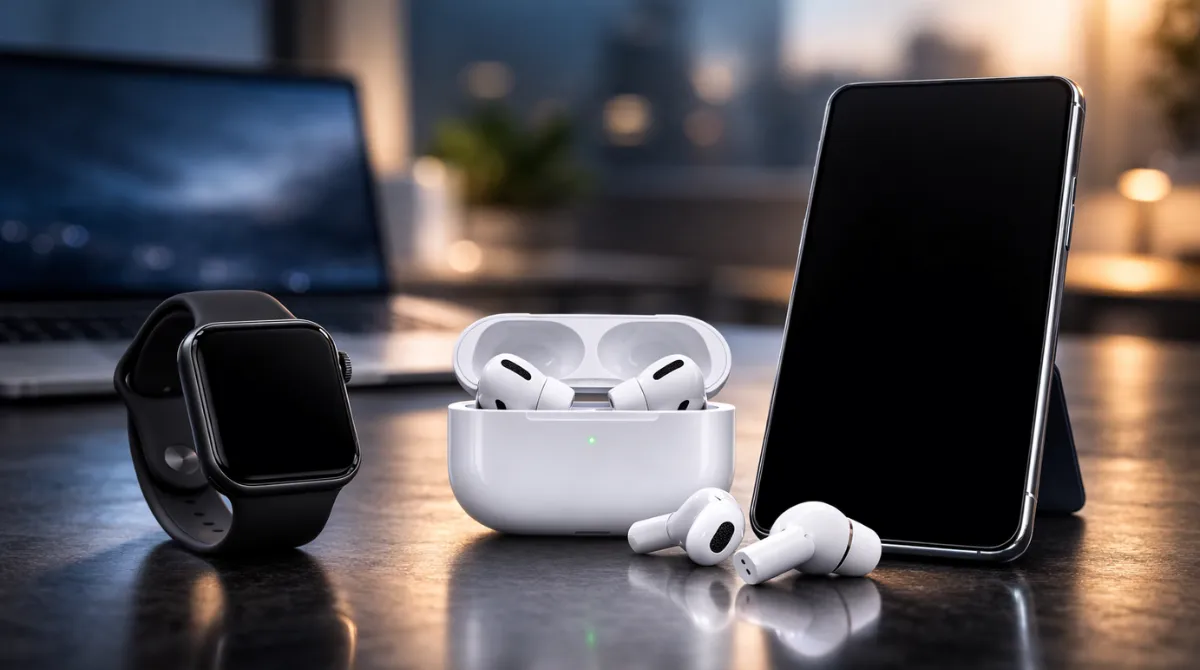
Apple is reshaping its AI roadmap around a deeper partnership with Google, positioning Gemini models and cloud infrastructure as a foundation for Apple Foundation Models while keeping the deal non-exclusive. Apple has also stressed that its privacy standards stay intact, with processing handled on-device or through tightly controlled systems, as it continues expanding Apple Intelligence features introduced in 2024.
The biggest shift is hardware: Apple is accelerating multiple AI wearables designed to act as the eyes and ears of a more capable Siri. Smart glasses in development are described as display-free, built around speakers, microphones and two cameras, including a high-resolution capture camera and a second camera aimed at computer-vision context. That context is expected to enable more precise navigation, reminders integration and real-time assistance.
Other concepts include:
- An AirTag-sized AI pin or pendant with a camera and microphone, heavily dependent on iPhone processing
- Camera-equipped AirPods with low-resolution sensors for environmental input, planned as early as this year
Across these devices, the consistent approach is offloading heavy compute to the iPhone, with foundational models tied to a Gemini-backed stack.