
Dyson has entered the oral care market with a new high-tech electric toothbrush called the CameraJet. Priced at $499.99 in the United States, the device combines regular electric brushing with a built-in camera, artificial intelligence and an automatic liquid-flossing system.
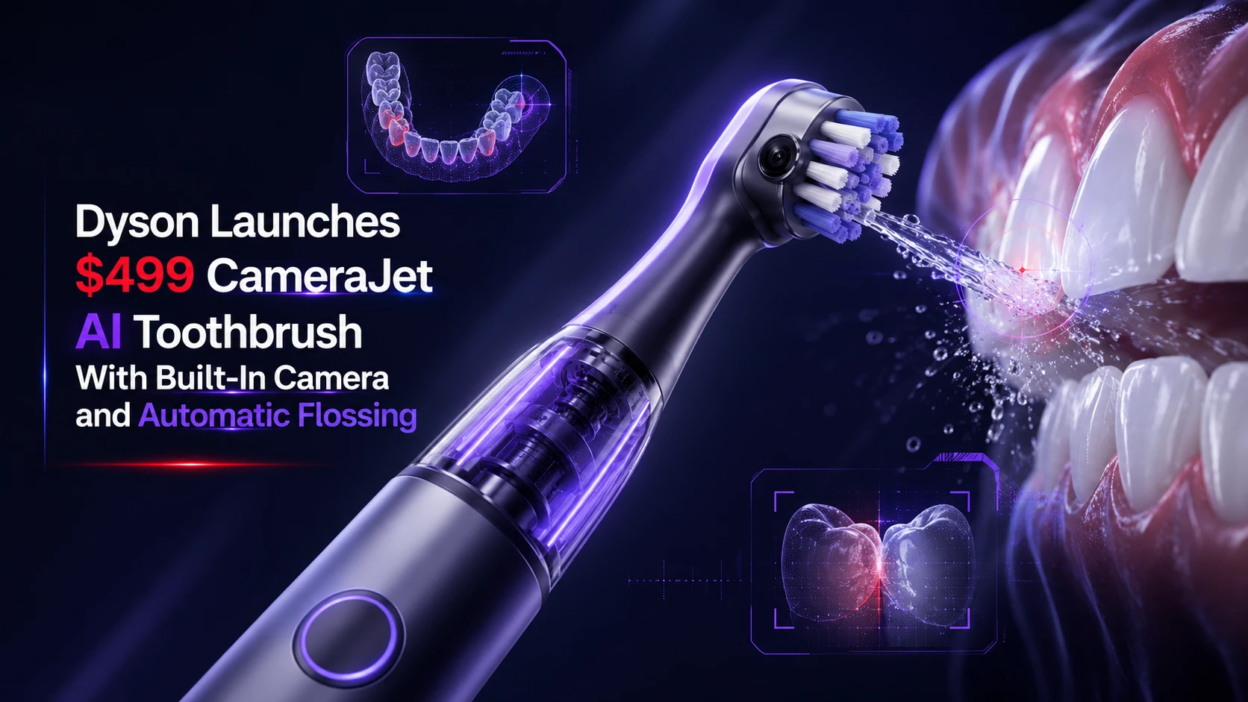
The main feature of the CameraJet is a small 100,000-pixel camera placed inside the toothbrush. While a person brushes, the camera scans the teeth and uses Dyson’s Gap Optical Targeting AI system to identify spaces between them.
The camera can analyze up to 28 images every second. When the system detects a gap between two teeth, it automatically sends a targeted burst of mouthrinse into that area. Dyson says the process can happen within around 100 milliseconds after a gap is detected.
This means users can brush and clean between their teeth during the same routine instead of using a separate water flosser afterward.
The toothbrush includes a 12.5ml liquid tank designed to continue supplying mouthrinse even when the brush is tilted or moved around inside the mouth. This is important because people regularly change the angle of a toothbrush when cleaning the front, back and sides of their teeth.
Dyson has also developed a charging and refill dock for the CameraJet. The dock can refill the toothbrush’s liquid tank in around three seconds while also charging the device between brushing sessions.
The CameraJet uses variable sonic movement for brushing. Dyson designed the system to keep the bristles moving even when they are pressed against difficult areas of a tooth. The brush head includes different types of bristles for cleaning the tooth surface and gumline.
Smart features are another major part of the product. CameraJet connects through Wi-Fi and Bluetooth and works with the MyDyson app.
Users can view the inside of their mouth through the toothbrush camera while brushing. The app can also provide guided cleaning, coverage information and feedback to help people understand which areas they may be missing.
The camera could naturally raise privacy questions because it is being used inside a person’s mouth. Dyson says images from the camera are not recorded or stored on the toothbrush or in the cloud. The camera is mainly active when users enable live viewing or when the automatic jet system is working.
Dyson has also introduced specially designed low-foaming toothpaste and mouthrinse for the system. Reducing foam helps keep the CameraJet’s camera view clear while it searches for gaps between teeth.
The CameraJet is available in Ceramic Ultra Blue and Ceramic Pink. The complete system includes the toothbrush, charging dock, travel case, toothpaste and mouthrinse.
The launch marks a major expansion for Dyson beyond products such as vacuum cleaners, air treatment devices and hair-care tools. With CameraJet, the company is bringing cameras, AI, sensors and precision fluid technology into an everyday personal-care product.
At nearly $500, however, CameraJet sits firmly in the premium end of the electric toothbrush market. Its success may depend on whether consumers see automatic flossing, live camera views and AI-guided cleaning as useful enough to justify the higher price.