
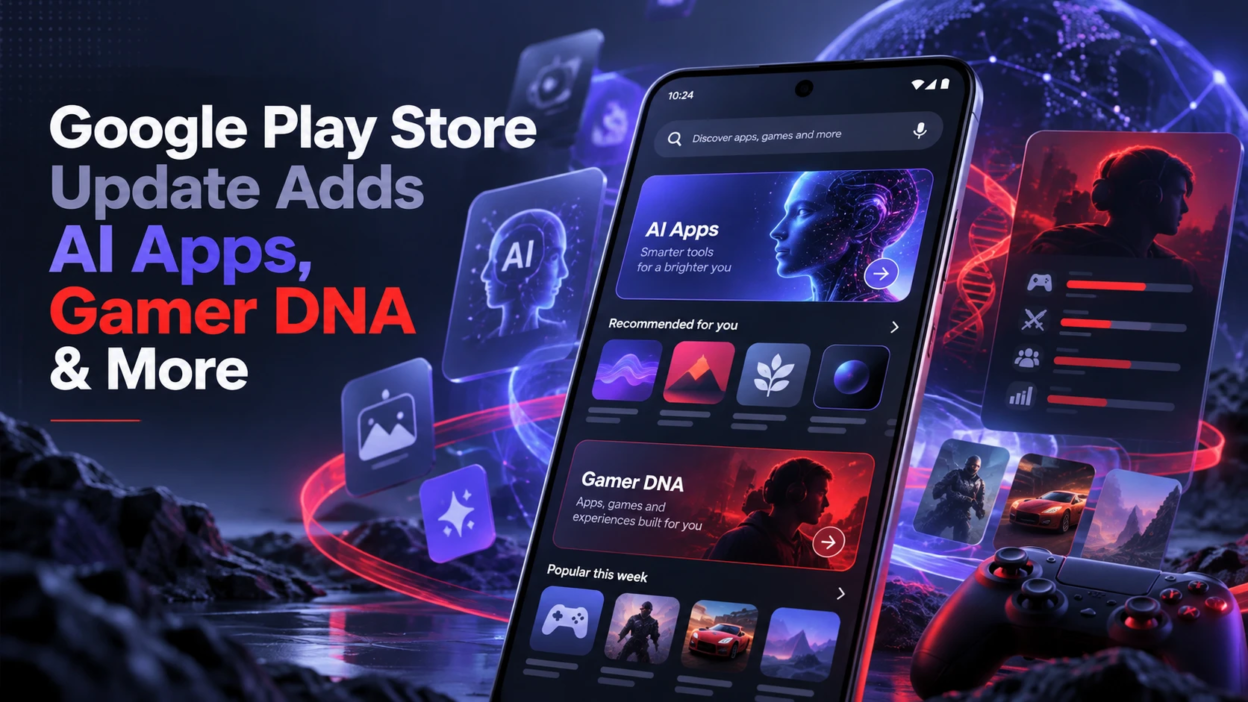
On October 13, 2026, Google announced a new update for the Google Play Store that lets eligible Android users run personal AI-built apps and adds smarter ways to discover apps and games. The changes include AI-powered app comparisons, personalized game recommendations and new gaming tools, with availability varying by feature and region.
People can use Google AI Studio to build a custom Android app with AI and launch it privately on their own phone through Google Play. They only need a regular Google account, not a professional developer account. These personal apps remain separate from the public Play Store catalog and are not visible to other users.
The personal-app feature began rolling out on October 13 to users aged 18 and older in selected markets, including the United States. It is designed for personal projects and could help people with limited coding experience create useful apps. Google has also explored simpler app development through other tools, including its earlier Opal no-code AI app builder.
Google says users will be able to share their personal apps with a small group of friends and family in the coming months. Those who later want to publish their apps for everyone will need a professional developer account and must meet Google Play’s existing safety and quality requirements.
Google is also improving app discovery through Ask Play, its AI-powered assistant for finding applications. The updated tool can compare different apps, highlight their main differences and summarize user opinions. This may help Android users choose an app without checking several listings and reviews separately.
Another upcoming feature, Play in Gemini, will bring Google Play apps, games and developer content into Gemini conversations. Users will be able to explore related content while chatting with the AI assistant. Google says this feature will start rolling out to Gemini users soon. The move follows Google’s wider focus on more personal AI experiences, including earlier Gemini personalization features designed to make AI responses more useful.
For gamers, Google has introduced Game Finder, a personalized recommendation feature powered by Gamer DNA. This system uses information about how people play and the preferences they share, such as favorite genres, game types and playing styles. Users can also adjust their preferences to receive game suggestions that better match their interests.
Game Finder is initially available in English for users in the United States, with plans to expand to more markets.
Google is also adding new ways for gamers to connect. Sprints lets groups of two to five players compete in short challenges lasting 48 hours. The Sidekick gaming overlay is gaining a feature called Playbacks, which allows users on supported devices to record 30-second gameplay clips. Meanwhile, Community Posts lets players ask questions, share information and discuss games directly on their Play Store pages, with automatic translation support.
Google is also expanding gaming across Android phones and PCs. Games such as Dave the Diver and Warhammer 40,000: Boltgun are coming to Google Play, with more titles planned in the coming months. Some upcoming releases will support cloud saves across Android and PC, while Game Trials will expand to PC games so players can try eligible premium titles for a limited time before buying them.
Google is also holding Play Fest from October 13 to 19, offering selected users extra Google Play Points, special gaming deals and event rewards. Availability and eligibility depend on the user’s market and the offer.
The Play Store is also changing on other devices. In cars with Google built-in, the updated interface adapts to the vehicle’s display. On extended reality (XR) devices, users can explore apps in a three-dimensional space. Googlebook devices will also highlight applications designed for larger screens.
Google is also introducing an option that lets parents share a child’s age range with apps through Family Link without providing the child’s exact date of birth. The aim is to support age-appropriate app experiences while limiting unnecessary personal information. Android users should also review app permissions before allowing new applications to access sensitive information.
The rollout will differ by feature and location. Personal AI apps are initially available only to eligible adults in selected markets, while Game Finder is launching first in English in the United States. Sprints and Community Posts have wider availability, but other features will arrive gradually. Google has not provided a specific worldwide launch date for every new feature.
With these changes, the Google Play Store is moving beyond a traditional app marketplace and becoming a smarter platform for creating, discovering and enjoying digital experiences.