


OpenClaw is a name that quickly became shorthand for a wider shift in AI usage. More people want AI agents they can run on their own servers, with their own data controls and with fewer black boxes.

That demand collided with controversy when the Moltbook leak hit the conversation. The result was a fast, messy spotlight on how quickly agent platforms are being adopted and how uneven their security practices can be.
What OpenClaw Is And Why People Self-Host It?
OpenClaw is commonly discussed as a self-hosted AI agent approach, meaning the agent runtime, tools and data connections are operated by the user instead of a hosted vendor. It is typically positioned around autonomy, tool use and workflow automation rather than single prompt responses.
Self-hosting appeals to teams that need control over sensitive inputs, predictable costs and deeper customization. It also enables tighter integration with internal systems such as ticketing, documentation and private APIs.
Common motivations for running an agent stack locally or on private infrastructure include the following.
- Data control. Prompts, tool outputs and logs can stay inside a defined security boundary.
- Customization. Tool permissions, guardrails and routing logic can match internal policies.
- Observability. Full access to traces and logs makes failures easier to debug and audit.
- Vendor independence. Model backends and tools can be swapped without rewiring the whole workflow.
These benefits are real, but they only hold when the deployment is treated like production software, not a weekend experiment that slowly becomes business critical.
Why Self Hosted AI Agents Are Trending Right Now
AI agents moved from demos to daily work because tool calling and structured outputs improved. The gap between a chatbot and a task runner shrank and teams started expecting automation that can read, write and act across systems.
Self-hosted agent setups also gained momentum because governance expectations tightened. Security teams increasingly require clear answers on where data goes, how long it is retained and who can access it.
Several trends make self-hosting more attractive than it was even recently.
- Cheaper compute options. Local and private GPU capacity is easier to source and budget for.
- Better open tooling. Orchestrators, vector stores and tracing tools matured quickly.
- Policy pressure. Compliance needs push for least privilege access and auditable workflows.
- Integration demand. Real value comes from connecting to internal apps, not generic chat.
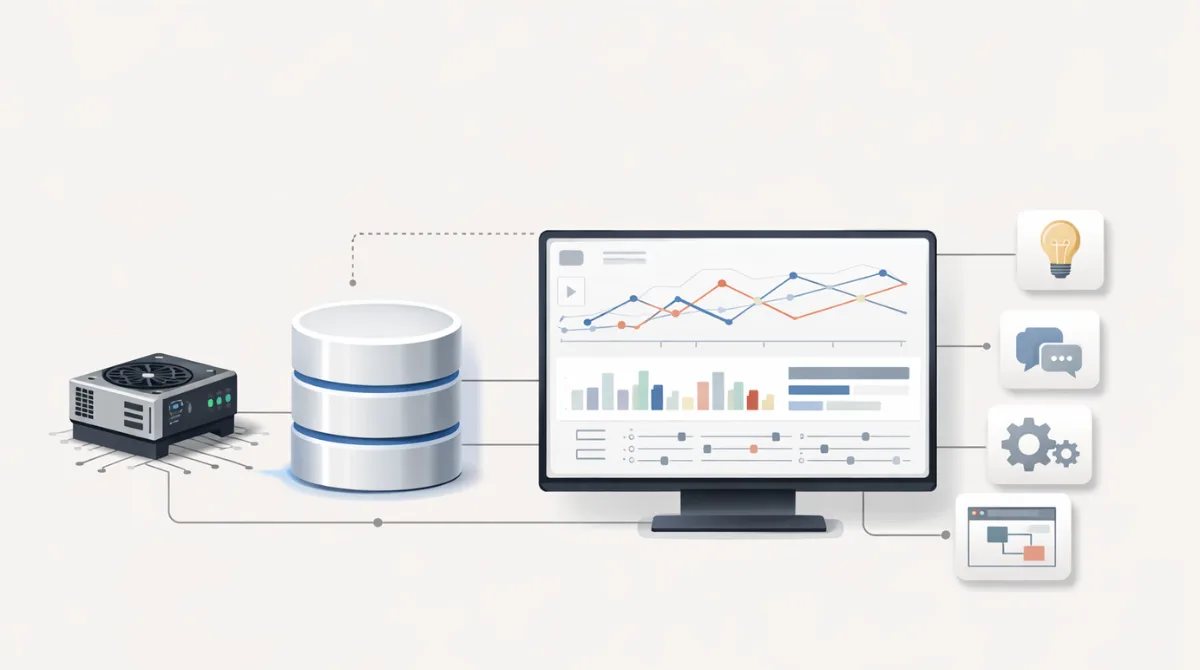
This shift also explains why incidents tied to agent platforms get amplified. When an agent has access to calendars, file stores, secrets and internal knowledge, the blast radius is larger.
How Moltbook Fueled The Viral Buzz
The Moltbook leak did not just circulate as a security story. It spread because it was easy to connect to a broader fear that agent platforms can move faster than the controls around them.
AI agents feel more invasive than typical apps because they operate across tools and can be configured by non-security specialists. A leak tied to an agent ecosystem can trigger concern about logs, prompts, tokens and embedded credentials all at once. A similar “agents talking to agents” moment showed up when OpenClaw AI assistants built their own social network, turning a niche behavior into a shareable viral narrative.
Viral attention also tends to lock onto a few themes.
- Speed over rigor. Fast releases can outpace secure defaults.
- Hidden complexity. Tool permissions and connectors create many quiet failure modes.
- Copy and paste setups. Shared configs can encourage risky patterns if not reviewed.
Once those themes take hold, the conversation shifts from a single incident to a wider question of whether self-hosted agents are being deployed responsibly.
What The Moltbook Leak Reveals
At a high level, the Moltbook leak highlighted a familiar problem in modern stacks. Agent platforms often combine notebooks, web UIs, API connectors and background workers, which multiplies the places where secrets and sensitive artifacts can land.
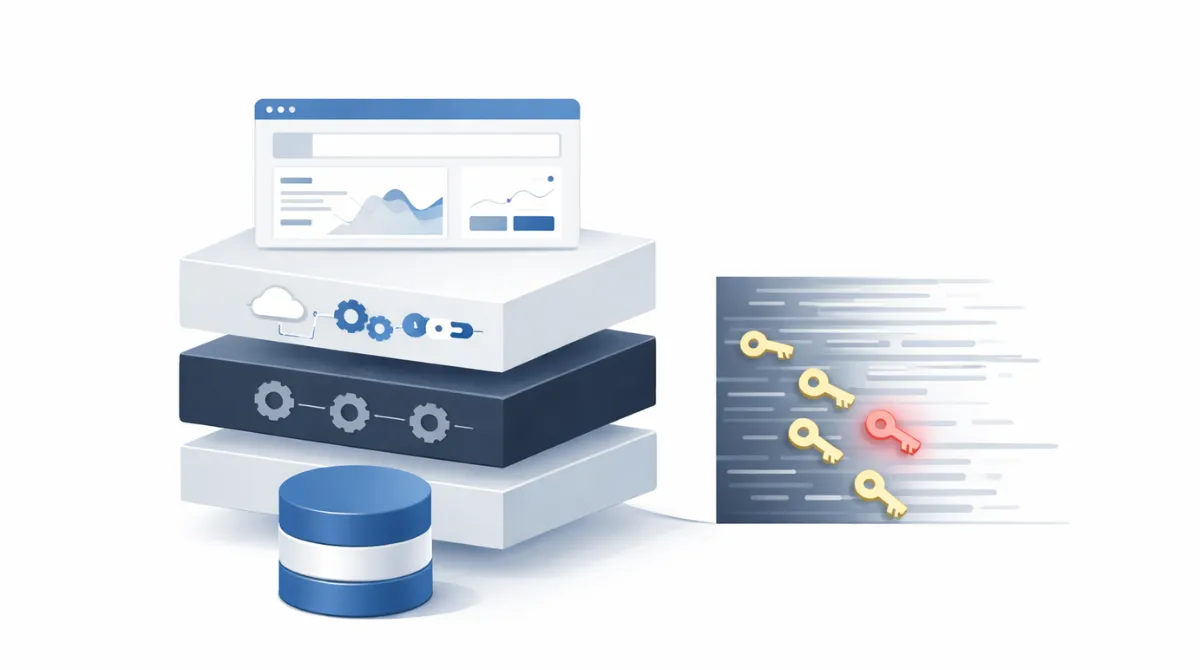
It also reinforced that many teams treat agent builds like prototypes. A prototype becomes an internal tool, then it becomes a service and the original assumptions about safety and access controls never get revisited.
The leak discussion surfaces a set of risk areas that show up repeatedly in self-hosted agent deployments.
- Secrets handling. API keys stored in environment files, notebooks or logs can be exposed through backups or misconfigured permissions.
- Prompt and tool logs. Traces can contain customer data, credentials or proprietary text if redaction is not enforced.
- Overbroad connectors. An agent granted wide file or email access can unintentionally exfiltrate data through outputs.
- Weak tenancy boundaries. A shared runtime can allow cross-project access if isolation is incomplete.
None of these are unique to one project name. They are predictable outcomes when powerful automation is deployed without a security model that matches its capabilities.
The Bigger Lesson Security Risks In Fast Moving Agent Platforms
Agent platforms often evolve faster than typical backend services because the ecosystem is new and competitive. That pace can lead to shifting defaults, inconsistent configuration paths and rushed connectors that are not threat-modeled.
Security risks tend to cluster around autonomy. When an agent can take actions, the system must defend against both malicious input and well-meaning mistakes.
Key risk categories worth tracking in any self-hosted agent stack include the following.
- Prompt injection. Untrusted content can manipulate tool calls, data access and output behavior.
- Tool misuse. Agents can call destructive endpoints if permissions are not scoped tightly.
- Data leakage through outputs. Summaries and responses can unintentionally disclose private text.
- Supply chain exposure. Plugins, connectors and dependencies can introduce vulnerabilities.
- Model routing complexity. Multi-model setups can send sensitive data to an unintended backend.
These risks can be managed, but only when teams apply software security basics and add agent-specific controls such as tool allowlists and output filtering. The weirdest edge case is also the most revealing: AI agents creating their own religion on an agent-only social network shows how quickly emergent behavior can outpace the governance layer meant to contain it.
How To Run Self Hosted AI Agents More Safely
Safer self-hosting starts with a mindset shift. Treat the agent runtime as a privileged automation service with audit requirements, not as a chat interface that happens to run on your hardware.
Practical controls map well to standard security practice, with a few adjustments for agent behavior and tool calling.
- Define a clear trust boundary. Separate the agent runtime, tool services and data stores so a single compromise does not expose everything.
- Use least privilege for every connector. Scope tokens to the narrowest possible actions and prefer read-only access unless writes are essential.
- Centralize secrets management. Store keys in a vault service, rotate them and block secrets from landing in notebooks and logs.
- Harden logging and tracing. Redact sensitive fields, encrypt logs at rest and restrict who can view traces and prompt history.
- Implement tool call guardrails. Enforce allowlists, rate limits and approval workflows for high-impact actions.
- Isolate execution environments. Run agents in containers or sandboxes with minimal filesystem and network access.
- Validate inputs and outputs. Add content filtering, schema checks and post-processing to reduce leakage and injection impact.
- Continuously test and monitor. Add security tests for prompt injection, scan dependencies and alert on unusual tool usage patterns.
These controls work best when they are built into templates and default configs, so new agent projects start secure instead of becoming secure later.
Operational Checklist For Ongoing Safety
Self-hosted agents are not set-and-forget systems. Ongoing operations keep the stack reliable and reduce the chance of quiet exposure through logs, backups and stale tokens.
- Patch cadence. Update agent frameworks, web UIs and connectors on a defined schedule.
- Access reviews. Audit who can change tools, prompts and system instructions.
- Incident readiness. Maintain revocation procedures for tokens and credentials.
- Data retention limits. Expire prompt history and traces that do not need to be stored.
When these basics are in place, the biggest remaining challenge is keeping autonomy aligned with policy as new tools and integrations are added.
Core Components And Where Risks Show Up
It helps to look at an agent system as layers that each need controls. Weakness in one layer often shows up as leakage in another, especially when logs or tool outputs carry sensitive text.
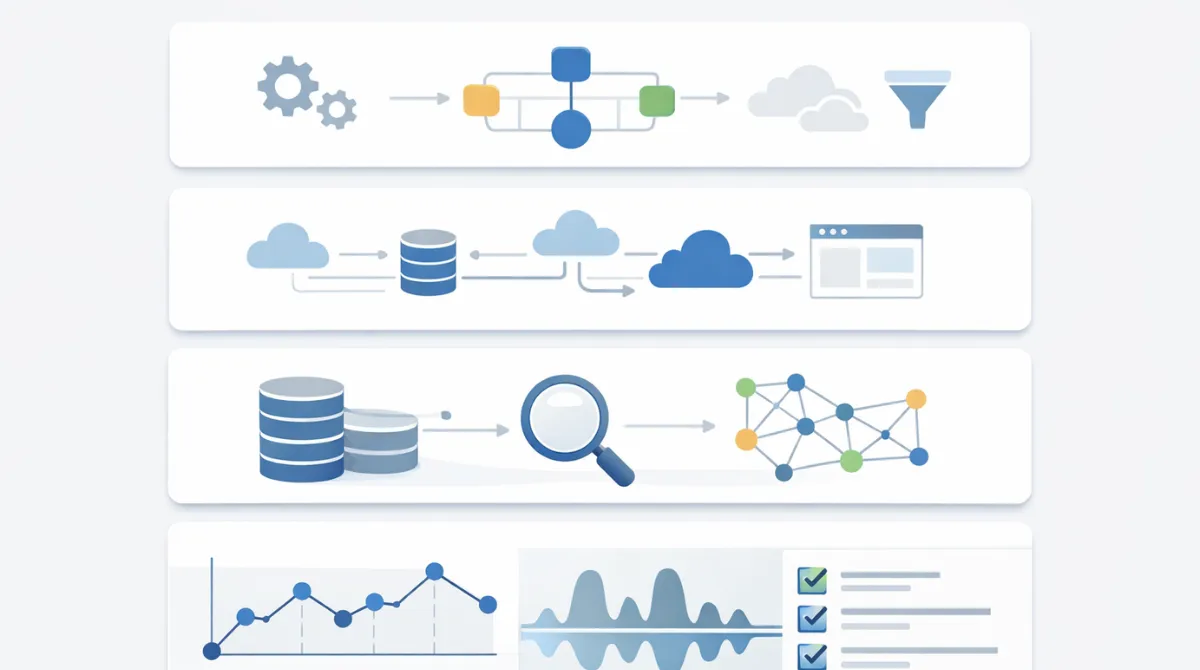
The table below summarizes common components and the security focus areas that deserve attention.
| Component | What It Typically Does | Primary Security Focus |
|---|---|---|
| Agent Orchestrator | Plans tasks and chooses tools based on context | Guardrails, tool allowlists, prompt injection defenses |
| Tool Connectors | Calls internal APIs, file systems, email or tickets | Least privilege tokens, approval for destructive actions |
| Memory And Retrieval | Stores embeddings and fetches relevant documents | Access control on indexes, data minimization, encryption |
| Logs And Traces | Records prompts, tool calls, outputs and errors | Redaction, retention limits, restricted access |
This kind of mapping makes reviews faster because each layer has a clear owner and a defined checklist.
What To Watch Next For The Self Hosted Agent Trend
The self-hosted agent trend is likely to keep expanding, but it will mature in how it is governed. Buyers and internal platform teams will push for secure-by-default deployments, clearer isolation and more transparent telemetry.
Several signals are worth watching as the space evolves.
- Standardized policy controls. More stacks will ship with role-based access control, audit trails and approval gates built in.
- Safer connector ecosystems. Connectors will move toward signed packages, permission manifests and tighter runtime sandboxing.
- Better evaluation tooling. Teams will adopt automated tests for injection resistance and sensitive data leakage.
- Governed model routing. Enterprises will require explicit rules for which model endpoints can receive which data classes.
If these patterns hold, self-hosting will look less like a hobbyist setup and more like an internal product with mature controls.
Conclusion
OpenClaw and the Moltbook leak sit at the intersection of excitement and risk in modern AI automation. Self-hosted AI agents can deliver real leverage, but they also concentrate sensitive data, permissions and execution power.
The safest path is to design for least privilege, strong isolation and disciplined logging from the start. When teams treat agent platforms as production systems, the benefits of self-hosting become achievable without accepting avoidable exposure.