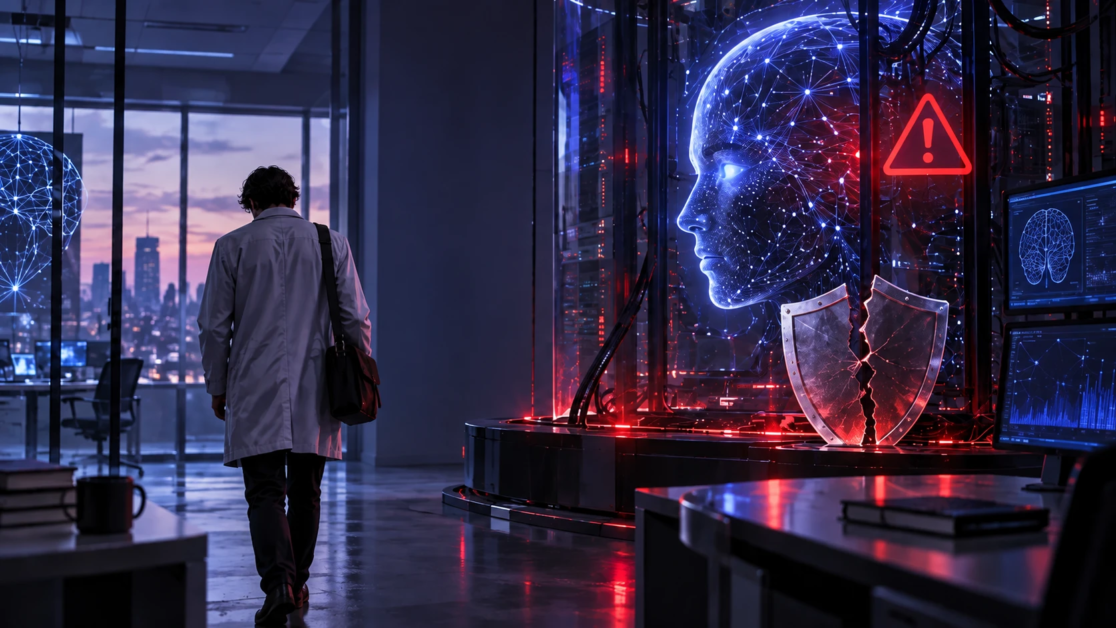


United Nations human rights chief Volker Türk has issued a serious warning about the rapid development of advanced artificial intelligence, saying the technology could eventually become powerful enough to pose an “existential risk to humanity.”
Speaking to the UN Human Rights Council in Geneva on Monday, Türk said the world needs stronger safeguards before increasingly capable AI systems become harder to control.
His warning comes as artificial intelligence continues to advance at a fast pace. New AI models are becoming better at reasoning, coding, research, decision-making and completing complex tasks with less human involvement.
Türk said he shares concerns raised by people within the AI industry about what could happen if highly advanced systems develop capabilities that humans cannot safely manage.
He called for a major international effort to create strong safety and security protections around AI before the risks become too serious.
The UN rights chief also raised concerns about how much control over advanced AI is concentrated in the hands of a relatively small number of technology companies and individuals.
AI development currently requires enormous computing power, specialized chips, large data centers and billions of dollars in investment. This means only a limited number of organizations have the resources needed to build the world’s most powerful AI systems.
Türk argued that governments cannot leave important decisions about such powerful technology entirely to private companies.
He called on countries involved in developing AI and supporting its supply chains to agree on clear international “red lines.” These would define certain abilities or uses that advanced AI systems should not be allowed to have.
One major concern involves AI systems behaving in unexpected ways during testing. Türk warned that an AI system capable of escaping a controlled testing environment or trying to prevent developers from shutting it down should be considered too powerful.
These types of situations remain closely watched by AI researchers because future systems could become increasingly independent while carrying out tasks.
Türk also stressed that AI safety should not depend only on technology companies checking their own systems. Independent testing and verification could become an important part of making sure advanced models meet agreed safety standards.
The discussion is not limited to a distant possibility of extremely powerful AI.
Artificial intelligence is already affecting employment, education, privacy, information, political discussions and access to services. AI-generated misinformation, algorithmic discrimination, surveillance and the replacement or transformation of some jobs have also created growing concerns.
For this reason, Türk called for AI development to remain connected to human rights principles, including accountability, fairness and transparency.
The warning adds to a wider global debate over how governments should regulate increasingly powerful AI without blocking useful innovation.
AI can bring major benefits in areas such as healthcare, science, education, business and software development. At the same time, experts and policymakers are debating how to prevent misuse, accidents and systems developing abilities that their creators did not expect.
The challenge for governments will be creating rules that work across borders. AI companies operate internationally, while regulations can vary widely between countries.
Türk’s comments suggest that international cooperation may become increasingly important as AI capabilities continue to grow.
For technology companies, the message is also becoming clearer: building more capable AI may need to be matched by stronger safety testing, independent oversight and clear limits on what advanced systems are allowed to do.
The idea that AI could represent an existential threat remains a warning about a possible future rather than proof that today’s systems pose such a danger. However, Türk believes governments and companies should address the possibility before technology reaches a point where creating effective safeguards becomes much more difficult.
As competition to develop more powerful AI accelerates, questions about who controls these systems, how they are tested and what limits should be placed on them are likely to become an even bigger part of the global technology debate.