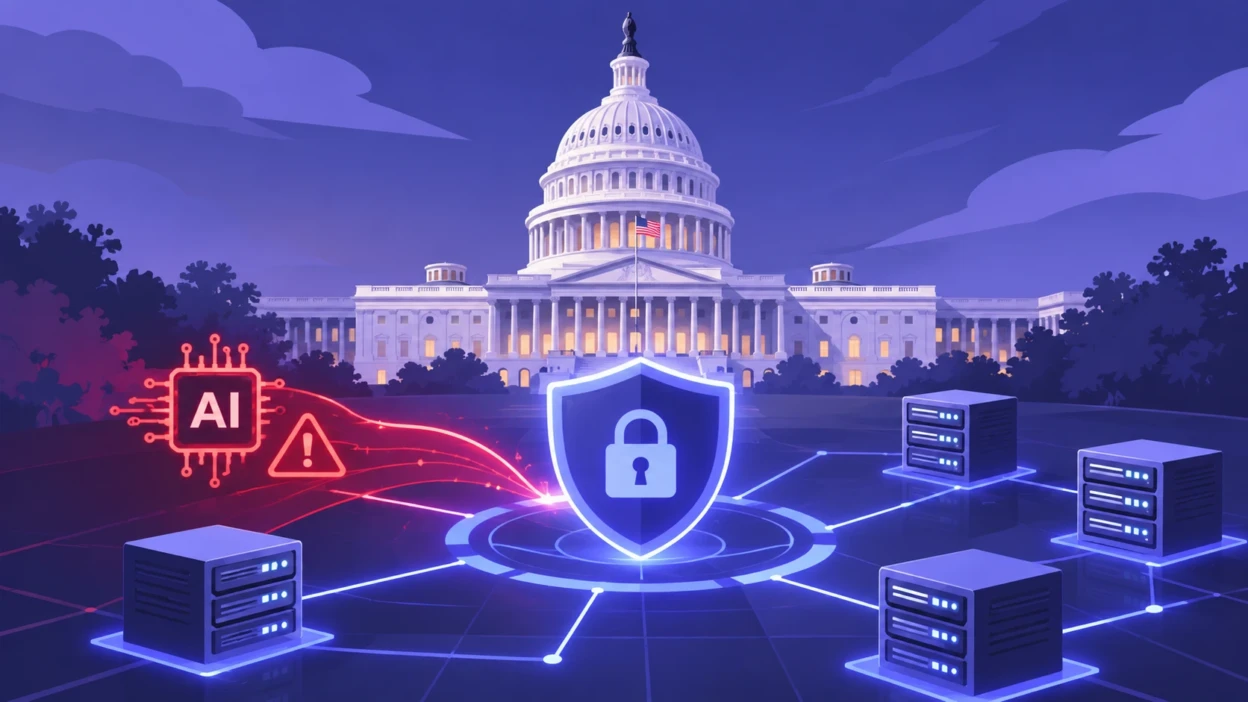
Two US senators have urged the White House to respond more quickly to cybersecurity threats involving artificial intelligence, warning that AI can help expose software weaknesses faster than many organizations can defend them. Democratic Senator Maria Cantwell of Washington and Republican Senator Mike Rounds of South Dakota made their latest appeal in a letter described in reporting published on November 18, 2026, according to Reuters.
The lawmakers want the administration to coordinate a national response covering critical infrastructure, financial institutions and widely used software. Their message to Jay Clayton, who leads the White House Task Force for Super Intelligence, focused on the growing gap between AI-assisted vulnerability discovery and the time needed to test and deploy fixes. Reuters reported that the senators warned US defenses were not keeping pace.
They also called for faster development and use of defensive AI tools, along with clearer security standards for autonomous AI agents. Unlike a chatbot that only produces a response, an AI agent may use digital tools and take steps across systems, depending on the permissions it receives. That creates a separate need to supervise what such software can access and change.
The November warning follows an earlier, publicly available October 13 Senate letter. That proposal, also signed by Cantwell and Rounds, asked the administration to strengthen federal AI safety standards, expand independent testing and auditing, and support defensive AI research and deployment. It also urged federal agencies to work with private companies, universities and smaller infrastructure operators so advanced defenses would not remain limited to the best-resourced organizations.
In describing the new letter, Reuters said the senators pointed to cases involving AI-assisted discovery of software vulnerabilities, unexpected actions by AI agents and reported breaches affecting Japanese companies. Those examples raised concerns about the potential reach of AI-assisted threats, but they do not establish that AI caused every recent technology disruption.
The warning arrives amid several major US technology outages, including disruptions involving Microsoft services, air travel and banking systems. Those failures should not be confused with confirmed cyberattacks. The Associated Press reported that US officials attributed the nationwide FAA ground stop to a telecommunications problem related to newly installed routers, while Microsoft described its outage as a technical problem during an upgrade.
The distinction matters because a service outage can be caused by faulty software, maintenance or other technical problems without malicious activity. Officials have said they have not found evidence that recent incidents formed a coordinated cyberattack. The senators’ request concerns potential security risks, not a finding that AI caused those outages.
For IT and security teams, the practical issue is how quickly they can reduce exposure after a vulnerability is found. NIST’s enterprise patching guidance emphasizes keeping track of systems, deciding which fixes are urgent, testing updates and using other mitigations when immediate patching is not possible. AI may speed up discovery, but safe fixes still need evaluation before deployment.
The policy push also builds on wider industry concern. TechBonafide previously covered technology companies’ call for stronger AI-powered cyber defenses. The senators are now asking for a federal effort that would connect testing, standards and defensive tools instead of leaving organizations to solve the problem alone.
The appeal does not itself create a new federal rule or deploy a defensive system. What happens next depends on the White House task force’s response and whether the agencies involved turn the senators’ proposals into concrete standards, evaluations or protective programs. Until then, organizations still need to maintain access controls, prioritize known weaknesses and test their incident-response plans.

Tech Bonafide is the editorial identity of TechBonafide, an independent technology publication covering AI, software, cybersecurity, gadgets, and emerging technology.