


Big technology companies rarely win by shipping a single great tool and stopping there. They win by shaping how people discover, buy, use and pay for many tools that work better together than apart.
An ecosystem strategy turns individual products into connected services, data flows and identity layers. That connection creates convenience for users and durable advantages for the company.
What A Tech Ecosystem Means Today?

A tech ecosystem is a set of products and services designed to operate as one experience across devices, apps, payments, identity and support. The value is not only in each component, but in the integration and the habits it creates.
Modern ecosystems often include hardware, operating systems, app stores, cloud platforms, content subscriptions, developer tools and customer service. They also include shared accounts, synchronized settings and cross product analytics.
Connectivity matters because it reduces friction. When a user signs in once and everything is already configured, the ecosystem feels like the default choice.
Ecosystems also define rules. They set technical standards, monetization terms and distribution policies that influence what partners can build and how customers can move.
Why Big Tech Builds Ecosystems Instead Of Single Products?

Standalone products compete on features and price, which erodes margins over time. Ecosystems compete on switching costs, network effects and shared data advantages that are harder to copy.
Integration makes value compound. A calendar improves when it connects to email and conferencing and a phone becomes stickier when it syncs with wearables, storage and messaging.
Distribution is another driver. When a company controls an app marketplace, a browser or a default search pathway, it can route demand to its own services and preferred partners.
Security and compliance also push companies toward ecosystems. Central identity, device management and unified policies reduce risk and support enterprise procurement requirements.
Finally, ecosystems reduce dependency on any single hit product. When growth slows in one category, the company can shift focus to adjacent services without losing the customer relationship.
How Ecosystems Increase Customer Retention?
Retention rises when daily workflows span multiple connected services. The more tasks a person completes inside one environment, the less appealing it feels to rebuild that setup elsewhere.
Account based design is a powerful retention lever. One login unlocks purchases, preferences, saved content, backups and device settings across the stack.
Shared data increases personalization, which increases satisfaction. Recommendations, autofill, smart routing and cross device continuity make experiences smoother and reduce effort.
Bundling is another mechanism. When storage, music, support and premium features are priced together, the customer evaluates the bundle value instead of each line item.
Retention also comes from community and third party investment. Developers and businesses build integrations and that growing catalog increases the ecosystem’s usefulness for everyone.
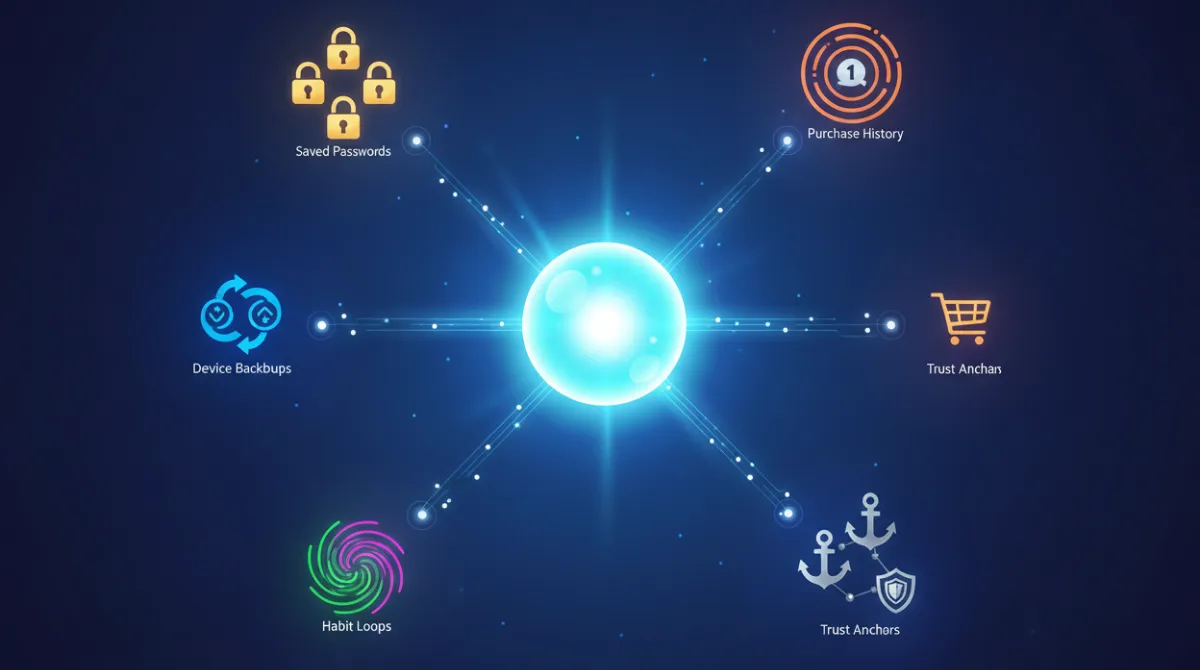
- Switching Costs: Saved passwords, device backups, purchase histories and integrations create real work to recreate elsewhere.
- Habit Loops: Notifications, cross app shortcuts and defaults guide users back into the same services.
- Trust Anchors: Familiar security prompts, verified payments and consistent support reduce the anxiety of change.
These forces combine into a retention moat that is hard to overcome with a single better feature.
The Business Benefits Of Ecosystem Strategy
Ecosystems unlock multiple revenue streams. A company can earn from hardware margins, subscriptions, advertising, transaction fees and cloud usage, all tied to the same customer.
Cross selling becomes cheaper because the company already owns attention, identity and billing. That reduces customer acquisition cost and increases lifetime value.
Data synergy is another benefit, though it is increasingly constrained by privacy regulation. Usage signals across services improve product decisions, fraud prevention, forecasting and personalization when handled responsibly.
Platform governance also strengthens bargaining power. Control over APIs, ranking and distribution allows an ecosystem owner to shape partner economics and product direction.
At scale, ecosystems improve operational efficiency. Shared infrastructure, unified telemetry and common design systems reduce duplicated work and speed up releases.
| Ecosystem Lever | Customer Value | Business Value |
|---|---|---|
| Single Sign On And Identity | Faster access and consistent settings | Higher retention and smoother onboarding |
| Bundled Subscriptions | Lower total cost for multiple services | Recurring revenue and reduced churn |
| App Store And Marketplace Rules | Safety checks and easier discovery | Distribution control and transaction fees |
| Cross Device Sync | Seamless work across phone, laptop and TV | More engagement and expanded product adoption |
The same levers that create convenience can also concentrate power. That tradeoff is why ecosystem strategy draws both customer loyalty and regulatory attention.
Examples Of Big Tech Ecosystems
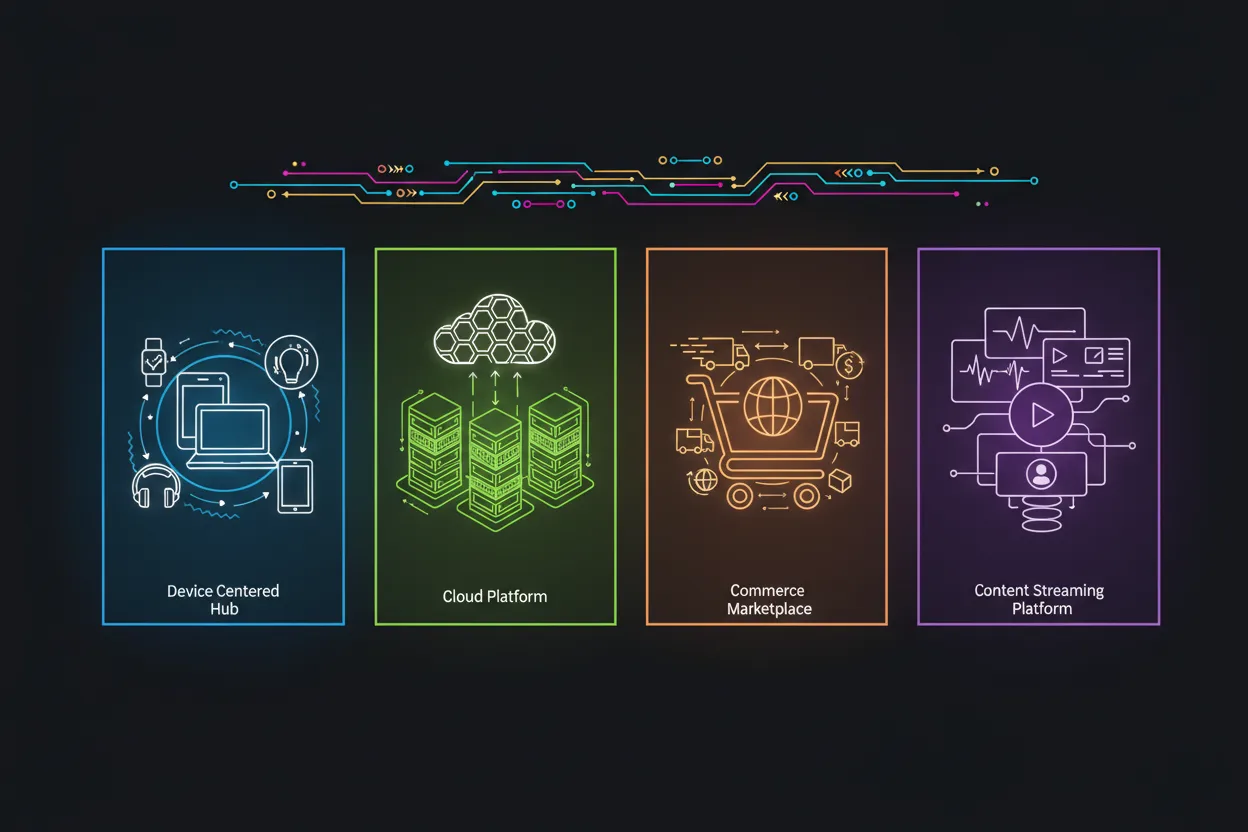
Several patterns show up repeatedly across large technology ecosystems. The specific products differ, but the architecture is similar, with identity at the center and services orbiting around it.
- Device Centered Ecosystems: Hardware integrates tightly with operating systems, app stores, accessories and paid services to keep experiences consistent.
- Cloud Platform Ecosystems: Infrastructure, databases, AI services, security tooling and billing unite into a full stack for developers and enterprises.
- Commerce And Payment Ecosystems: Marketplaces pair logistics, payments, advertising and seller tools to coordinate buyers and merchants at scale.
- Content And Entertainment Ecosystems: Streaming, gaming, creator tools and recommendation engines tie content libraries to subscriptions and devices.
Across these models, the ecosystem owner often sets defaults and standards. That shapes how quickly competitors can break in with standalone offerings.
What This Means For Consumers And Smaller Companies?
Consumers gain convenience, security and consistency when ecosystems are well designed. Setup takes less time, updates are coordinated and support tends to be centralized.
The cost is reduced flexibility. Leaving an ecosystem can mean lost purchases, incompatible accessories or degraded interoperability with friends, family or workplace tools.
For smaller companies, ecosystems can be both a growth channel and a constraint. Marketplaces, app stores and partner programs provide distribution, but also impose fees, policy risk and ranking dependency.
Smaller teams can still compete by choosing a clear position. They can differentiate through specialized workflows, better customer service, data portability or integration quality across multiple platforms.

- Prioritize Interoperability: Support common standards, export options and well documented APIs to reduce customer anxiety.
- Own A Narrow Outcome: Win on a specific job to be done rather than matching a full suite.
- Build Trust By Design: Clear permissions, minimal data collection and predictable pricing reduce friction during adoption.
- Diversify Distribution: Balance marketplace visibility with direct channels like email, referrals and partnerships.
These moves help smaller companies benefit from ecosystems without being fully captive to them.
Conclusion
Big Tech builds ecosystems because they compound value through integration, defaults and shared identity. Those systems increase retention, expand monetization and make competition harder for standalone products.
For consumers, ecosystems can simplify life while limiting choice over time. For smaller companies, they offer powerful distribution paired with structural dependencies that require careful strategy and strong differentiation.