Xendit is a financial technology company that helps online businesses accept and manage digital payments. Its platform provides payment APIs, checkout options, invoicing tools, and access to local payment methods across supported Asian markets. Businesses can use these services to manage transactions, receive payment updates, and simplify payment operations, depending on their country and account setup.
For online businesses, a payment gateway is more than a checkout button. It is the bridge between a customer payment method, the banking network, and your internal systems for orders, subscriptions, and accounting.
Xendit focuses on making that bridge reliable, developer friendly, and compatible with the payment behaviors common in Southeast Asia. Businesses use it to reduce payment friction, improve reconciliation, and scale transactions without building bank connections from scratch.
What Xendit is?
Xendit is a payments platform that helps businesses collect money online through multiple methods such as bank transfers, virtual accounts, cards, e-wallets, and retail outlets depending on availability. It provides APIs and dashboards that let teams control payment experiences, view transaction status, and manage settlements.
In simple terms, Xendit sits between your customer and the financial rails. It routes payment requests, returns success or failure responses, and sends confirmations so your business can fulfill orders quickly and accurately.
What A Payment Gateway Does?
A payment gateway is a technical service that securely transmits payment data, checks whether a payment can be processed, and communicates the outcome back to your website or app. It reduces the work required to connect directly to banks, card networks, and alternative payment channels.
Good gateways also help with payment reliability and operations. That includes status notifications, refund handling, and tools for matching incoming payments with the right invoices or orders.
A payment gateway should not be confused with an API gateway. A payment gateway supports financial transactions, while an API gateway manages communication, routing, and access controls between software services. Our comparison of API gateway vs load balancer explains how these infrastructure components work in modern applications.
- Payment Request Handling: Routes a payment attempt from checkout or invoicing to the right payment method and provider.
- Authorization and Confirmation: Confirms whether the payment is accepted and provides a reference you can store.
- Status Updates: Sends events when a payment is pending, successful, expired, or failed.
- Settlement Support: Helps move collected funds into the business account based on the provider settlement cycle.
These functions matter because payments affect revenue, customer trust, and support workload. A gateway that is stable and easy to integrate reduces failed payments and manual follow ups.
How Xendit Payment Gateway Works?
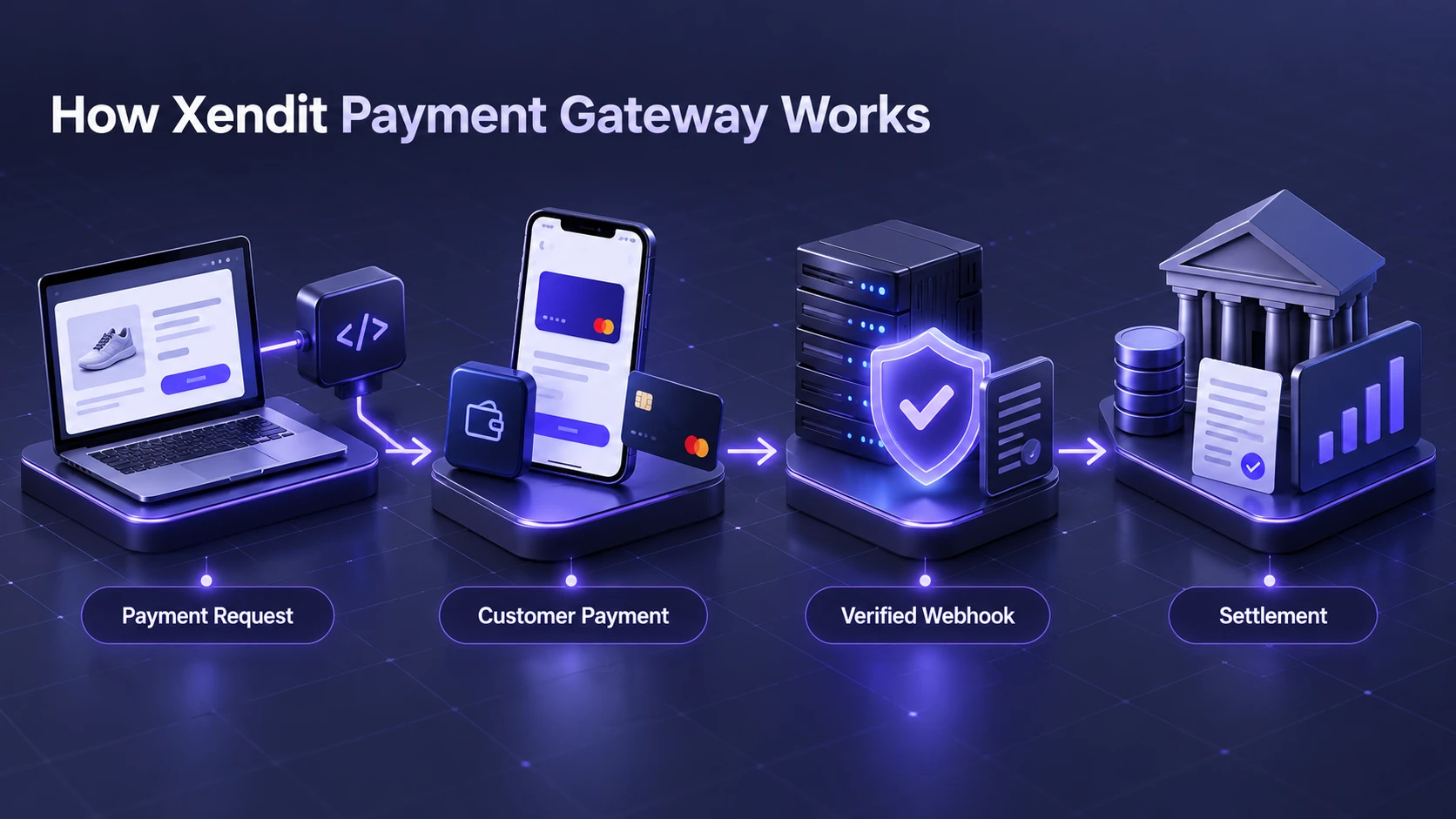
Xendit payment flows generally follow the same life cycle regardless of the payment method. Your system creates a charge or payment request, the customer completes payment through the selected channel, and Xendit reports the final status back to you.
Where Xendit adds value is in unifying different payment methods under a consistent set of integration patterns. That reduces the need for separate bank contracts and custom code per method.
Payment Initiation
In an API-based integration, a business application sends a payment request to Xendit with information such as the payment amount, currency, reference ID, and selected payment method. The required fields depend on the payment channel and integration flow. Businesses can also use supported dashboard-based payment products when they do not need a fully customized checkout.
Xendit responds with details required to complete payment. Depending on the method, that can be a virtual account number, a checkout token, or a payment instruction set that you show to the customer.
Developers can review the Xendit Payments API documentation to understand payment requests, required integration fields, and supported payment flows.
Customer Payment Completion
The customer completes payment through the channel you provided at checkout. Some methods are immediate, while others are pending until the customer transfers funds or completes authentication.
Xendit tracks payment progress and keeps a record tied to your reference so you can see exactly what happened later.
Notification and Status Handling
When a payment changes state, Xendit can send a server-to-server notification, known as a webhook, to the business’s backend system. The receiving application should authenticate the notification, confirm the relevant payment details, and prevent duplicate processing before updating an order. Because webhooks may be retried or arrive out of sequence, merchants should design their systems to handle these events safely before triggering fulfillment, receipts, or access to paid services.
Reliable status handling reduces disputes and support tickets. It also helps prevent double shipping and misapplied payments.
For more detailed instructions, Xendit’s webhook handling guide explains how developers can authenticate notifications and prevent duplicate processing when webhook events are retried.
Settlement and Reconciliation
Once payments are completed, funds are settled to the business based on the settlement rules of each method and bank. Reconciliation refers to matching payouts and transaction records back to invoices and orders so finance teams can close the books faster.
Xendit provides reporting and transaction lists that can be used to reconcile payments. Many businesses also integrate these records into their ERP or accounting system.
Key Payment Methods Supported
Xendit is commonly used for payment options that customers in the region already trust. This matters because payment method fit often has a direct impact on conversion rate.
Xendit lists payment services across Indonesia, the Philippines, Vietnam, Thailand, Malaysia, Singapore, and Hong Kong. However, available payment methods vary by market, business eligibility, and account approval. Merchants should confirm which channels are supported in their country before adding them to a checkout or payment integration.
- Virtual Accounts: Customers transfer to a unique bank account number tied to an order or invoice.
- Bank Transfers: Manual or guided transfers that can work for customers who prefer direct banking.
- Cards: Card payments for customers who prefer debit or credit card checkout.
- E Wallets: Popular wallet options that support fast payments and mobile first experiences.
- Retail Outlets: Cash based payments through partnered stores in supported markets.
Offering the right mix of methods helps reduce abandoned checkouts. It also helps you serve customers who do not use cards or prefer bank based payments.
Businesses should check Xendit’s supported payment methods to confirm which payment channels are available in their market before configuring an online checkout.
APIs and Integrations for Developers

Xendit is built for software teams that want direct control over payment flows. APIs allow you to create charges, generate invoices, issue refunds, and subscribe to notifications so your platform can react in real time.
From an engineering standpoint, the most important integration work is designing reliable payment state management. That means your order system should handle pending states, retries, and idempotency so duplicate charges do not occur when networks are unstable.
Payment integrations also require strong API security, including authentication, input validation, secret protection, and appropriate access controls. Developers can explore these practices further in our guide to API security basics, which explains common weaknesses in connected applications.
- Webhook Processing: Build secure handlers that validate events and update order status only once.
- Error and Retry Logic: Treat network timeouts as unknown outcomes and rely on status queries or webhooks for final state.
- Reference Design: Use consistent order and invoice references so finance teams can trace transactions without confusion.
Before launching a payment integration, developers should test successful, failed, pending, and duplicate payment events. They should also confirm that order fulfillment, inventory updates, and customer notifications depend on verified payment states. These checks become especially important when payments are connected to subscriptions, accounting software, inventory systems, or marketplaces.
Security and Compliance Basics
Payments involve sensitive data and regulatory obligations. A gateway should support secure transport, controlled access, and auditability so your business can reduce risk.
Although Xendit provides payment security controls and publishes compliance information, merchants remain responsible for securing their own applications and integrations. Important practices include protecting API credentials, verifying webhook notifications, limiting dashboard permissions, and avoiding unnecessary storage of sensitive payment information. Businesses that accept card payments should also understand the PCI DSS requirements applicable to their own payment setup.
- Data Protection: Use encrypted connections and avoid storing sensitive payment information unless necessary. Check that checkout pages use properly configured HTTPS and do not display browser security warnings. Our guide explaining why your browser says Not Secure covers common connection and certificate problems.
- Access Controls: Restrict dashboard access based on roles and keep logs of changes.
- Fraud Awareness: Monitor chargebacks, unusual purchase patterns, and repeated payment failures.
Security work is never finished. Regular reviews of webhook security, API key rotation, and incident response readiness keep payment operations safer as volume grows.
Businesses can also consult the Xendit Security Trust Center to review available compliance certificates, security policies, and supporting documents for relevant Xendit entities.
Fees and Settlement Considerations
Xendit’s payment costs depend on the selected market, payment method, transaction activity, and applicable account terms. Businesses should account for payment-method charges, processing fees, refunds, taxes, and any additional fees relevant to their integration. Transaction failures can also affect costs and operational workload.
Xendit updated its pricing policy in 2026, including revised transaction charges and processing fees introduced in October. Certain charges may apply to failed payment attempts, refunds, dormant accounts, or businesses still using legacy APIs. Merchants should review the latest pricing terms, applicable contract conditions, and expected settlement schedules before choosing a payment setup.
| Factor | Why It Matters | What to Verify |
|---|---|---|
| Payment Method Fees | Different methods can change margin and customer adoption | Payment-method charges, processing fees, unsuccessful-attempt fees, and applicable contract terms |
| Settlement Timing | Cash flow impacts inventory, payroll, and ad spend | Typical payout schedule and any delays during high risk periods |
| Refund Handling | Refund speed affects customer trust and support load | Refund process, timelines, and reporting visibility |
| Reconciliation Reporting | Clean records reduce accounting errors and manual work | Export formats, identifiers, payout level summaries, and audit trails |
Once you map these factors to your business model, it becomes easier to choose the right payment mix and design a stable checkout experience.
Before finalizing the payment setup, review Xendit’s official pricing policy for information about processing fees, refunds, monthly charges, and other conditions that may affect the total cost of accepting payments.
Who Should Use Xendit?
Xendit is a strong fit for online businesses that need local payment methods and want a single platform to manage collections. It is also useful for teams that prefer API based control rather than relying only on hosted checkout pages.
Common use cases include ecommerce, subscription businesses, marketplaces, and platforms that need to manage high transaction volume with clear reconciliation.
- Ecommerce Stores: Useful when bank transfers and e-wallet payments are key to conversion.
- SaaS and Subscriptions: Helpful when invoicing, recurring billing, and automated status updates are required.
- Marketplaces: Relevant when payment tracking must stay accurate across many orders and sellers.
- Service Businesses: Effective when sending payment links or invoices is part of the sales process.
If you are building a custom checkout, the main decision is whether you want to invest in a tighter integration to gain better control over user experience and payment reliability.
Common Setup Mistakes to Avoid
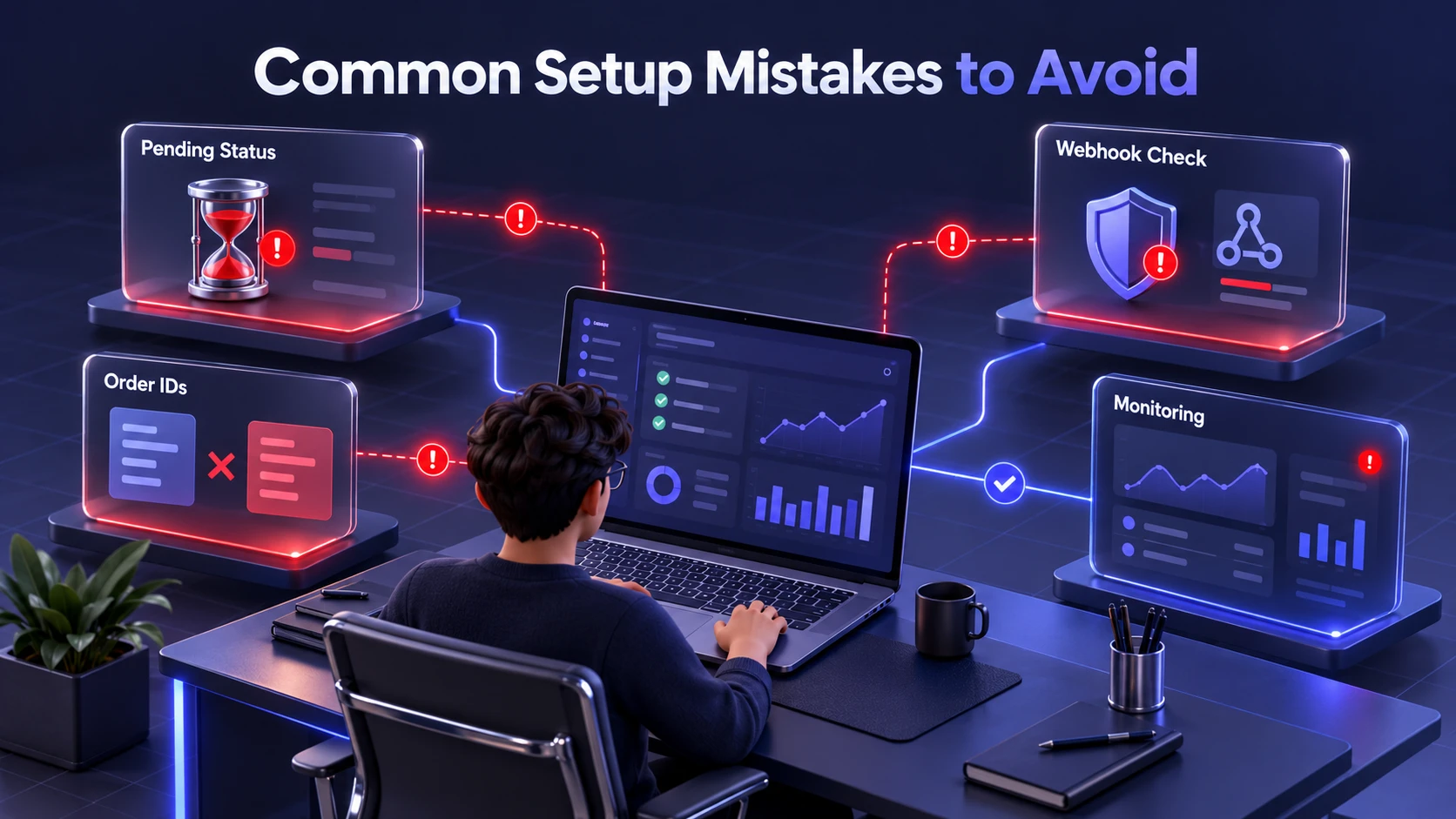
Payment problems can result from several factors, including gateway or banking disruptions, unsuccessful customer authentication, network delays, and incorrect integration logic. Common implementation mistakes include ignoring pending payment states, failing to verify webhook notifications, and processing the same payment event more than once.
A small amount of upfront engineering rigor prevents many downstream issues like duplicate orders, unrecognized payments, and slow refund resolution.
- Assuming Payment is Instant: Some methods require time and can remain pending, so order fulfillment should wait for confirmed status.
- Not Verifying Notifications: Webhooks should be validated and processed idempotently to prevent fraud and duplicates.
- Poor Reference Hygiene: Inconsistent invoice and order IDs make reconciliation harder and increase support burden.
- Skipping Monitoring: Without alerts, failed payments and delayed settlements can go unnoticed until customers complain.
When you address these early, your payment system becomes easier to scale and less stressful to operate.
Conclusion
Xendit is a payment gateway provider that helps online businesses accept digital payments and manage transactions through a unified platform. Its core value comes from supporting local payment methods, providing APIs and dashboards for control, and enabling reliable status updates for automation.
The best results come from pairing the gateway with strong internal payment logic, secure webhook handling, and careful reconciliation practices. When you treat payments as a system rather than a plugin, checkout performance and operational clarity both improve.
Frequently Asked Questions
Is Xendit Only for Large Businesses?
No. Xendit can work for small to mid sized online businesses as long as they need digital payment collection and can meet onboarding requirements. The platform supports both dashboard based workflows and API integrations depending on the team capabilities.
Do I Need Developers to Use Xendit?
Not always. Many businesses can start with invoices or basic checkout configuration using the dashboard. Developers become important when you need deep integration such as automated fulfillment, custom checkout, or advanced reconciliation workflows.
How Do I Know A Payment is Successful in My System?
The most reliable approach is to update order status based on server to server notifications and verified transaction status. Your system should treat customer facing screens as informational and rely on backend confirmation before shipping goods or activating access.