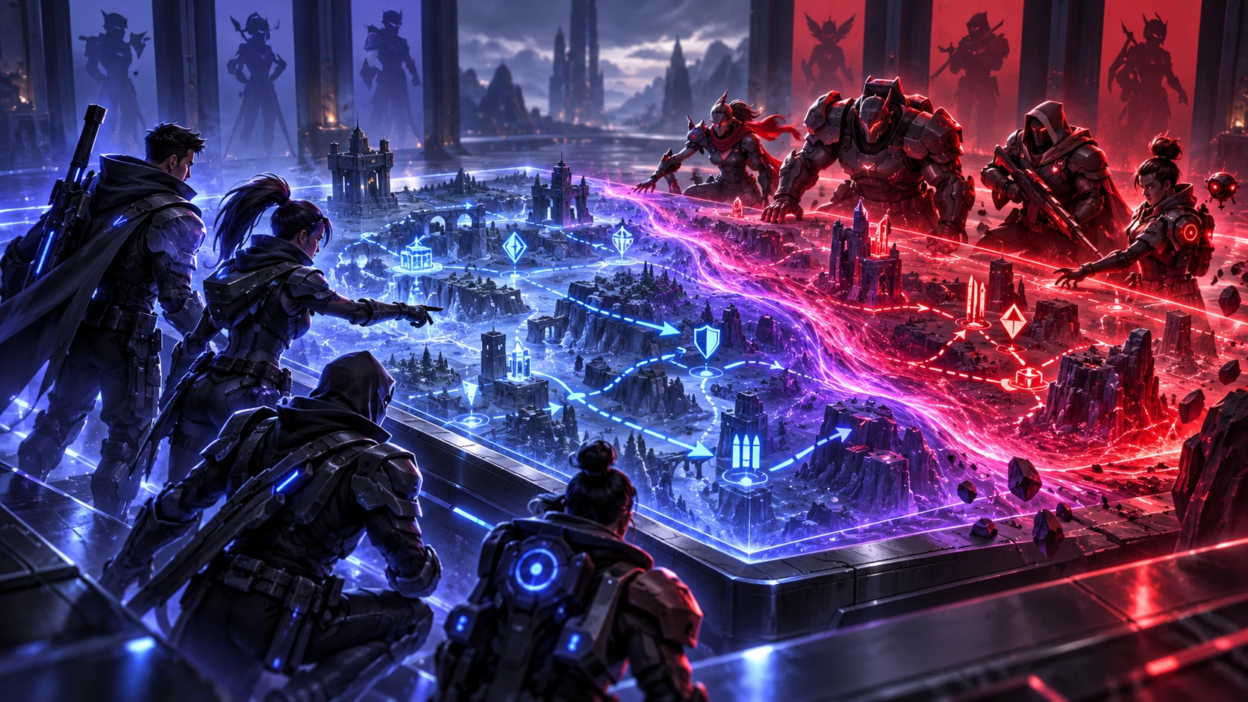
In competitive gaming, the meta refers to strategies, characters, weapons, and team choices that players currently consider effective. It changes when developers adjust game balance, players discover new tactics, or opponents develop counterstrategies. Understanding the meta helps you recognize popular choices and adapt to updates, but the best approach can also depend on your rank, game mode, and personal playstyle.
What Meta Means in Gaming?
The word meta comes from metagame, which describes the strategies and decisions that develop around a game’s basic rules. Players study popular tactics, character choices, team combinations, and counterstrategies to gain an advantage. You may also hear that META stands for “most effective tactics available,” but this is a popular backronym rather than the word’s original meaning.
In practice, a gaming meta includes strategies and choices that tend to perform well within a particular game version, rank, or competitive mode. These may involve character selections, weapons, skill builds, team compositions, map rotations, and resource management. However, a popular strategy does not automatically guarantee better results for every player.
Why the Meta Always Changes?
Meta changes because competitive games are complex systems, not puzzles with one answer. When enough players copy what works, opponents respond with counters. Developers then patch out extremes and introduce new content, which restarts the cycle.
Even without patches, meta drifts as players learn better routing, aim patterns, frame traps, ability combos, and objective timing. A strategy can look weak until someone proves it with consistent results and others refine it.
How Updates Rewrite Winning Strategies?
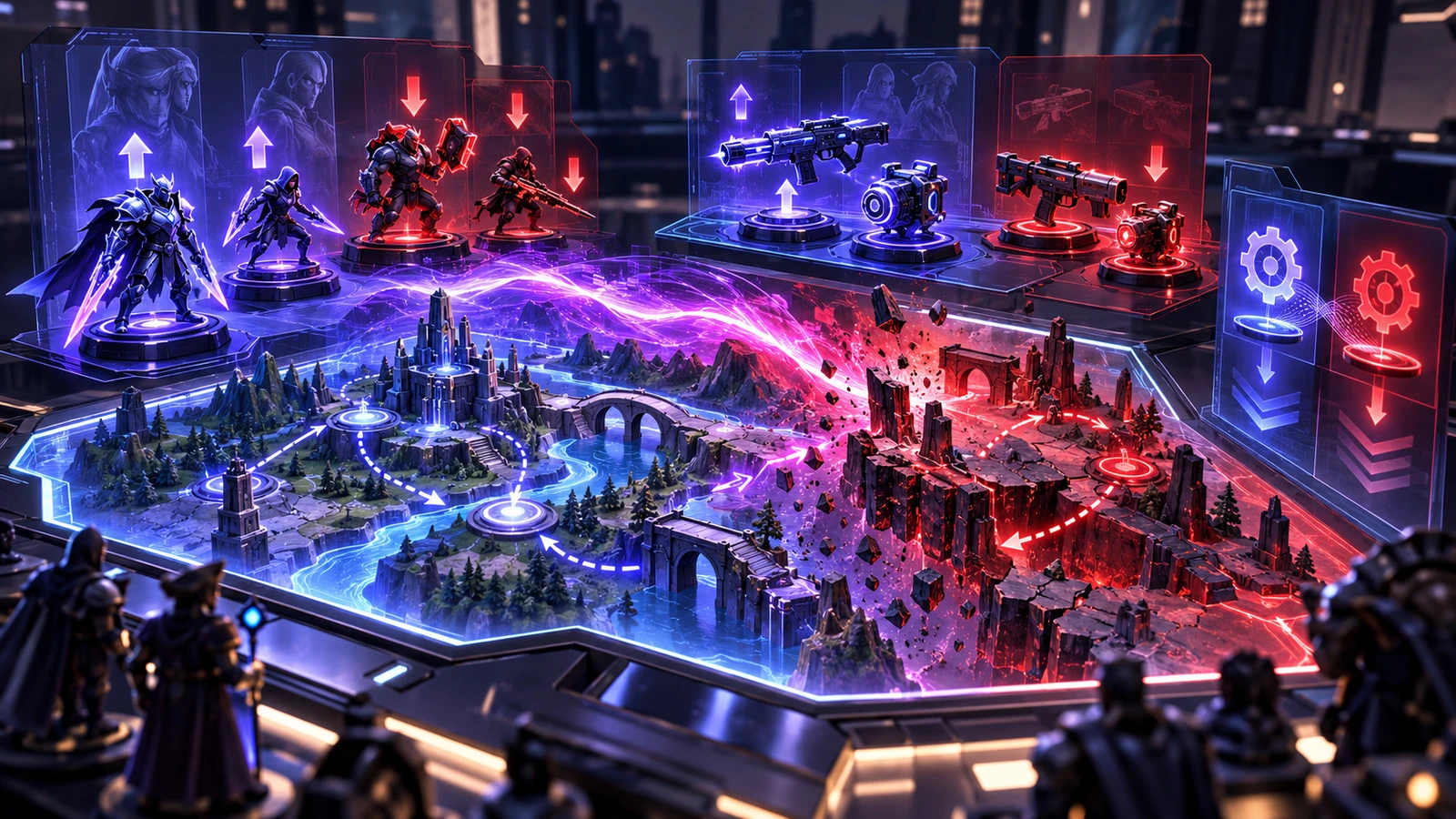
Game updates can change the balance of competitive play by adjusting character abilities, damage values, item costs, and gameplay rules. Even small changes may affect important matchups or make certain strategies more attractive. For example, Riot Games League of Legends Patch 26.21 notes document adjustments to champions and items. Players can use these official details to identify which builds, matchups, and team strategies may need further testing.
Several patch types tend to move the meta the most.
- Balance Changes: Buffs and nerfs change which picks feel reliable and which fall behind in key matchups.
- New Characters or Weapons: New characters and weapons introduce unfamiliar abilities, combinations, and possible counterstrategies. For example, the official VALORANT Patch Notes 13.09 introduced the agent Hush, giving players new abilities and tactical interactions to explore. However, players still need match experience before deciding how strongly a new addition affects the competitive meta.
- Map and Objective Tweaks: Layout changes alter rotations, sightlines, spawn timing, and how teams control space.
- System Updates: Changes to economy, itemization, recoil, movement, or matchmaking can reshape which strategies work best in different competitive situations.
These changes can weaken familiar strategies, create new opportunities, or make previously overlooked options more useful. However, not every update completely changes the meta. Players should test affected characters, weapons, and builds, compare results across different matches, and adjust their strategies when meaningful patterns become clear.
Key Elements That Define a Meta
Meta is broader than a tier list. It is a network of incentives that push players toward certain choices.
- Pick and Ban Pressure: High-priority selections influence drafts and can force teams into uncomfortable matchups.
- Counterplay Availability: A strong option can become more popular when practical counters are limited or difficult to execute.
- Consistency Under Stress: Competitive play rewards tools that perform well even with imperfect mechanics and communication.
- Tempo and Resource Efficiency: Strategies that secure objectives, create advantages, or use resources efficiently can become more popular, especially when updates change important timings or costs.
- Skill Floor and Skill Ceiling: Characters or strategies that are easier to learn may deliver more consistent results for beginners. More difficult options can reward experienced players who master their mechanics, although higher complexity does not automatically make a choice stronger.
These factors help explain why the meta can look different across ranks, regions, and game modes. A 2023 academic paper presenting research on esports metas also examines how gaming communities, tournaments, and shared strategic knowledge influence the development of competitive strategies.
Meta Differences Across Game Genres
Meta exists in nearly every competitive genre, but it appears in different forms. In shooters, popular strategies often depend on weapon effectiveness, recoil patterns, ability timing, and map control. In MOBAs, the meta may focus on character combinations, lane priority, objectives, and scaling. Gameplay responsiveness is a separate but important factor in competitive shooters. Our input lag vs response time guide explains how display performance can influence the gaming experience without determining which strategies are currently meta.
In fighting games, meta focuses on matchup charts, safe pressure, and tournament rulesets. In card games, it is driven by deck archetypes, sideboard choices, and the speed of the format.
When an Off-Meta Strategy May Be Hurting Your Results
Playing off-meta means choosing a less common character, build, weapon, or strategy instead of following the most popular competitive choices. It is not automatically a disadvantage. However, repeated problems with matchups, timing, or team coordination may indicate that your approach needs adjustment. The following signs can help you identify possible weaknesses.
- You Need Perfect Execution: You must play near flawlessly to match average performances from meta picks.
- Your Power Spikes Arrive Late: The game ends or snowballs before your plan becomes relevant.
- You Lose the Same Matchups Repeatedly: Loss patterns stay consistent even after adjusting play.
- Your Team Comp Lacks A Win Condition: You cannot explain how your lineup secures objectives or closes games.
These signals are not meant to discourage creativity. Instead, they can help you identify why a strategy is struggling and determine whether adjustments are needed after an update.
How to Adapt When the Meta Shifts?
Adapting to meta does not mean copying blindly. It means understanding why something wins, then updating your decisions with that logic.
- Read Patch Notes With Purpose: Focus on changes that affect breakpoints such as damage thresholds, cooldown windows, and economy timing.
- Identify the New Win Conditions: Track what ends games now, such as faster objective takes, burst damage, or stronger late scaling.
- Test A Small Pool: Choose a limited set of picks and builds so you can learn matchups deeply instead of spreading practice too thin.
- Track Results By Situation: Note what works on specific maps, roles, team styles, and against common opponents.
- Build Counter Plans: Learn at least one reliable answer to each top threat so you are not forced into mirror matches.
This approach keeps you flexible while still letting you specialize.
A Simple Patch Impact Checklist
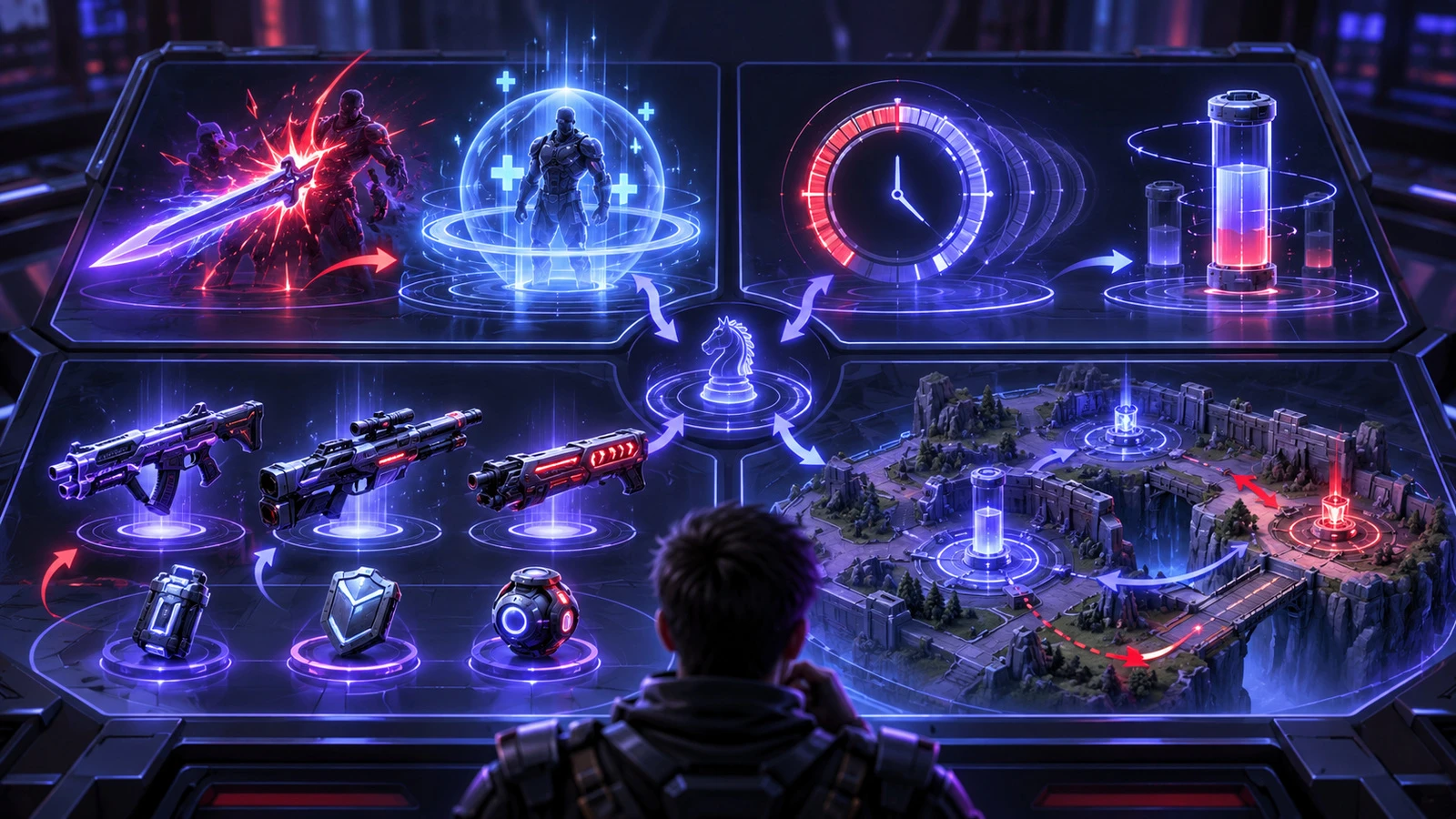
Some updates look minor but still change the meta because they nudge core interactions. The checklist below helps you quickly evaluate what matters without overreacting.
| Patch Change Type | What Usually Shifts | What to Review First |
|---|---|---|
| Damage and Healing Numbers | Time to kill and sustain matchups | Key duels and objective fights |
| Cooldown and Resource Costs | Tempo, uptime, and punish windows | Rotation timing and combo routes |
| Item or Loadout Adjustments | Build paths and power spikes | Early-game efficiency and breakpoints |
| Map or Objective Tweaks | Positioning, sightlines, and control | Default setups and retake patterns |
Once you identify which category the patch hits, you can narrow testing to the interactions most likely to decide games.
Common Mistakes Players Make With Meta
Most players do not struggle because they ignore meta. They struggle because they misunderstand it and change too much at once.
- Chasing Tier Lists: Swapping constantly prevents mastery and makes losses feel random rather than fixable.
- Ignoring Your Rank Context: A top-tier pick in professional play can be weaker in solo queue, where coordination is lower.
- Copying Builds Without Understanding: A build can rely on specific pacing, matchups, or team support that you are not getting.
- Overreacting to One Bad Session: Variance is real, so patterns need enough games to become meaningful.
Meta awareness works best when paired with steady practice and basic fundamentals.
How to Keep Your Edge Between Updates?

Staying competitive does not mean reacting to every rumor or copying every new strategy. Start by confirming whether important gameplay changes have actually been released. Our guide to verifying gaming updates explains how to check patch information and identify reliable announcements. Once you understand what has changed, follow a simple practice routine to improve your gameplay without constantly switching strategies.
- Maintain A Core Playstyle: Keep a main role and a small champion or weapon pool so your mechanics stay sharp.
- Review One Loss Pattern Weekly: Pick a recurring mistake such as bad spacing, late rotations, or poor economy choices and fix that first.
- Practice Counter Fundamentals: Learn how to deny the common win condition rather than trying to outplay everything.
This keeps your performance more consistent while the broader meta moves around you.
Conclusion
The meta in gaming reflects the strategies, characters, weapons, and builds that players currently consider effective. Balance updates, new content, player discoveries, and counterstrategies can change these preferences over time. Instead of copying every popular trend, focus on understanding patch notes, testing relevant changes, and improving your existing skills. By combining meta knowledge with practice and good decision-making, you can adapt more confidently as the competitive environment evolves.
Frequently Asked Questions
Is Meta the Same As Overpowered?
Meta and overpowered are related but not identical. Something can be meta because it is consistent and easy to execute, even if it is not the strongest on paper. Overpowered usually implies the option is too strong compared to alternatives and may need adjustment.
Do I Have to Follow the Meta to Rank Up?
No. You can improve your rank with an off-meta character, weapon, or strategy if you understand its strengths and weaknesses. Popular meta choices may offer certain advantages, but they do not guarantee victory. Consistent practice, good decision-making, teamwork, and knowledge of common matchups can matter just as much as following the latest tier list.
How Fast Should I Switch After A Patch?
Switch quickly only if the patch clearly affects your main breakpoints, such as damage thresholds or key cooldown timings. Otherwise, test changes for several sessions and look for repeatable patterns before committing. A small pool with one or two flexible backups usually provides a more stable approach than constantly switching characters, weapons, or builds.