Gaming news moves fast, and rumors about game releases, updates, esports tournaments, and player transfers can spread before anyone verifies them. Readers following gaming updates from ETrueSports and ETrueGames need to know how to separate confirmed announcements from speculation and outdated information. This guide explains how to evaluate gaming news sources, verify patch notes and competitive results, recognize misleading headlines, and build a reliable news routine without spending hours checking every update.
Why Reliability Matters in Gaming Updates?
Bad information wastes time, but it can also cost money through rushed preorders, unnecessary hardware upgrades, or risky account actions. It can also distort competitive conversations when esports results, roster changes, or rule updates get misreported.
Reliable gaming updates give readers the context needed to understand game changes, tournament developments, and new releases. Publication dates, official announcements, and platform availability are especially important when planning purchases or subscriptions. For example, TechBonafide’s Xbox Game Pass October 2026 coverage illustrates how a dated gaming report can explain announced game additions, availability, and subscription requirements. Readers should still compare time-sensitive details with the latest publisher information before making decisions.
What Makes A Gaming Update Trustworthy?
Trust is rarely about one signal. It is a combination of sourcing, clarity, and accountability that holds up after the hype fades.
- Clear attribution: The update explains where the information came from rather than referencing vague insiders or unnamed screenshots.
- Verifiable evidence: It points to patch notes, official statements, tournament rulebooks, developer posts, or documented match results.
- Balanced framing: It separates confirmed facts from interpretation and does not overstate what a change means for every player.
- Correct timelines: It states when something happened, when it was announced, and what is still pending confirmation.
- Accountability: Corrections are visible and the outlet updates older posts when a story changes.
Once you understand these trust signals, you can evaluate gaming updates from ETrueSports and ETrueGames using the same standards applied to other news websites. For background on the topics and features associated with ETrueSports, see TechBonafide’s ETrueSports.com overview. However, a general website profile is not proof that every published story is accurate, so important gaming announcements should still be verified against original sources.
How to Evaluate ETrueSports and ETrueGames Directly?

ETrueSports and ETrueGames are names associated with online gaming and esports-related content. However, readers should not assume that similarly named websites share the same ownership, editorial standards, or original sources. Before relying on a report, identify the exact website, its publication date, the author, and the source of the reported information.
When evaluating the ETrueSports website, examine whether individual gaming articles identify original announcements, distinguish reporting from opinion, and provide enough context to verify competitive claims. Apply the same checks to the ETrueGames website, particularly when reading game announcements, guides, or esports-related articles.
Both websites should be evaluated article by article rather than treated as automatically reliable or unreliable. The following checks are especially useful:
- Website Identity: Confirm the exact domain name and avoid confusing unrelated websites with similar branding.
- Editorial Transparency: Look for identifiable authors, publication dates, contact information, and visible corrections.
- Original Sources: Check whether reports link to developers, game publishers, tournament organizers, or official documentation.
- Current Information: Compare article dates with the relevant game version, competitive season, or announcement.
- Independent Verification: Confirm significant claims using primary documentation rather than relying only on the publishing website.
These checks help readers understand what a gaming website reports without assuming that its claims have already been independently verified.
How to Verify Sources Without Slowing Down?
You do not need an hour to fact-check every gaming headline. A short verification routine can help identify misleading updates before they influence your decisions. The Internet Society’s 30-second misinformation check recommends identifying the source, examining the evidence, and comparing claims with other information. These basic steps also help when evaluating gaming announcements, esports rumors, and unfamiliar news websites.
- Identify the original source: Trace the claim back to the earliest post or statement and confirm it is not a repost of a repost.
- Look for primary documentation: Prioritize official patch notes, event pages, league announcements, developer statements, and platform status pages.
- Check for corroboration: Compare reporting from independent outlets and examine whether they provide separate evidence or original reporting. Several websites repeating the same unverified rumor do not establish that the claim is true.
- Inspect wording for certainty: Reliable reporting uses precise language and avoids turning early signals into definitive outcomes.
- Confirm dates and versions: Verify the build number, season, tournament stage, or platform region so you do not apply the wrong update.
That short process protects you from recycled rumors and misread screenshots while keeping you up to speed.
Common Red Flags in Unreliable Gaming News

Many misleading posts share the same patterns. Recognizing them early helps you avoid getting pulled into speculation loops.
- Overconfident headlines: Claims are presented as final even when the body text uses uncertain language.
- Missing context: Patch changes are listed without explaining game mode differences, platform differences, or limited test environments.
- Selective screenshots: Images are cropped to remove dates, sources, or indicators that the content is a mockup or concept.
- No correction history: Old posts remain unedited even after official sources disprove them.
- Engagement bait: The post pushes strong reactions and arguments instead of focusing on what can be confirmed.
When these red flags stack up, it is safer to wait for a clearer update rather than spreading an uncertain claim.
Quick Credibility Checklist for ETrueSports and ETrueGames Updates
A checklist keeps you consistent. It also reduces the chance that excitement overrides judgment when big announcements drop.
| What to Check | What Reliable Looks Like | What Unreliable Looks Like |
|---|---|---|
| Source Trail | Links or references to official statements and clearly named reporters | Vague insider claims with no traceable origin |
| Evidence Quality | Patch notes, rule updates, match records, or platform notices | Single cropped screenshot or paraphrased rumor |
| Language Precision | Separates confirmed facts from analysis and uses careful wording | Declares outcomes as guaranteed with little support |
| Update Behavior | Edits and corrections are visible when new info appears | Old claims stay live without changes after being disproven |
Use this checklist as a fast filter before you share posts or act on them.
Understanding Different Types of Gaming Updates
Not all gaming updates require the same evidence. A roster leak, server outage, tournament ruling, and balance patch should each be verified differently. For example, suspected Xbox service disruptions can be checked against the official Xbox network status page, while game balance changes should be compared with developer patch notes. Checking the source appropriate to the claim helps prevent speculation from being mistaken for confirmed news.
Patch Notes and Balance Changes
Look for complete developer patch notes and version numbers rather than summaries that omit important conditions. For example, Riot Games publishes official VALORANT patch notes covering game changes, adjustments, and updates. When evaluating a reported change, compare the article with the corresponding developer announcement and check whether the information applies to a particular version, competitive mode, platform, or limited-time event.
Pay attention to what is measurable. Numbers, cooldowns, recoil patterns, drop rates, and matchmaking rules are easier to verify than broad claims about a meta shift.
Esports Results and Competitive Rulings
Trust esports updates that cite official tournament brackets, match recordings, organizer announcements, or published competition rules. Competitive reporting can involve penalties, substitutions, eligibility requirements, and disputed results, so missing context can change how readers understand an event. The Riot Games Competitive Operations library provides official regulations and competition documents that readers can consult when checking relevant esports rulings.
Reliable esports reporting avoids implying misconduct before an organizer confirms the relevant facts. It should distinguish published tournament information from independently verified competitive results and official rulings. TechBonafide’s PBLGamevent gaming news and tournament platform analysis explains why reporting about esports events should not automatically be treated as evidence that a website directly operates those competitions. This distinction is useful when evaluating unfamiliar esports news sources.
Leaks and Early Access Information
Leaks can be real, but they are not the same as confirmed news. A trustworthy outlet labels leaks clearly and explains what is known, what is unverified, and what would need to happen for it to become official.
If the update pressures you to make a purchase decision quickly, slow down. Reliable reporting does not demand urgency to be credible.
Building A Clean News Feed That Stays Reliable
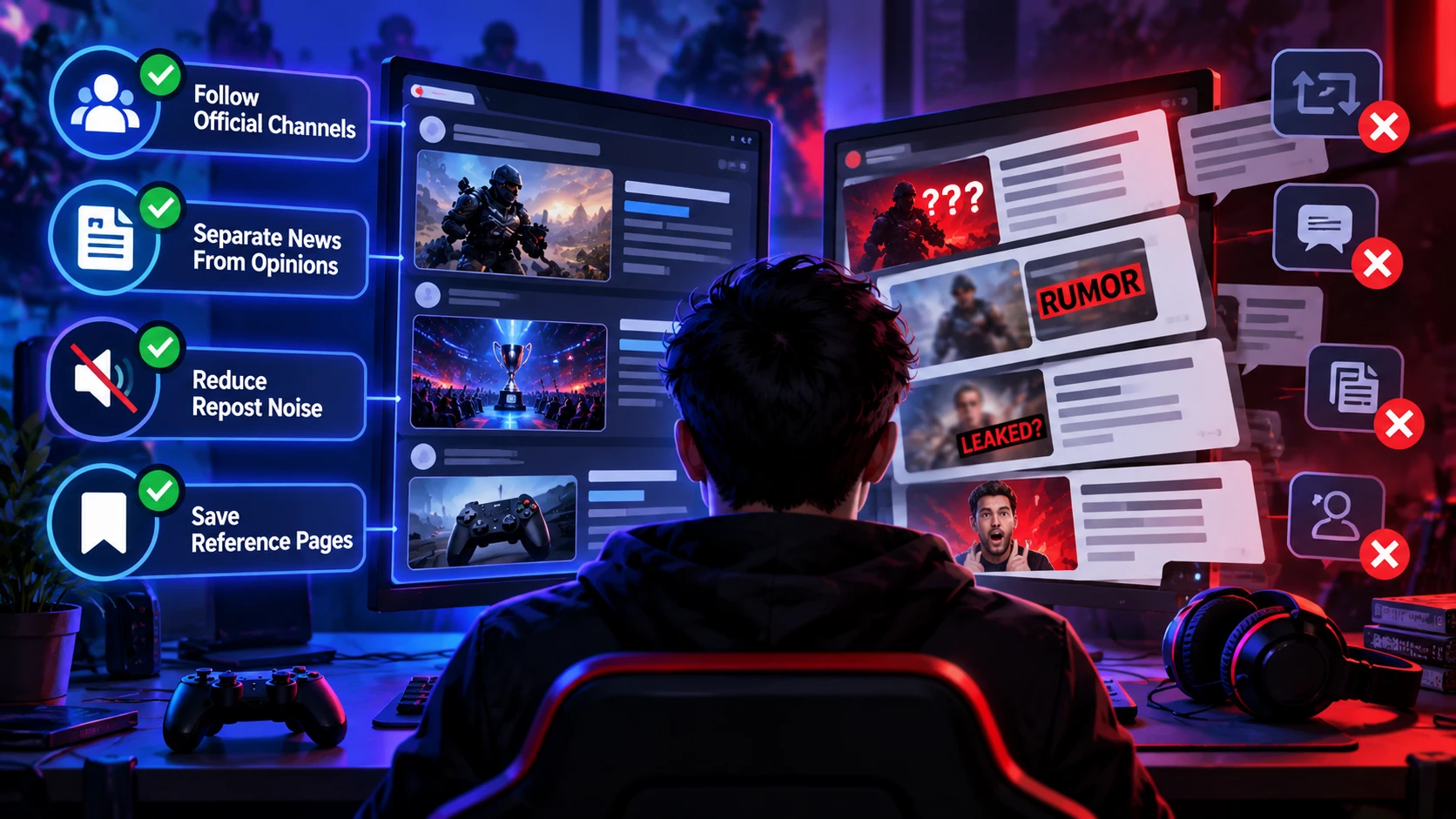
Even good sources can be drowned out by repost accounts and low effort aggregators. Small feed adjustments improve the quality of the gaming updates you see from ETrueSports and ETrueGames and similar outlets.
- Prioritize official channels: Follow verified developer accounts, league organizers, and platform status pages so you can confirm key claims fast.
- Separate news from opinions: Keep analysis and reaction content in a different list or tab so it does not blur into reporting.
- Reduce repost noise: Mute accounts that only repeat headlines without adding sourcing or context.
- Save reference pages: Keep bookmarks for patch notes, rulebooks, and known changelog pages for quick verification.
This approach makes it easier to spot what is new, what is recycled, and what has real documentation behind it.
Responsible Sharing and Community Trust
Sharing a claim turns you into part of the distribution chain. If you share unreliable updates, even with good intentions, it can create confusion in teams, friend groups, and competitive communities.
Before reposting, confirm the source trail and check whether the update has been revised. If you cannot verify it quickly, share it as unconfirmed or wait until it is supported by stronger evidence.
Conclusion
Reliable gaming updates from ETrueSports and ETrueGames should stand up to basic source checks, clear evidence, and consistent corrections. When you apply a short verification routine, you protect your time, your purchases, and your competitive understanding.
Use the checklist, watch for red flags, and keep official documentation close. Over time, you will spend less energy sorting rumors and more time enjoying the games and events that matter.
Frequently Asked Questions
How Can I Tell If An Update is Confirmed or Just A Leak?
Confirmed updates cite official patch notes, developer statements, league announcements, or platform notices. Leaks should be labeled clearly and supported by verifiable context such as consistent build references or multiple independent confirmations. If the post avoids naming sources or relies on one unclear screenshot, treat it as unconfirmed.
What Should I Do When Two Outlets Report Different Details?
Follow the source trail and compare which report cites primary documentation. If neither provides direct evidence, wait for official clarification rather than choosing the more exciting version. Reliable outlets usually update their posts when details change or errors are found.
Is It safe to Act on Fast Breaking Gaming Updates?
It depends on the information and the action involved. For game purchases, hardware upgrades, and major esports announcements, confirm important details through official sources before making decisions. If you suspect your gaming account has been compromised, use the platform’s official security settings immediately rather than waiting for a news report. For server outages, check official status pages. You can follow developing stories for general awareness, but avoid acting on unverified claims or unfamiliar links.